Memory as the Primary Path, Not the Buffer
Standard IoT devices write to volatile RAM and batch-upload to the cloud, treating onboard flash as a temporary buffer. In offline sports device design, that hierarchy inverts. The device must log high-frequency sensor data—GPS fixes at 1Hz, accelerometer streams at 100Hz, heart rate variability timestamps—for eight to twelve hours without dropping a single sample.

Photo by cottonbro studio on Pexels
This changes your memory selection from an afterthought to a critical specification. You need pSLC NAND or industrial-grade eMMC with power-loss protection, not consumer storage that corrupts on unexpected shutdown when a trail runner stumbles. Garmin’s Fenix series maintains local cartography and weeks of activity history precisely because they architected for the mountain first and the smartphone second. The hardware cost per unit increases, but the alternative is a local data capture device that becomes a brick when the user needs it most.
The Power Paradox of Local Processing
Connectivity-independent devices cannot offload computation to the cloud to save battery. Every Fast Fourier Transform for cadence analysis, every GPS position calculation, every compression algorithm runs locally. This creates a power budgeting problem that cloud-dependent devices avoid by streaming raw data to a phone.
The engineering response is not simply a bigger battery. It is a heterogeneous compute architecture where sensor fusion runs on a low-power DSP while the main processor sleeps, waking only to persist data to non-volatile storage. Coros watches achieve 140 hours of offline GPS tracking not through larger cells but through aggressive duty-cycling and bespoke algorithms that process location data without waking the application processor. If you optimize for the no-internet scenario from day one, you design a power state machine where “recording” is the default low-power mode, not an energy-intensive exception.
The Interface Must Work Through Gloves at Speed
A field data sports device lives or dies in the five-second glance. The user is hypoxic, gloved, or descending at speed. They cannot pull out a smartphone to parse complex data or wait for a Bluetooth connection to initialize.
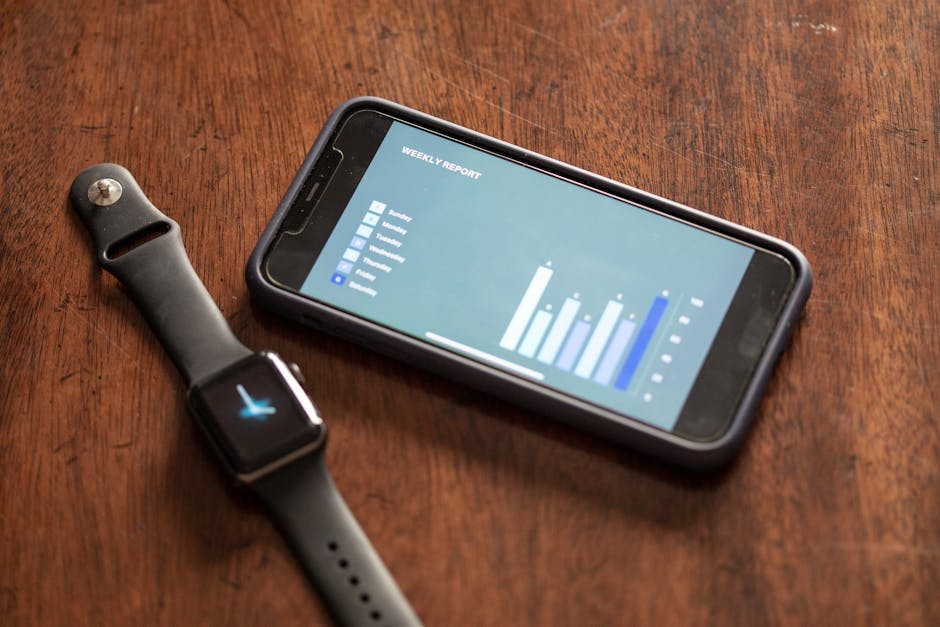
Photo by RDNE Stock project on Pexels
This constrains display and input hardware more than connected devices. You need transflective MIP displays that remain readable in direct alpine sun without backlight drain. Physical buttons with 1.2mm travel that function through neoprene gloves. Haptic patterns that communicate zone changes without visual confirmation. Suunto’s offline navigation workflow succeeds because the UI was designed for the trail, not the living room. The hardware decision—bezel texture for grip with sweaty fingers, button placement for thumb operation while holding ski poles—determines whether the athlete can actually use the device when they are moving at full effort.
Reconciliation as a Hardware Timing Problem
When connectivity returns, the sync-later sport hardware faces a synchronization challenge that online-first devices never encounter. The device has been the authoritative record for days. The cloud may contain stale data or conflicting sessions from other devices.
This is not merely a software problem. The radio must wake intelligently to avoid draining the battery during extended sync operations. The file system must support atomic writes so that a failed upload does not corrupt the local archive. You need hardware clocks accurate enough to establish temporal ordering of events when the device reconnects after a week in airplane mode. Devices that require constant phone tethering forfeit the backcountry use case entirely. Engineering for offline-first operation means designing the RF subsystem to burst efficiently and the storage to maintain integrity across thousands of power cycles.