School Districts Buy on Unit Cost, Not Total Cost of Ownership
School districts buy equipment through RFPs that prioritize unit cost and safety certifications, yet the true cost of ownership emerges in the gymnasium where unsupervised innovation occurs. A consumer heart rate monitor fails when submerged; a school heart rate monitor fails when a seventh-grader wonders if it floats in a toilet or how far it will skip across concrete. This difference is not merely a matter of waterproofing grade. It is a fundamental shift in how we model user behavior. Where consumer student sports device engineering assumes voluntary engagement and self-interest, education sports equipment design must assume antagonistic entropy. The product will be dropped, kicked, stepped on, and repurposed as a projectile. These are not edge cases. They are the operating environment. When Fitbit attempted direct entry into school districts with consumer-grade trackers, the failure rate in semester one reached forty percent, not because the hardware was poorly made, but because the social contract of ownership was absent. For procurement teams comparing spec sheets, this means that the lowest upfront price often guarantees the highest replacement volume by spring.
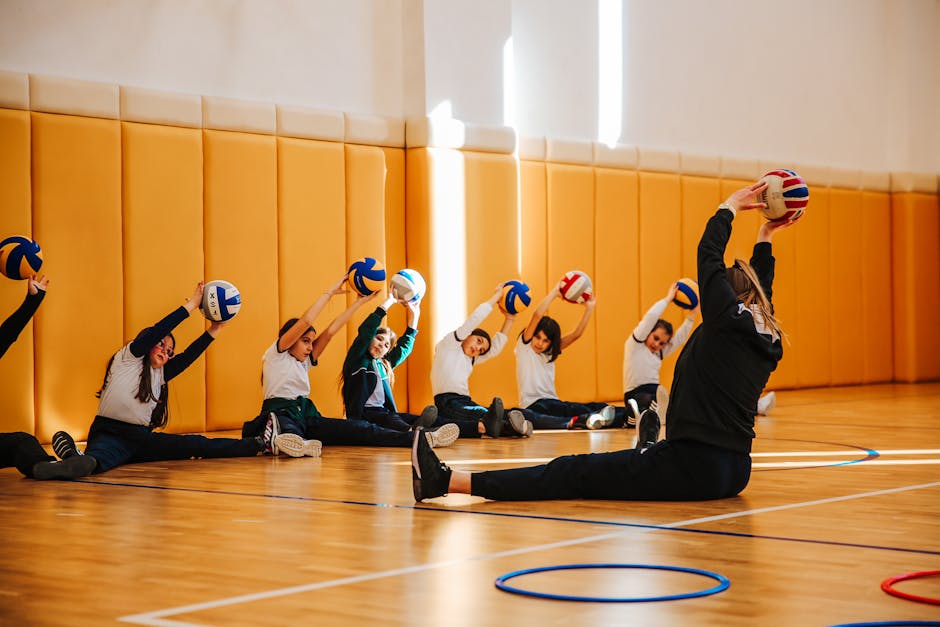
Photo by Xhemi Photo on Pexels
Transparency Signals Fragility and Changes How Students Handle Devices
Manufacturers often respond to this reality by overbuilding with steel reinforcements, rubber armor, and proprietary fasteners that require specialized keys. Yet this approach ignores the second constraint: the PE teacher with ninety seconds to distribute thirty units before the bell rings, with no assistant and no time to hunt for tiny screws. School PE equipment design achieves longevity through intuitive interaction rather than indestructibility. When Gopher Sport designs pedometers for elementary use, the housings are translucent not for aesthetics but to reveal internal components, making the device feel fragile even when it is reinforced with polycarbonate. Students handle transparent objects more carefully. The durability is psychological before it is material. Furthermore, the battery compartments use captive screws attached to the housing body, not because children steal batteries, but because dropped screws disappear into gym floor cracks forever, rendering the unit unusable for warranty service.
One-Handed, No-Look Operation Is Not a Nice-to-Have
That distribution moment reveals why PE class equipment UX operates under compression unknown to consumer hardware. The teacher cannot read a manual while breaking up a dodgeball dispute or applying ice to a twisted ankle. Every interaction must be discoverable at a glance, operable with one hand, and forgiving of syrup-sticky fingers. Buttons require distinct tactile profiles so they can be distinguished without looking. Charging docks must be orientation-agnostic because they will be used by children who cannot yet read and by substitute teachers who received no training. Polar learned this with their school heart rate systems: their consumer chest straps use finicky snaps that require dexterity, but their institutional versions employ wide, tactile buckles that click audibly—a design choice that allows teachers to verify proper closure without pausing supervision of the class.
Photo by Xhemi Photo on Pexels