Why IP68 Ratings Fail Against Sweat Corrosion
Standard ingress protection ratings deceive hardware teams. IP68 certification tests submerge devices in deionized water under static pressure. Sweat behaves differently. The sodium content in human perspiration creates galvanic cells between dissimilar metals. When aluminum enclosures contact stainless steel inserts, or when copper traces meet gold-plated pads, salt bridges complete electrical circuits that accelerate corrosion.

Photo by Erlan Shatmanov on Pexels
Early fitness trackers experienced epidemic failure rates in Southeast Asian markets despite IP67 ratings. The devices survived the shower test in the lab but corroded at the charging pins within weeks of real use. This revealed that sweat-resistant device design requires validation against ASTM B117 salt spray standards or custom electrolyte solutions, not just IEC 60529 water immersion. A device sealed against static pressure will still fail if capillary action draws sweat into seams during thermal cycling.
Thermal Management and Moisture Protection as Coupled Problems
Thermal management and moisture protection cannot be designed independently in humid weather electronics design. Ambient heat reduces the efficiency of convective cooling, forcing devices to rely on conductive paths to the skin or air gaps. When sweat enters this interface, it initially improves thermal conductivity. Then evaporation cools the skin but deposits salt crystals that insulate sensors and create electrical bridges.
Processors throttle performance when junction temperatures exceed safe limits. In hot climates, this happens faster because sweat-salt buildup acts as a thermal barrier. Heat-resistant sports device engineering must account for the fact that users generate 200 to 600 watts of metabolic heat, adding to 35°C ambient conditions. The enclosure must dissipate this heat while preventing sweat from reaching the PCB. This usually requires isolating the thermal path from the sealing geometry. Heat sinks that contact the skin directly provide efficient cooling but create capillary highways for perspiration. Successful designs use internal vapor chambers or thermal vias that move heat to radiative surfaces away from sweat channels.
Materials as Chemical Defense Systems
Perspiration-resistant device architecture starts with material selection that assumes continuous electrolyte exposure. Standard FR4 circuit boards with HASL finishes fail quickly in salty environments. ENIG provides better corrosion resistance but creates galvanic potentials with aluminum housings.
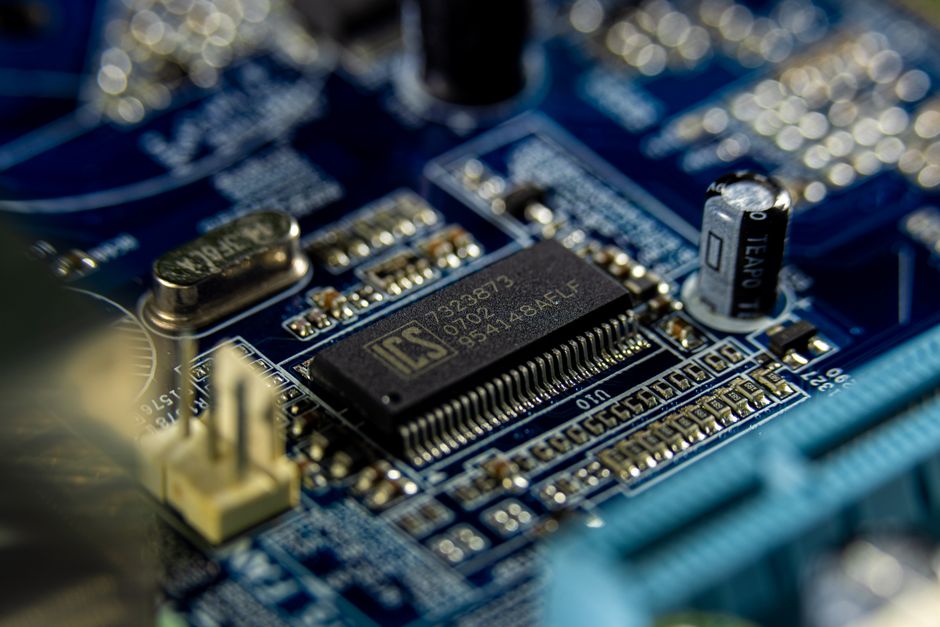
Photo by Sergei Starostin on Pexels
Conformal coating selection becomes critical. Acrylic coatings offer moisture resistance but dissolve in the fatty acids present in sweat. Urethane provides chemical resistance but traps heat. Parylene C offers the best barrier to both moisture and chemicals, though it requires vacuum deposition that adds cost.
Mechanical interfaces demand equal scrutiny. Charging pins require overmolded seals or wireless induction to eliminate failure points. Buttons must use piezoelectric or physical switch mechanisms rather than capacitive sensing, which malfunctions when wet. The product engineering phase must specify galvanic compatibility matrices that ban certain metal pairings within the sweat path.
The Moment of Accumulation
Design validation requires anchoring to a specific moment of use. Consider a runner in Bangkok at 6:00 AM with the temperature at 32°C and humidity at 90 percent. During a forty-five minute run, this user produces three liters of sweat. The device strapped to their wrist experiences not occasional splashing but continuous immersion in a warm salt solution while the processor logs GPS and heart rate data.
Tropical-proof electronics must function during this accumulation, not merely survive it afterward. This changes the user interface logic. Screens must remain readable through water droplets, requiring specific polarization treatments or transflective displays. Haptic feedback must penetrate fluid layers between skin and device. Touch targets must accommodate fingers slick with perspiration. Sweat-proof wearable UX means the device continues to deliver accurate biometric data when the optical sensor window is partially obscured by liquid. Some designs now incorporate hydrophilic wicking channels that pull sweat away from sensors rather than trying to seal against it entirely.