Bang Design

How to Design Wearables for Kids

A seven-year-old receives a fitness tracker sized for an adult wrist. Within an hour, the band is twisted around her fingers like a ring, the clasp is being tested against her teeth, and the screen protector is peeling because she found out it could. By lunch, it’s in her pocket. By dinner, her parents have hidden it. The device was engineered for a body that doesn’t exist in her life, with assumptions about how wear happens that collapse the moment a child approaches it with the full creative force of boredom and curiosity.

This is the core constraint of pediatric wearables: you are designing for a user who is not a small adult, but an entirely different category of adversary. Children’s devices aren’t judged by engagement metrics or design elegance. They’re judged by whether they survive the forces that will actually be applied, the removal attempts, the bite testing, the creative destruction that comes from a user with zero incentive to keep your product intact and every incentive to see what happens if they don’t. The teams that win in this space stop designing for compliance and start designing for resilience: hardware that either earns continued wear through genuine utility, or is engineered to degrade predictably under the exact forces that will inevitably be used against it.

Wrist Circumference Growth Obsoletes Static Sizing Within Months

That rapid anthropometric shift means static sizing fails within months, not years. A device sized for a five-year-old becomes a tourniquet by seven, cutting off circulation or creating pressure sores that lead to non-compliance. Yet adjustable straps with traditional buckle mechanisms introduce mechanical failure points and pinch hazards that violate ISO 8124 toy safety standards. The solution is not incremental sizing but architectures that accommodate growth without conscious adjustment. Stretchable conductive threads woven into elastic substrates, accordion-fold TPE structures that extend radially, or modular band systems that parents can replace without tools when the circumference exceeds 150mm. This shifts the constraint from industrial design to material science, demanding elastomers that maintain electrical continuity across 40% elongation cycles while resisting UV degradation from playground exposure. You are not designing a watch band. You are designing a compliant mechanism that happens to tell time.
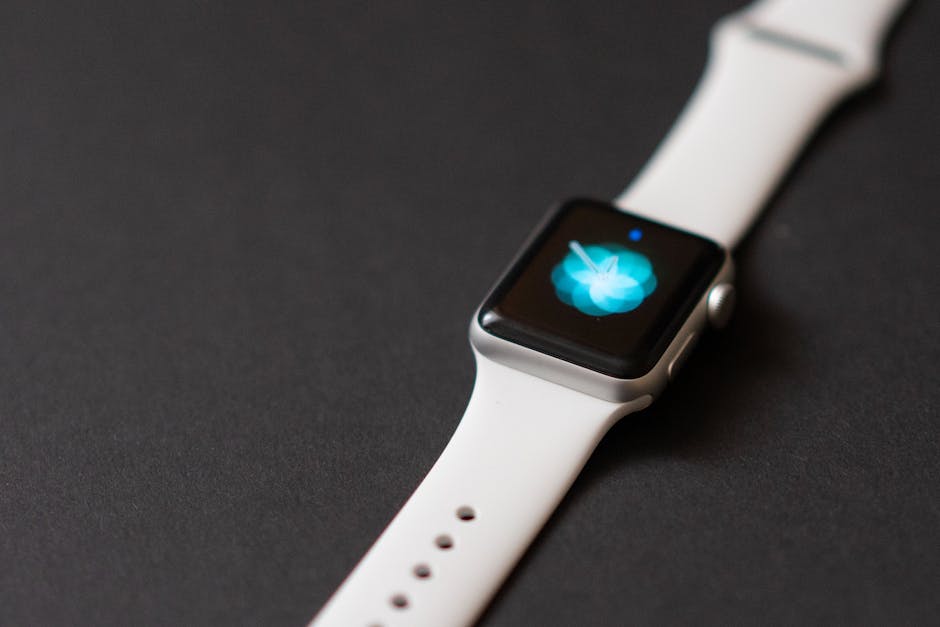
Close-up of a sleek smartwatch with a white strap on a dark surface, showcasing its digital clock display.

Photo by Atlantic Ambience on Pexels

Pediatric Skin Chemistry Requires Bioactive Material Strategies

That same physiological volatility attacks the materials enclosing them. Child epidermis runs 0.5 to 1.0 pH points higher than adult skin, accelerating hydrolysis of standard polycarbonate blends and causing delamination of plated surfaces within weeks. Sebaceous gland density differs dramatically by age group, creating moisture traps under silicone straps that breed Staphylococcus and Streptococcus colonies if antimicrobial additives are absent. Then there is the oral phase: any protrusion under 35mm will enter a toddler’s mouth, exposing the device to enzymatic saliva containing alpha-amylase and lipase, plus bite forces exceeding 500 Newtons concentrated on small surface areas. Durable wearable product design for this demographic requires medical-grade liquid silicone rubber with embedded silver-ion antimicrobials, overmolded polycarbonate shells with zero draft angles to eliminate pinch points, and surface textures that resist teeth grip through micro-ribbing rather than smooth gloss. The material specification list for a kid-safe wearable device reads more like a dental implant than a fitness tracker, and the biocompatibility testing budget must match that ambition.

Ingress Protection Must Survive Intentional Submersion and Abuse

Those material choices mean nothing if the enclosure fails during the behavioral chaos that defines childhood use. IP67 ratings assume accidental immersion in clean water. Pediatric devices face intentional submersion in bathwater, applesauce, and sandbox particulate matter that abrades seals. Accelerometer data from deployed units shows children generate impact forces double those of adults through repeated throwing, stepping, and striking against hard surfaces during tantrums or play. Child wearable ergonomics must prioritize impact dissipation over slim profiles, accepting bulk as a feature rather than a bug. This means structural ribbing inside the housing to distribute point loads, strain relief at cable exits that withstands 90-degree bends 10,000 times, and ultrasonic welding that eliminates seam gaps where glitter glue or bodily fluids can ingress and corrode PCBs. Aesthetic cleanliness becomes an engineering liability when smooth surfaces crack under torsional stress. The form factor must telegraph robustness through visual language: rounded geometries that roll when dropped rather than catching on edges, raised bezels that protect the display from face-down impacts on concrete, and mass distribution that prevents the device from spinning around the wrist into the palm during climbing. You are designing for a drop test from a moving bicycle onto asphalt, not a desk.

A mother and daughter connect through digital technology in a modern setting.

Photo by Ron Lach on Pexels

Child-Friendly UX design Demands Binary Interaction Models

The interface layer faces equal hostility. Children lack the fine motor control and cognitive patience for multi-step navigation or capacitive sliders that require sustained contact. This means binary interaction models: one actionable input, immediate haptic or LED feedback, zero menu drilling. Haptic patterns must be distinct enough to differentiate between parent alerts, friend notifications, and achievement rewards without requiring visual confirmation during active play. Color-coded LED states work better than screens for children under eight, reducing cost, fragility, and sleep disruption simultaneously. Most critically, the device must fail gracefully when removed. If a child takes off a medical monitoring wearable, the system needs to alert caregivers through the paired hub without punishing the child through alarm fatigue that encourages further rejection. The UX architecture assumes the device lives in an adversarial relationship with its user, designing for compliance through delight and gamification rather than enforcement, while maintaining the wearable safety standards required for unsupervised use.

Designing pediatric wearables means accepting that your user actively wants to destroy your product through growth, chemistry, and creativity. That constraint forces innovation in material selection, compliant mechanisms, and interaction models that often surpass adult wearable sophistication. The teams that succeed recognize they are not miniaturizing technology for small people. They are engineering for a biological and behavioral environment that treats every attached object as a teething toy, a fidget device, or a foreign body to be escaped. Victory belongs to designers who architect for entropy.

If you are navigating the regulatory labyrinth and material complexity of pediatric wearable technology, Bang Design has spent 25 years taking products from concept to manufactured reality across consumer, medtech, and industrial sectors. Their subscription-based model means you get a full-stack team designing for bite forces and growth velocity without the overhead of a traditional agency. Explore their work or start a project.

See all plans

Get in touch with us

By registering, you confirm that you agree to the processing of personal data by BangDesign as described in our privacy policy