Why Cuff Mechanics Determine Signal Integrity
The oscillometric method depends on consistent arterial compression geometry to detect the pressure oscillations that indicate systolic and diastolic endpoints. For seniors, this is where products fail first. A&D Medical‘s UA-651SL and similar traditional designs require bilateral dexterity to thread a D-ring and pull the fabric tight, a motion that assumes grip strength and fine motor control that arthritis gradually erodes. When the cuff sits crooked or loose, the sensor detects motion artifact rather than pressure oscillations, producing the “inconsistent readings” that plague reviews and lead to product returns.

Photo by Yaroslav Shuraev on Pexels
Blood pressure cuff hardware engineering for elderly populations must eliminate the need for precise hand positioning. Pre-formed rigid cuffs that snap into place, like those in Omron‘s Intelli Wrap series, guide the arm into correct positioning without requiring the user to hold the device steady while securing it. The bladder shape matters too: tapered designs that concentrate pressure over the brachial artery reduce the positional sensitivity that makes standard cylindrical cuffs unforgiving for trembling hands. A cuff positioned one centimeter off the brachial artery produces a five to seven millimeter of mercury error in a healthy subject, but that error doubles when the artery has lost elasticity and the sensor must distinguish smaller oscillation amplitudes.
Oscillometric sensor design cannot compensate for poor cuff mechanics. The pressure transducer detects volume changes in the artery, but if the cuff slides or gaps during inflation, the signal-to-noise ratio degrades before the algorithm processes a single data point. Senior-friendly BP monitor design treats the cuff as the primary user interface, not an accessory, because the mechanical connection between arm and sensor determines whether the device receives valid data. The engineering decision to optimize the bladder geometry and closure mechanism has more impact on measurement consistency than the sensor resolution itself.
Displays and Interaction Must Compensate for Presbyopia and Fine Motor Loss
Even with perfect cuff placement, the measurement fails if the user cannot interpret the result or initiate the sequence. Morning hypertension checks often occur before caffeine in a kitchen when essential tremor is highest and cognitive resources are most taxed, the precise moment when complex button sequences, small touch targets, or app-dependent workflows collapse.
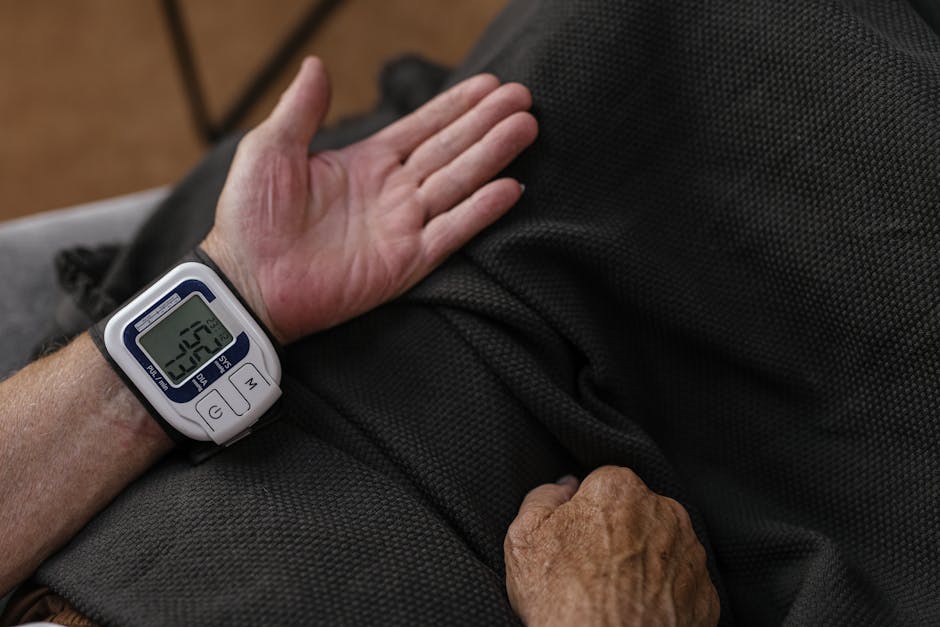
Photo by SHVETS production on Pexels
Large display medical device design addresses presbyopia through more than font size. iHealth‘s Track Smart and similar app-first devices fail here by offloading the reading to smartphone screens that seniors struggle to navigate, while the device itself offers minimal feedback. Effective designs use high-contrast LCDs with backlighting and viewing angles optimized for users who cannot hold the device at arm’s length. The numerals must remain legible when the monitor sits on a kitchen table viewed from above through bifocal lenses, not just when held at eye level. Color coding helps, amber for pre-hypertension and red for stage one, but only when the colorblind-friendly patterns remain distinct under yellow indoor lighting.
One-touch BP monitor UX means eliminating mode selection entirely. The device should handle inflation velocity and deflation rate automatically based on real-time pressure feedback, without requiring the user to pre-select “User 1” or “Guest” modes that demand accurate short-term memory. A&D Medical solves this through automatic inflation algorithms that adjust to arm size, while Omron eliminates the “start” button complexity found in clinic-grade devices. Button travel and tactile feedback matter equally; membrane switches with shallow travel and no audible click provide no confirmation for users with diabetic neuropathy who cannot feel their fingertips. Each additional decision point in the interaction flow introduces failure modes for users with mild cognitive impairment or medication-induced confusion.