Tactile Language in a Visual Vacuum
Once the instrument crosses the lips, the dentist relies on the fulcrum technique, with fingers resting on adjacent teeth for stability, meaning the grip geometry must accommodate a hand position that never looks at the device itself. In intraoral device design, buttons cannot require visual targeting; they must present distinct heights, textures, or detents detectable through nitrile gloves that reduce fine tactile discrimination by nearly 40 percent. Early intraoral cameras failed adoption because they required practitioners to glance at control panels, breaking visual contact with the anatomy. Modern systems like the iTero Element scanner integrate gesture controls or foot pedals, keeping the workflow eyes-up, a competitive advantage because the practitioner never loses position. Dental instrument UX is not about screen clarity but about whether the practitioner can distinguish capture mode from standby without looking. The industrial design becomes the interface architecture.

Photo by Cedric Fauntleroy on Pexels
When Sterilization Changes Your Sensor Calibration
That tactile interface must survive the autoclave. Dental equipment for chair-side use requires materials that tolerate 121°C steam cycles without dimensional creep, which would misalign optical paths or shift button tolerances. Polycarbonate housings common in consumer medical devices warp under repeated sterilization, altering the precise tolerances required for intraoral imaging sensors. You are selecting materials not for durability in the consumer sense, but for metrological stability. A dental imaging device that loses calibration after fifty sterilization cycles creates liability through measurement drift, not mechanical failure. The housing material becomes a signal integrity decision that affects patient diagnosis six months into the device’s service life.
The Sterile Field Boundary
Material stability solves the thermal problem, but connectivity creates a sterility hazard. Cables snagging on chair arms breach the sterile field, forcing assistants to break protocol mid-procedure. This is why chair-side dental device design increasingly favors sealed wireless architectures, despite the engineering penalty of battery weight and thermal generation inside an already warm oral environment. The alternative, cable management integrated into the instrument geometry, requires collaboration between the industrial designer and the clinic architect, routing cords through the chair itself. Either approach treats the cable not as a power solution but as a contamination vector. The connectivity choice determines whether the device can remain in the operatory during the procedure.
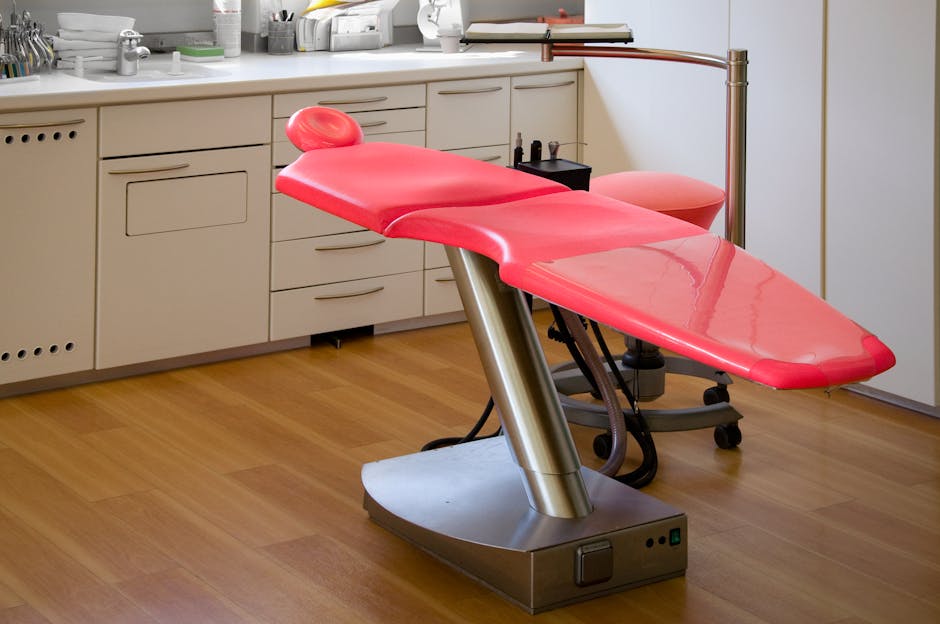
Photo by mali maeder on Pexels
Chair-Side Economics and the 60-Minute Ceiling
Even a perfectly sterile, tactilely intuitive device fails if it disrupts the appointment cadence. A chair-side diagnostic device must integrate into the existing tray setup within 90 seconds, because hygienists schedule patients every 30 to 60 minutes and cannot absorb complex calibration rituals between prophylaxis appointments. Consider the difference between first-generation fluorescence caries detectors, which required darkroom adaptation and multiple accessories, and modern integrated systems that clip into standard handpiece couplings. The latter succeed not because the sensor improved, but because the workflow friction disappeared. If the device adds setup time that pushes the schedule, it costs the practice revenue regardless of diagnostic accuracy. Clinical value means nothing if the economics fail.