Power Supply as Acquisition Component
That instability starts with electrons. Hospital-grade equipment assumes 120V/230V mains with ±5% tolerance and grounded neutral. Mobile clinics draw from idling alternators, solar inverters with voltage sag, or shore power at fairgrounds where neutral and ground float unpredictably. A van-mounted healthcare device must regulate its own power as aggressively as it processes its signal. This means isolated DC-DC converters, supercapacitor banks for motor-start sag, and battery architectures that bridge the gap between engine-off silence and generator racket. The power supply becomes part of the acquisition chain; a 50mV ripple in the input can modulate a photodetector signal in ways that look like pathology. Philips‘ portable ultrasound systems address this with hot-swappable battery sleds that maintain ground isolation, but they assume you have time for a controlled swap, a gap that matters when the alternator dies mid-procedure. True transport medical device engineering designs for the moment when the device must complete its acquisition on stored joules without rebooting, corrupting data, or losing the sterile field. Fixed costs here are high, medical-grade isolation transformers and LiFePO4 cells add BOM weight, but they scale across every mile of unpaved road.

Photo by Mikhail Nilov on Pexels
Vibration Isolation as Structural Design
Power stability means nothing if the sensor head shears off on a pothole. Vehicle-mounted diagnostic devices face vibration spectra that differ from both fixed installations and handheld gear: low-frequency heave from suspension travel (1-10 Hz), high-frequency buzz from diesel engines (100-200 Hz), and shock from curb strikes that generate hundreds of Gs momentarily. IEC 60601-1-11 addresses home healthcare vibration, but mobile clinics operate under commercial vehicle duty cycles closer to military transport specifications. Mounting solutions must decouple the device from the chassis while surviving daily acceleration loads that would shatter standard rackmount ears. RAM mounts work for tablets, but precision optics or fluid-handling systems need tuned mass dampers, gel-isolated subframes, or active piezoelectric cancellation. The housing becomes a suspension system. Sealing shifts from IPX4 splash resistance to IP6X dust tightness, because rural access roads do not stop for calibration schedules. Manufacturing partners must understand that a screw torque spec validated in a cleanroom loosens itself under harmonic vibration; thread-locking compounds and captive fasteners are not optional accessories.
EMC Testing in the Vehicle Enclosure
Mechanical survivability means little if the device fails electromagnetic compliance the moment the ignition turns over. A mobile health unit device certified only to stationary hospital standards will pass EMC tests in an anechoic chamber and fail inside a steel box surrounded by ignition coils, two-way radios, and cellular boosters. The Faraday cage of the van body creates resonant cavities; the device must neither emit nor be susceptible within that metal topology, while also surviving temperature swings from desert parking lots to mountain passes. FDA guidance now requires vibration testing per ASTM D4169 and thermal cycling beyond IEC 60068-2-14, but the real compliance risk is electromagnetic. Device teams must conduct radiated emissions testing with the unit installed in a representative vehicle, not just on a bench, because the ground plane changes everything. product engineering teams that skip this step discover interference patterns only after deployment, when the EKG trace picks up the turn signal or the infusion pump resets at highway speed.
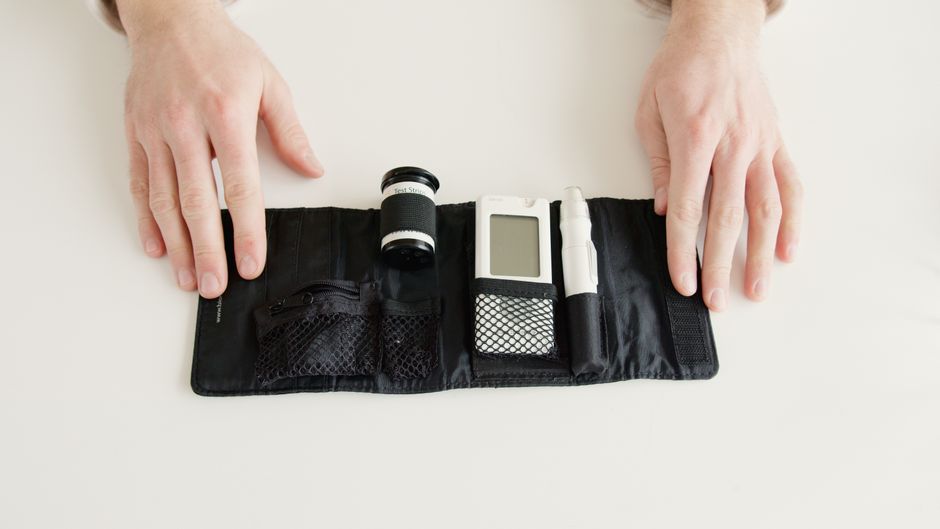
Photo by Artem Podrez on Pexels