Bang Design

How to design disinfectant-ready devices for hospitals

A handheld diagnostic scanner moves between seventeen patients on a med-surg floor before noon. Between each encounter, a nurse performs a thirty-second wipe with a bleach wipe or hydrogen peroxide cloth. The device survives drops, dust, and bag checks. But by month eight, the housing crazes. By month twelve, the display delaminates. The unit is removed from service not because of electronic failure, but because cracks harbor pathogens that no wipe can reach.

Clinical disinfection protocols are chemical stress tests that operate on timelines industrial designers rarely encounter in consumer electronics. The concentration of sodium hypochlorite or quaternary ammonium compounds used between patient encounters degrades standard polymers faster than UV exposure or thermal cycling. Designing for hospital device disinfection requires accepting that material stability against aggressive chemicals is the primary mechanical constraint. It dictates every downstream decision from thermal management to antenna placement, and teams that treat chemical resistance as a coating afterthought design devices that fail compliance audits within a year.

How Hospital Disinfectants Crack Standard Plastics

Standard PC/ABS blends and unfilled nylons that survive office drops begin stress cracking within months of exposure to hospital-grade disinfectants. The chlorine in bleach initiates chain scission in polycarbonate. Hydrogenyl groups in hydrogen peroxide attack ester linkages in polyester elastomers. This is not surface staining; it is structural degradation that creates microchannels where *Clostridioides difficile* spores survive terminal cleaning.

Close-up of wall-mounted soap, sanitizer, and paper dispenser in a sterile environment.

Photo by Ivan Babydov on Pexels

Clinical device chemical resistance cannot be solved with a conformal coating or a rugged rubber boot. The substrate itself must resist chemical attack, pushing teams toward medical-grade polymers like PPSU, PSU, or chemically resistant TPU blends that cost three to five times standard engineering plastics but survive five-year depreciation cycles.

Why IP65 Ratings Miss the Disinfection Threat

Ingress protection ratings measure static resistance to water and dust. They do not account for the vaporized hydrogen peroxide used in terminal cleaning of patient rooms, or the swelling that occurs when EPDM gaskets meet quaternary ammonium compounds over six months. The Zebra TC52-HC and similar healthcare rugged computers specify chemical resistance testing beyond IP ratings because a sealed hospital handheld can achieve IP67 and still fail when its gasket material undergoes compression set, creating a path for cleaning fluids to pool behind the lens, a gap that matters because terminal cleaning occurs whether or not your sealing strategy anticipates it.

Effective healthcare rugged device design requires sealing strategies that anticipate chemical compatibility across the entire wetted surface, including adhesive selection for display bonding and the metallurgy of spring contacts. A seal that survives water immersion may still degrade when exposed to oxidative disinfectants daily.

The Wiping Motion as a Mechanical Load Case

Beyond chemistry, the physical act of disinfection applies abrasive forces. A nurse applies two to three pounds of pressure with a textured wipe, moving in circular patterns across the device surface. Over a five-year service life, this represents over ten thousand abrasion cycles. Sharp geometric transitions become failure initiation points. Laser-etched logos create valleys that trap bioburden. Soft-touch coatings that feel premium in the hand delaminate under mechanical scrubbing.

Surface finish specifications for medical device cleaning resistance must prioritize cleanability over aesthetics, favoring smooth, self-draining geometries with minimal surface area and radiused edges that allow wipes to maintain contact pressure without snagging. Any texture deeper than 0.1mm becomes a reservoir for pathogens in high-acuity settings.

Antimicrobial Coatings: Insurance, Not Replacement

Embedded silver ions or copper additives can reduce bioburden between cleanings, but they create regulatory and design risks. The EPA regulates antimicrobial claims strictly. An unregistered device marketing protection faces immediate distribution holds. More critically, antimicrobial hardware can create a false sense of security that leads to reduced cleaning frequency, actually increasing cross-contamination risk.
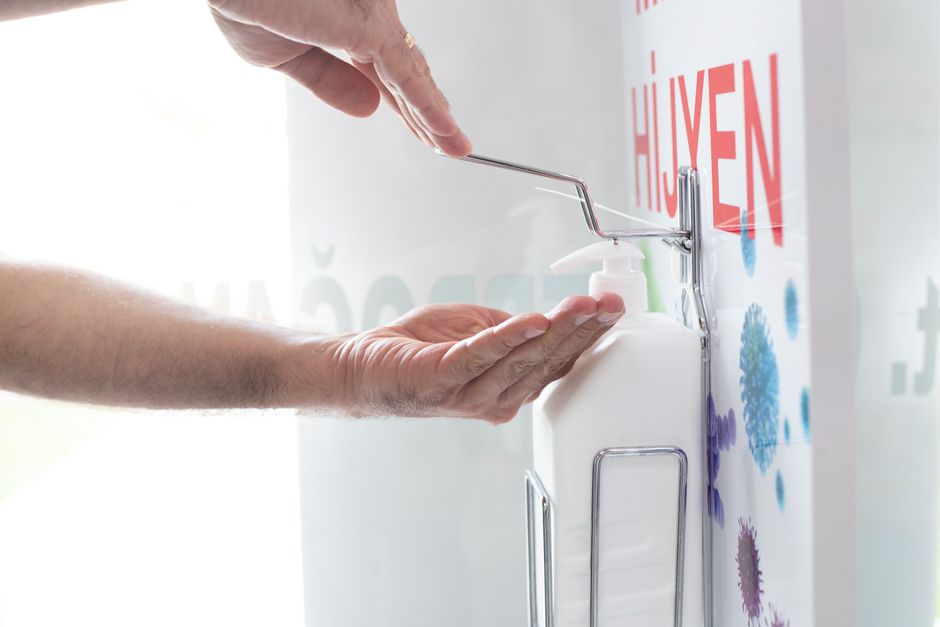
Close-up of hands using a liquid disinfectant dispenser in a clean environment emphasizing hygiene.

Photo by Enis Yavuz on Pexels

Integrating antimicrobial additives requires treating them as insurance against residual contamination, not a replacement for chemical resistance. The housing must still survive the same disinfection protocols whether or not it contains bacteriostatic compounds.

Designing for the Thirty-Second Wipe Between Patients

That reality manifests in a specific moment of use. The critical interaction occurs at the nursing station between patient rooms, where the device is powered on and running on battery while a nurse performs a wipe-down. Liquid must not ingress through the charging port cover. Labels must remain legible after alcohol exposure. The touchscreen must function with residual moisture. If the device requires removal of a protective case for effective cleaning, the protocol will be skipped during high-acuity moments.

Every geometric decision, from the flushness of screws to the geometry of speaker grilles, must assume the device will be wiped while hot and operational. Infection control compliance depends on cleaning convenience as much as chemical survivability.

Accepting the Thermal and RF Penalties

The materials that survive these chemical and mechanical assaults impose engineering penalties elsewhere. Chemically resistant polymers like PEEK or reinforced PSU typically exhibit poor thermal conductivity compared to aluminum or standard plastics. Sealed enclosures prevent convective cooling. The result is a device that runs warmer, requiring thermal vias and spreader designs that add cost. Similarly, metalized coatings for electromagnetic shielding may react with chlorine-based cleaners, forcing reliance on conductive paints or internal shielding cans that consume volume.

These constraints are non-negotiable. Teams that attempt to optimize for thermal performance by switching to chemically vulnerable materials discover late in validation that their device cannot survive the cleaning protocols required for FDA 510(k) clearance in clinical settings.

Navigating these material and sealing trade-offs requires an integrated approach where industrial designers, mechanical engineers, and regulatory specialists collaborate from concept through validation. If you’re developing equipment that must survive the realities of hospital disinfection protocols, Bang Design has spent 25 years taking medical devices from concept through clinical deployment across health and life sciences, manufacturing, and product engineering. Their subscription-based model means you get a full-stack team without the overhead of a traditional agency. Explore their work or start a project.

See all plans

Get in touch with us

By registering, you confirm that you agree to the processing of personal data by BangDesign as described in our privacy policy