Skin Integrity Determines Sensor Architecture
That thermal vulnerability extends to mechanical fragility. Neonatal skin is 40% thinner than adult skin, with a stratum corneum only two to three cell layers deep. Standard medical-grade adhesives rip this barrier away, and pulse oximeter probes designed for adult fingers crush capillary beds when clipped to a 750-gram foot. Masimo developed the LNCS Neo sensor specifically to reduce spring tension below 100 grams of force, while Philips‘ IntelliVue MX system uses lead wires that flex rather than transmit torque to electrodes. These modifications eliminate a failure mode that standard pulse oximetry never encounters: pressure injury. Even cable weight becomes a clinical variable, 100 grams of lead wire draped across a thorax restricts respiratory effort in a patient breathing 40 milliliters per tidal volume. When GE Healthcare redesigned the Giraffe incubator family, they eliminated external cable ports that forced nurses to route leads across pressure points, instead creating internal raceways that support the entire harness mass. The design recognizes that routing path matters as much as sensor accuracy, because transepidermal water loss increases under any pressure that compromises skin barrier function. A sensor calibrated to clinical standards but attached with excessive force becomes a source of inflammation that alters the physiology it attempts to measure.
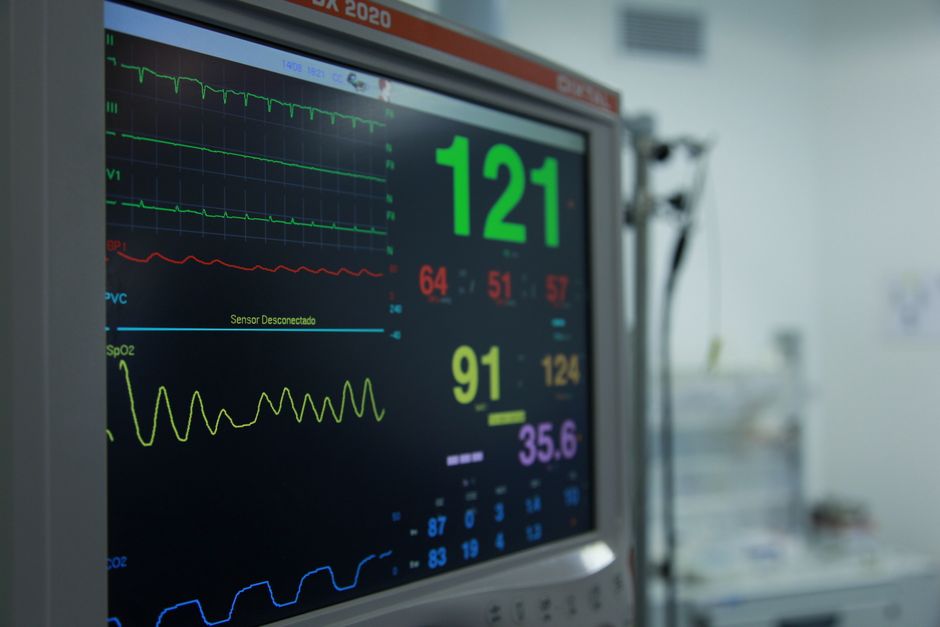
Photo by CARLOSCRUZ ARTEGRAFIA on Pexels
The Incubator as Signal Integrity Environment
Once sensors contact the infant without trauma, they must function inside a microenvironment that standard monitoring assumes is ambient air. Closed incubators like the Dräger Isolette maintain humidity at 80% and temperatures up to 37°C to limit evaporative water loss through immature skin. These conditions corrode standard PCB conformal coatings and shift capacitive sensor baselines, meaning neonatal monitoring hardware cannot be sealed adult technology scaled down. The humid thermal chamber creates condensation cycles that bridge traces on standard flex circuits, while servo-control systems cycling incubator heaters generate electromagnetic interference that induces noise in unshielded ECG leads. Manufacturers must specify parylene coating thicknesses and silicone overmolds that withstand autoclave cycles while maintaining signal integrity in saturated air. The incubator is not a container for the device; it is the medium through which the device must operate without introducing artifacts that trigger false alarms or erode clinician trust in the data. Because humidity gradients affect impedance, a temperature probe accurate in dry air drifts in the isolette, potentially masking the onset of late-onset sepsis.
Designing for Neurodevelopmental Silence
That controlled environment serves a developmental purpose beyond thermoregulation. The premature brain undergoes synaptogenesis during the third trimester, a process that should occur in the uterus but instead happens under phototherapy lights, alarm beeps, and handling disruptions. During routine care episodes like a heel stick performed through an incubator porthole at 3:00 AM, the infant must remain in flexion while maintaining IV lines, minimizing light and sound exposure to preserve sleep architecture. Devices designed for this reality route tubing through soft grommets that seal without hard snaps and incorporate quick-release mechanisms that allow sterile transfer to kangaroo care without dislodging sensors. Natus Medical incorporated amber status LEDs in their Olympic Cool-Cap system specifically to avoid blue-spectrum light that suppresses melatonin, while Philips’ BiliBed phototherapy units use fiber optics to separate the light source from the infant, eliminating fan noise and heat generation at the mattress surface. The interface becomes neuroprotective when audible alarms drop below 45 decibels and haptic feedback replaces auditory alerts during sleep periods, preserving the REM cycles essential for cortical maturation.

Photo by Speak Media Uganda on Pexels