Fixed Geometry Fails as Torso Circumference Expands
This anatomical volatility begins with the most visible constraint. The uterus expands 500-fold during gestation, stretching the abdominal wall and often separating the rectus abdominis muscles. Rigid PCBs and fixed sensor arrays lose skin contact within weeks, while elastic materials fatigue under constant mechanical load. The device cannot merely stretch; it must maintain consistent sensor pressure as the curvature of the abdomen changes from convex to dramatically convex, altering the focal distance of any acoustic or optical sensor. The curvature change affects acoustic coupling for Doppler sensors and optical path length for photoplethysmography, meaning that even if physical contact is maintained, the quality of the biometric acquisition degrades nonlinearly with gestational age. Designers must abandon traditional planar electronics for stretchable circuit architectures or modular expansion systems that users reconfigure as they enter each trimester, accepting that the hardware will require physical metamorphosis to match the biological one.

Photo by juliane Monari on Pexels
Maternal Cardiovascular Remodeling Obscures Fetal Signals
While the abdomen remodels externally, internal physiology drowns the signals those sensors seek. Blood volume increases by 50 percent, stroke volume rises, and resting heart rate accelerates, creating a cacophony of maternal biological noise that masks fetal heart rate or movement. A fetal movement tracker must distinguish between a kick and maternal breathing, gastrointestinal motility, or Braxton Hicks contractions, while the signal-to-noise ratio degrades as pregnancy progresses and amniotic fluid volumes shift. Static filtering algorithms fail because the noise profile itself evolves weekly. Machine learning models trained on third-trimester data fail catastrophically when applied to first-trimester baselines, forcing teams to either collect longitudinal training data across the full nine months or architect adaptive systems that recognize their own operational gestational window. Effective pregnancy wearable engineering requires gestational-age-aware signal processing that reweights maternal and fetal contributions to the biometric stream as the pregnancy advances, treating calibration as a continuous function rather than a factory setting.
clinical validation Conflicts with Consumer Usability
These physiological complexities intensify when the device must detect intermittent, high-stakes events rather than continuous metrics. Contraction monitors must distinguish Braxton Hicks from true labor, a challenge that has driven companies like Bloomlife to prioritize clinical validation over consumer convenience. Unlike fitness tracking, where temporary signal loss is acceptable, false negatives on fetal distress or premature labor carry liability implications that demand FDA Class II medical device standards. Yet users shower, sleep irregularly, and remove devices for comfort. This creates a power management paradox: clinical accuracy demands continuous sampling, but user compliance requires week-long battery life that heavy processing loads threaten. This often necessitates asymmetric architectures where low-power accelerometers wake high-fidelity acoustic sensors only when contraction patterns emerge, trading continuous monitoring for event-triggered surveillance that extends battery life without sacrificing clinical relevance. The tension between clinical rigor and domestic reality shapes every system decision.
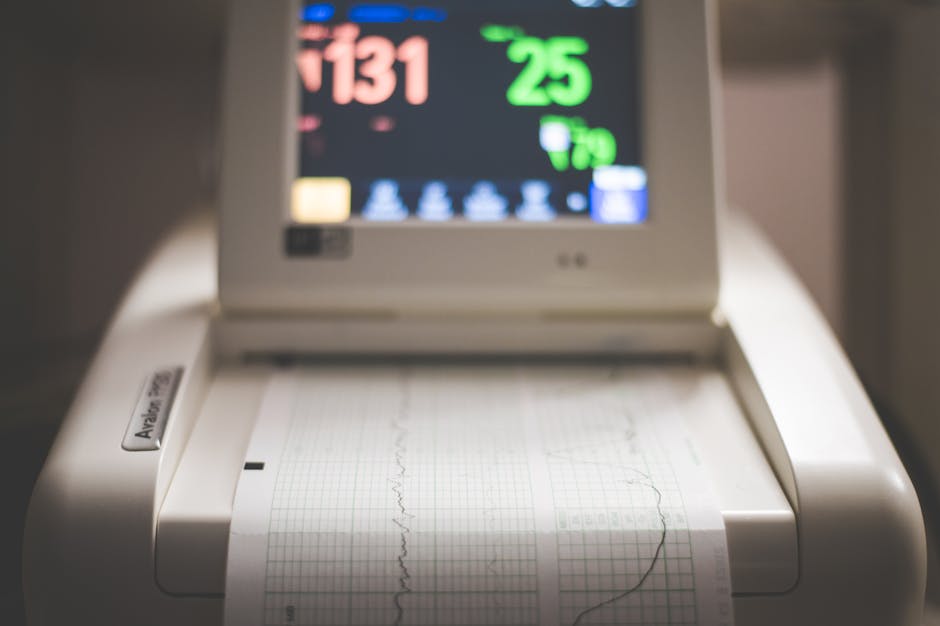
Photo by Stephen Andrews on Pexels