Cellular Redundancy as a Baseline Requirement
This prioritization of data resilience changes every layer of the hardware stack. Hospital telemetry assumes Ethernet backbones and UPS power; home patient monitoring device architecture must treat connectivity as the primary risk variable. This means cellular RPM device capability is not a premium feature but a baseline requirement, specifically Cat-M1 or NB-IoT modules that penetrate building materials better than standard LTE. The hardware must include redundant antennas positioned to avoid hand-blocking during patient interaction, store-and-forward memory buffers capable of holding 72 hours of critical data during network outages, and automatic failover logic that switches between WiFi, cellular, and Bluetooth mesh without patient intervention. Current Health’s hub approach, deployed through Best Buy Health, exemplifies this shift toward multi-network resilience. Power management becomes critical when modems draw current in bursts during tower registration; battery backup must sustain not just the sensors but the radio transmission cycles during power outages. The power budget and PCB real estate devoted to modems and memory often exceed that allocated to the physiological sensors themselves.
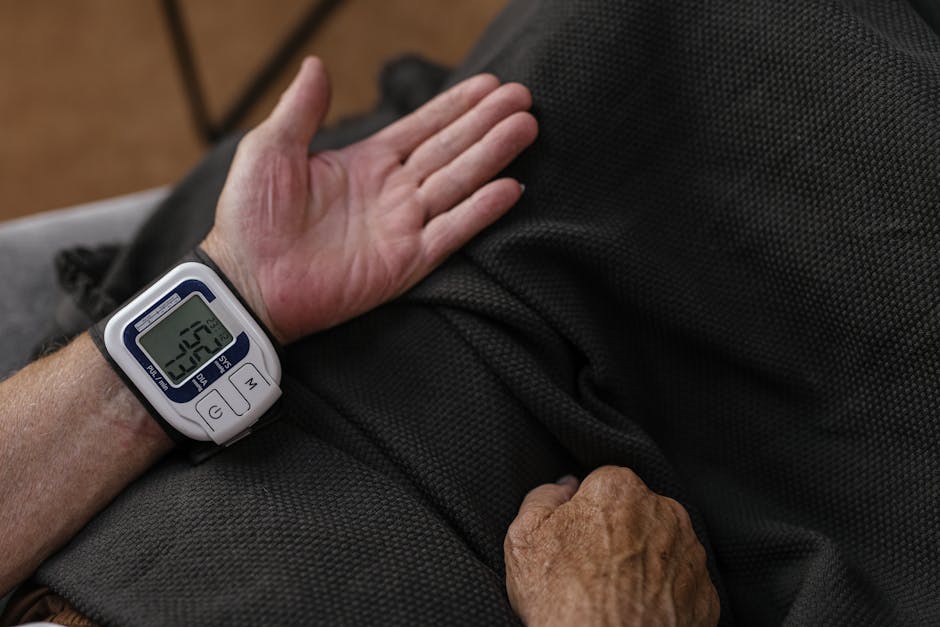
Photo by SHVETS production on Pexels
Environmental Design as Signal Integrity
Reliable transmission requires the device to survive conditions that destroy consumer electronics. A chronic disease monitoring hub sitting on a nightstand must withstand dust accumulation that would clog laptop fans, drops from waist height during medication reminders, and spills from bedside water glasses. RPM hub hardware design must prioritize IP54 ingress protection and fanless thermal management from week one, often utilizing heatsink thermally conductive plastics rather than vented enclosures. Thermal modeling changes significantly when the device lives inside a dusty cabinet rather than a climate-controlled server closet; passive cooling paths must account for dust filtration that restricts airflow. The enclosure selection becomes a signal integrity decision: a cracked housing allows moisture to corrode cellular antennas, creating intermittent connectivity failures that appear as data gaps in the clinician dashboard. Material selection favors polycarbonate over ABS for impact resistance, with living hinge designs for battery doors that survive thousands of open-close cycles. Design teams must validate drop tests not against military specifications, but against the specific physics of falling from a cluttered coffee table onto tile flooring.
The Bluetooth Peripheral Problem
Once the hub establishes its own reliability, complexity shifts to orchestrating a constellation of Bluetooth peripherals. A typical hub manages simultaneous connections with pulse oximeters, blood pressure cuffs, and weight scales, each with different pairing protocols and battery states. In congested 2.4GHz environments where home WiFi, microwaves, and neighbor networks create interference, the hub must maintain low-latency connections without requiring patients to re-pair devices. This requires dedicated radio management silicon and antenna diversity that consumer IoT devices omit, specifically BLE 5.2 with extended advertising for medical device profiles. The user experience failure mode here is subtle: a patient with early-stage dementia may not notice that their glucometer disconnected three days ago. The engineering response must be proactive connection health monitoring, haptic feedback for successful data transmission, and LED status indicators visible across a bedroom with 20/200 vision, not just subtle app notifications. Pairing workflows must assume the user cannot read 8-point font or perform complex button sequences.

Photo by i-SENS, USA on Pexels