Vibration Loosens Solder Joints Long Before Impact Failure
Emergency vehicle device specifications often lead with drop-test ratings, but the sustained vibration of ambulance transport is the silent killer of electronics. A unit responding to a cardiac arrest may experience harmonic frequencies between 5Hz and 2000Hz across variable road surfaces, loosening BGA solder joints long before the housing hits concrete.
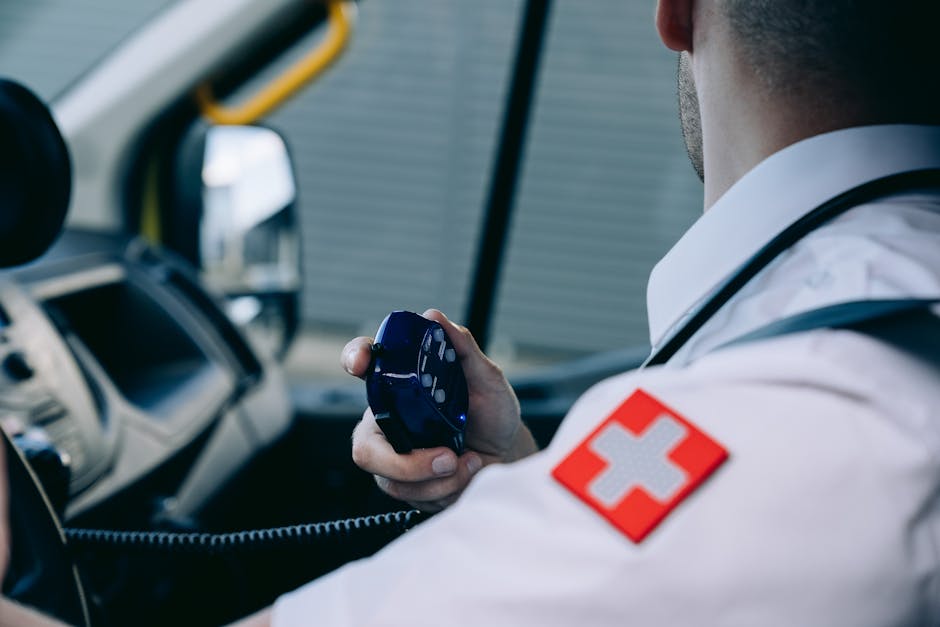
Photo by Mikhail Nilov on Pexels
This mechanical reality changes how you lay out the PCB. Stiffening ribs and potting compounds add weight that paramedics resent during twelve-hour shifts. The better approach integrates vibration damping into the mounting interface itself, isolating the board from the chassis before energy reaches sensitive components. Panasonic‘s Toughbook series suspended storage drives on gel dampers; modern ambulance tablet design achieves similar protection through strategic component placement and conformal coating that prevents micro-fractures without the mass penalty.
The consequence is clear: your mechanical engineering budget must prioritize harmonic analysis over simple impact resistance, because a device that survives a six-foot drop means nothing if the accelerometer drifts after three months of transport duty.
Thermal Whiplash in Sealed, Disinfected Cabins
That vibration isolation creates its own complication. Ambulance crews hose down cabins with disinfectant between calls, meaning any EMS rugged hardware needs sealed ports and fanless operation to achieve IP65 or higher ratings. But the same cabin becomes a solar oven when parked, reaching 60°C interior temperatures in summer, then shifts to refrigerated air conditioning the moment the engine starts.
This thermal stress forces a fundamental choice. Passive cooling through magnesium chassis works until the device mounts in a sun-facing cradle. Active cooling requires airflow that compromises biological sealing. The solution lies in phase-change materials or vapor chambers that absorb heat spikes during patient transport, buying enough time for the device to reach thermal equilibrium.
Samsung‘s Galaxy Tab Active series used removable batteries to limit heat generation per charge cycle, acknowledging that ambulance navigation hardware cannot throttle performance when GPS and LTE radios must remain active during emergency routing. If your thermal design assumes climate-controlled storage, the processor will throttle precisely when the paramedic needs to transmit 12-lead ECG data.
Gloved Fingers and Glanceable Interfaces
Thermal and mechanical stability enables the device to function, but the human interface determines whether it helps or harms. Paramedics work in nitrile or leather gloves, often contaminated, meaning touch targets must accommodate 8mm finger pads with wet capacitance. More critically, they operate during patient care moments where looking at the screen risks missing respiratory distress in a trauma patient.
Photo by Mikhail Nilov on Pexels
This shifts paramedic mobile device design from consumer touch paradigms toward glanceable, haptic-feedback systems. Physical emergency buttons with distinct tactile profiles allow drug dose confirmation without visual verification. Screen brightness must exceed 1000 nits for daylight ambulance interiors, yet dim instantly for night transport without menu navigation.
Zebra Technologies‘ healthcare tablets addressed this through programmable side buttons mapped to specific EMS workflows, recognizing that the device is not a general-purpose computer but a specialized tool for high-stakes data entry during movement. The UI failure mode here is not user frustration but medication error.