Institutional Support Disappears When Care Moves Home
That absence of institutional support means your device cannot assume baseline clinical literacy. Medtronic‘s MiniMed insulin pumps illustrate this transition. Earlier hospital-tethered devices relied on intensive in-service training programs where clinical specialists supervised initial uses. Current generation pumps intended for home use embed tutorial workflows directly into the touchscreen sequence, forcing users to navigate emergency stop protocols before the reservoir accepts insulin. The hardware prevents therapy initiation until the user demonstrates navigation competency through forced-choice interactions. This shift from external education to embedded constraint reflects a broader industry reality: as care moves downstream, the medical device training UX must compensate for disappearing expert oversight while satisfying stricter regulatory scrutiny. A failure in this context does not result in a service call. It results in an adverse event report.
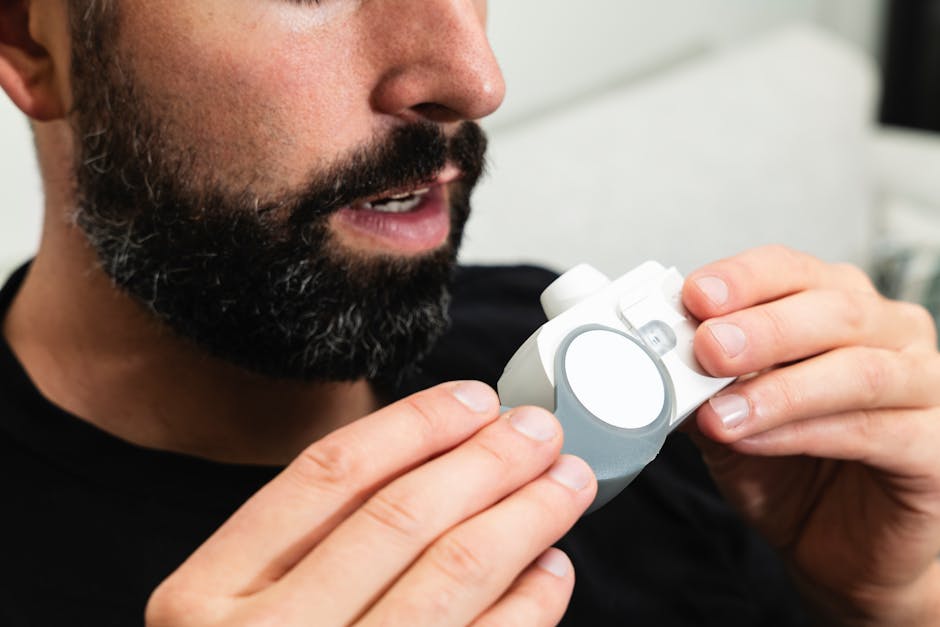
Photo by Cnordic Nordic on Pexels
Hardware Becomes the Instructor
Physical form can teach as effectively as screens. When a scrub nurse prepares a Da Vinci surgical system for a procedure, they perform a pre-use checklist under time pressure while the surgeon waits and the patient is anesthetized. Intuitive Surgical solved this not with a longer manual, but with haptic keying and LED status rings that make readiness visible from across the room. The device becomes a spatial communication system. Buttons illuminate in sequence. Latches provide tactile feedback that confirms sterile docking. Cannula insertion forces vary by stage, teaching correct assembly through resistance curves rather than visual diagrams. These are not aesthetic choices. They are training interventions that reduce cognitive load during high-stress onboarding, ensuring the device enters operational states only when physical confirmation aligns with user intent. A mismatch between perceived and actual readiness in this moment can cancel procedures or compromise sterile fields.
IEC 62366 Treats Training as Risk Control
These interventions are not optional. Under IEC 62366, human factors validation requires demonstrating that intended users can operate the device safely without prior device-specific knowledge. The standard treats training as a risk control measure, meaning you must prove your instructional method actually works through empirical testing with representative users. Formative evaluations during development must assess training decay, measuring whether users retain competency weeks after initial exposure. Abbott‘s FreeStyle Libre continuous glucose monitors ship with a mandatory interactive simulator app that blocks device activation until completion. This is not marketing onboarding; it is device competency verification built into the regulatory clearance strategy, acknowledging that a device cleared for home use must guarantee safe first use without clinical supervision. Skipping this validation step risks 483 observations during FDA inspection and delayed market entry.

Photo by Tima Miroshnichenko on Pexels