Electrodermal Activity Sensors Cannot Distinguish Excitement from Panic Without Contextual Hardware
Mental health wearables rely heavily on galvanic skin response to infer psychological arousal. Empatica has demonstrated clinical-grade EDA measurement for epilepsy research, but consumer anxiety tracking devices face a categorically different problem. A spike in electrodermal conductance indicates sympathetic nervous system activation, yet this activation accompanies sexual arousal, caffeine intake, and intense concentration as readily as clinical anxiety. The conductivity changes measured between two electrodes on the wrist reflect hydration levels, skin temperature, and physical exertion with equal fidelity to stress responses.

This ambiguity cannot be engineered away through better cloud algorithms alone. The physical sensor architecture must be designed for interpretive flexibility. That means selecting electrode materials, such as sintered silver chloride or conductive polymers, that maintain stable impedance across varying skin hydration states. The inter-electrode distance and contact force must accommodate the wrist’s rotational movement without generating motion artifacts that mimic stress spikes. Temperature sensors must sit adjacent to EDA electrodes to disambiguate environmental sweating from sympathetic responses. Most critically, the hardware must abandon the one-to-one mapping of sensor data to emotional states. A biometric stress tracker that displays “Anxiety Level: 8/10” commits a category error. The device succeeds when it prompts “You seem activated; what is happening?” rather than declaring “You are stressed.” The design implication is that interfaces must present physiological data as correlates requiring user calibration, not as diagnostic readouts.
Form Factor Must Prioritize Discretion Over Display Because Mental Health Data Carries Social Weight
That same requirement for interpretive flexibility shapes the physical design strategy. Unlike fitness trackers that users display proudly, mental wellness wearables track conditions society still treats as weakness or volatility. A stress monitoring wearable that looks medicalized or prominently displays mental health data becomes a liability in professional contexts, leading to removal during precisely the high-stakes moments when data matters most.
This creates a material constraint beyond standard industrial design. Devices must disappear. Muse chose the headband form factor for EEG precision but accepts visibility trade-offs; successful consumer anxiety tracking devices often migrate to locations like the ear canal, underclothing, or fingertip rings where Oura has demonstrated social acceptability. The ear offers additional physiological advantages: the skin is thinner, vascularization is consistent, and the location experiences less motion artifact than the wrist. However, miniaturizing electrodermal activity sensors to fit within an earbud form factor while maintaining signal quality requires flexible printed circuit board designs and micro-assembly techniques that exceed standard wearable manufacturing tolerances. The anxiety tracking device must be architected for discretion not as an aesthetic preference but as a clinical requirement. When users fear their device reveals their condition, adherence collapses, rendering the most accurate sensor worthless.
Biometric Stress Trackers Require Individual Baselines Rather Than Population Norms
The previous sections suggest a deeper architectural truth: population-level baselines kill accuracy in mental health wearable design. A marathoner’s resting heart rate variability differs categorically from a sedentary user’s, just as baseline EDA varies across skin types, ages, and medication regimens. Users taking SSRIs or beta-blockers exhibit dampened autonomic responses that factory-default thresholds would misread as perpetual calm.
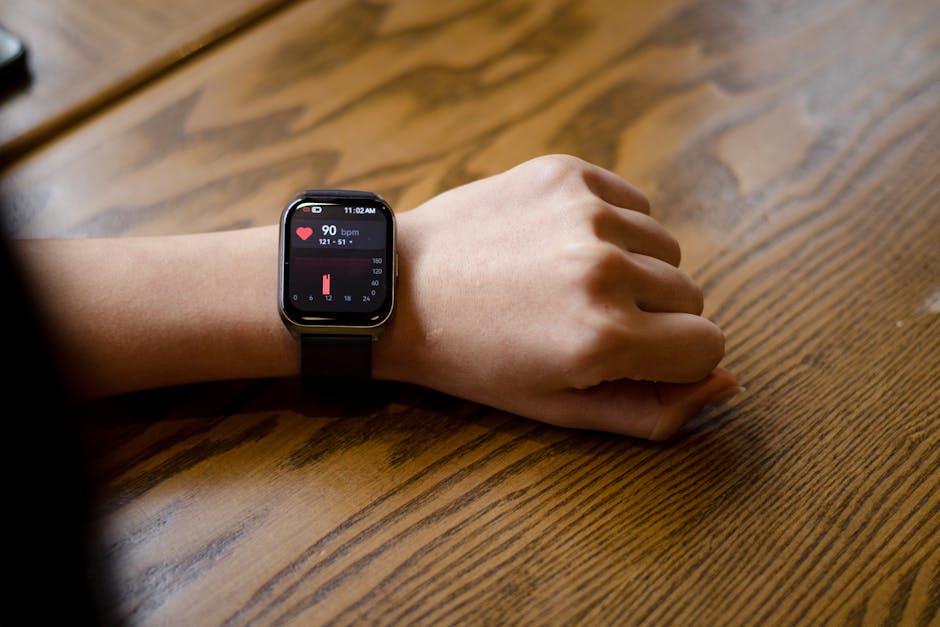
Photo by ahmed akeri on Pexels
Designing for calibration means hardware must accommodate longitudinal data collection without demanding immediate utility. The first two weeks of use should establish individual baselines across varied contexts: sleep, work, exercise, and social interaction. This requires power management architectures that support continuous passive monitoring without daily charging, and memory allocation that prioritizes baseline variance over raw signal storage. Manufacturers face a business model tension here: users demand instant insight, but accurate mental health metrics require weeks of silent learning. The product design must bridge this gap through onboarding UX that teaches calibration as a feature, not a limitation. Battery life becomes a clinical parameter, not merely a convenience metric.