Ship an Incomplete Flagship to Enable a Complete Ecosystem
A flagship device succeeds by solving one job perfectly. When designers add features to satisfy edge cases, the core experience degrades. DJI understood this with the Osmo Pocket. Rather than bulking the gimbal to accommodate wide-angle optics or waterproofing, they kept the core device minimal and transferred those functions to clip-on modules. The result was a flagship that remained genuinely pocketable while the accessory ecosystem handled the environmental extremes.

This approach requires ruthless subtraction during product design. The team must decide which capabilities are essential to the device’s identity and which are better served by companion hardware. Battery life, sensor protection, and physical mounting are the usual candidates for externalization. Each exclusion creates a constraint that the accessory must satisfy, but that constraint also liberates the flagship from compromise. Accessory ecosystem design begins with the courage to ship an incomplete product.
Design Mechanical Interfaces to Survive Hardware Generations
Those exclusions only function if the physical exit points are mechanically and electrically rigorous. Apple’s MagSafe launched as a charging convenience but revealed itself as a spatial computing protocol. The magnet array, NFC antenna, and charging coils created a coordinate system with precise registration points. Third-party manufacturers like Moment and Belkin could build mounts and lenses knowing that the mechanical relationship between device and accessory would hold within fractions of a millimeter—a standard that persists across four iPhone generations.
Contrast this with the Moto Mods system, which failed despite strong engineering. The 16-pin magnetic connector required tight tolerances that varied across manufacturing lots, leading to connection failures that users attributed to the phone itself. Product ecosystem engineering demands that the interface specification be simpler than the flagship it serves. The standard must survive multiple hardware generations, meaning the connector, wireless protocol, or mounting geometry you design today will constrain your team’s options three years from now. Design the interface as if it is the only permanent thing in your lineup.
Accessory Failure Becomes Flagship Brand Damage
Specifications matter most when they fail during critical use. Consider a photographer using a Sony Alpha with a vertical battery grip attached via the multi-pin interface at the camera base. During a wildlife sequence, the grip must maintain electrical continuity for autofocus and shutter signals while surviving 50,000 insertion cycles and maintaining weather sealing against rain. If the interface wobbles or disconnects, the photographer misses the shot, and the curse word is directed at Sony, not the grip manufacturer.
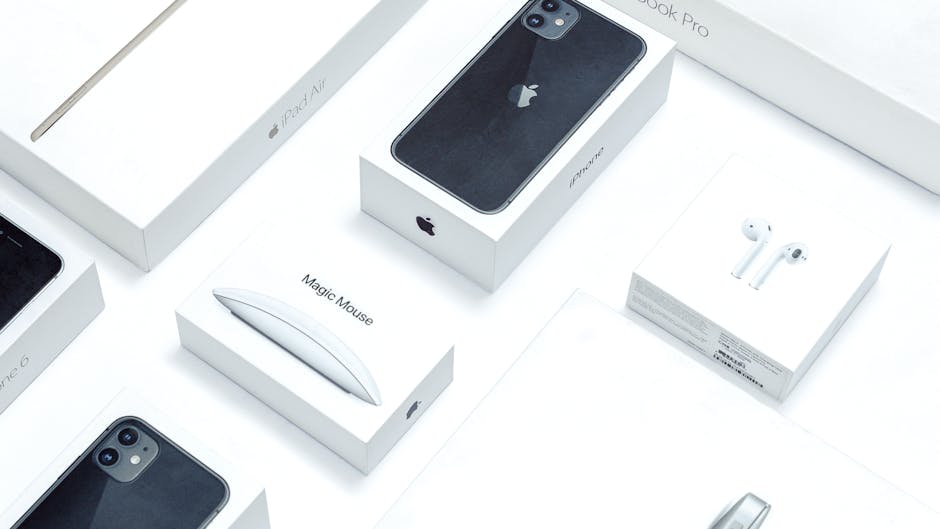
Photo by Alan Quirván on Pexels
This is the hidden risk of device accessories strategy. The user perceives the accessory and flagship as a single system. When GoPro mounts failed in extreme sports contexts, the brand damage accrued to the camera even when the third-party mount was at fault. Product engineering for accessories must therefore over-engineer the connection points relative to the accessory’s cost. The tolerances at the interface should be tighter than the accessory housing itself, ensuring that the flagship never bears the mechanical wear of the partnership.
Make Ecosystem Interfaces Viable for Third-Party Manufacturers
That liability scales differently than the flagship itself. A smartphone might amortize its tooling costs across ten million units. A specialized underwater housing for that same phone might sell ten thousand units total. If the interface requires injection molding tolerances of ±0.05mm or complex multi-axis machining, third-party manufacturers cannot achieve unit economics that support entering your ecosystem.
GoPro succeeded in building a platform accessory ecosystem because the mounting peg was a simple, mold-friendly geometry that any machine shop could produce. The Snap Spectacles camera glasses failed to generate meaningful accessory innovation partly because the proprietary charging cable required specialized tooling that suppliers hesitated to invest in. Modular add-on product design requires designing for the supplier’s P&L as much as the user’s hand. The interface must be manufacturable with standard processes, and the electrical protocol must be documented with enough clarity that a 20-person hardware startup can build for it without dedicated support from your team.