Particle Size Determines the Engineering Target
Allergens are not generic dust. Pollen fragments range from ten to one hundred microns, but the proteins that trigger histamine release often break into sub-micron particles. Dust mite feces cluster around twenty microns, yet their allergenic components measure point five to ten microns. Pet dander behaves similarly, fragmenting into breathable sizes that remain suspended for hours.
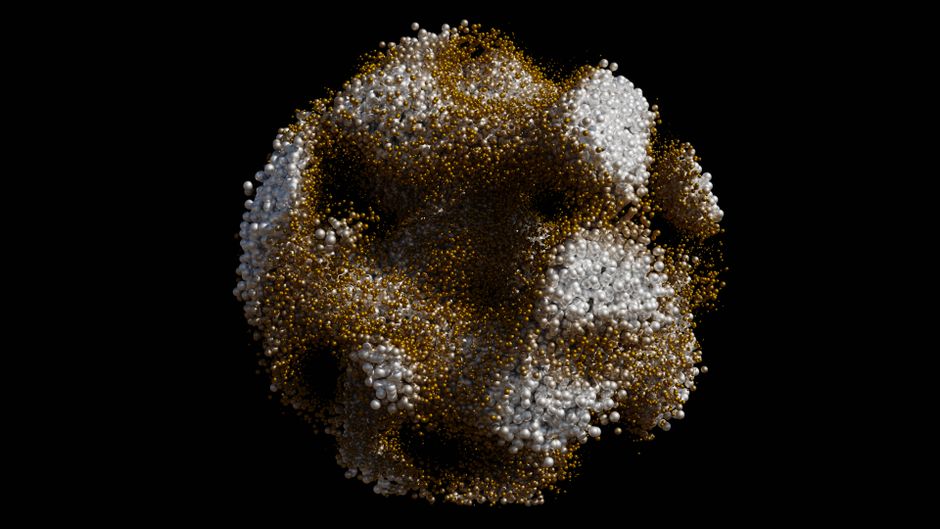
Photo by Maxim Landolfi on Pexels
This distribution dictates HEPA air purifier hardware requirements. True HEPA (H13) captures 99.97 percent of particles at 0.3 microns, the Most Penetrating Particle Size. But the specification assumes factory-test conditions: laminar flow, sealed channels, and zero bypass. In production, a gasket compression set of twenty percent creates a channel that disproportionately leaks the smallest, most inflammatory particles. For allergy sufferers, that leak is not an efficiency loss—it is symptom persistence.
The Seal Is the Filter
The housing must perform as part of the filtration media. The path from intake to exhaust is a pressure system. Any negative pressure leak upstream of the filter draws unfiltered air into the stream. Any positive pressure leak downstream recontaminates the clean air.
Dyson solved this in their Purifier Cool line by molding the HEPA and activated carbon composite as a continuous sealed cylinder, eliminating gasket interfaces entirely—a design that treats the filter cartridge as a sealed unit rather than an assembly of parts that can drift out of tolerance across manufacturing batches. IQAir takes the opposite approach with modular gasketed frames and individual filter seals tested to ISO 29463, building a cleanroom air handler at consumer scale. Both designs acknowledge that filter media is a commodity; the barrier architecture is the product.
The geometry of the air path matters equally. Sharp turns create turbulence that drops particles onto internal surfaces, where vibration later re-entrains them into the outgoing stream. Smooth, gradual transitions maintain laminar flow through the media, ensuring that captured particles stay captured.
Why CADR Misleads Allergy Sufferers
Clean Air Delivery Rate, measured per ANSI/AHAM AC-1, defines how fast a device reduces smoke, dust, and pollen concentrations. The standard tests with particles larger than 0.3 microns and assumes continuous operation at maximum speed. This creates a dangerous disconnect for air purifiers targeting allergies.

Photo by cottonbro studio on Pexels
Pollen and dust mite allergens require sustained air changes per hour, not burst capacity. A unit rated at 250 cubic feet per minute may deliver that figure on high, but drops to eighty CFM in sleep mode, the only speed tolerable for bedroom use. At that reduced flow, the device fails to achieve the 4.8 air changes per hour recommended for allergen control in a twelve-by-fourteen-foot room. The user sleeps through insufficient treatment and wakes symptomatic.
Designing for allergies means validating CADR at the acoustic threshold of sleep, typically thirty decibels or below. This constrains fan selection, blade count, and housing resonance. The air purifier that succeeds treats the bedroom as an acoustic chamber where airflow and sound pressure are coupled variables.
The 3 AM Test
The critical moment for bedroom air purifier design occurs during REM sleep. Breathing rate drops, breath depth increases, and the user is unconscious. If the device cycles on with a motor whine or filter flutter, it fragments sleep architecture. Fragmented sleep elevates cortisol and histamine response, counteracting the purifier’s primary benefit.
Successful hardware manages this through variable frequency drives that ramp gradually, avoiding the step-change in bearing noise that triggers arousal. Filter frames must be tensioned to prevent the paper flutter that occurs when pressure differentials shift at low speeds. The industrial design must signal “bedroom appropriate” through surface finishes that reduce light reflection and thermal mass that eliminates cycling clicks.