Storage Determines Form Factor Before Engineering Does
Most home appliances are designed under the assumption of shame-based storage. The default state is hidden: under the sink, in the closet, behind the cabinet. Neat freak consumer products invert this assumption. These devices live in the open, on display, because the cognitive load of “where did I put it” competes with the relief of a tidy room.

This changes every dimension of appliance design. Dyson recognized this early with their freestanding stick vacuums, treating the charging dock as a piece of furniture rather than an afterthought. The device stands at attention in the corner, looking intentional. But many competitors missed the secondary implication: if it lives in the open, it cannot collect visual dust. Seamless surfacing, muted colorways, and the elimination of visible fasteners become functional requirements, not aesthetic choices. The user is buying a sculpture that happens to clean. If the seams collect grime or the glossy plastic shows fingerprints, the object becomes a monument to maintenance failure.
The Topology of Peripheral Vision
That visibility constraint creates a geometric paradox. The engineering team wants volume for battery capacity, dust bin size, and motor cooling. The user wants a minimal silhouette that does not break the sightlines of their carefully curated space. Solving this tension requires treating the footprint and vertical profile as primary specifications, equal to suction power or wattage.
Muji’s appliances succeed here by prioritizing rectangular prisms over organic ergonomics. A rectangular form stacks, slides, and aligns with the orthogonal logic of organized storage. The device must satisfy the physics of cleaning while obeying the geometry of architectural order. When designing products for this category, starting with the negative space—the exact shelf depth or closet width—then working backward to internal component layout often reveals the real constraint: the battery cell that forces a bulge in the housing has to move, even if it costs five minutes of runtime, because five minutes of battery is invisible while a protruding shell is a daily irritant.
Cleaning the Cleaner
The interaction model presents a more insidious challenge. Traditional cleaning appliance UX focuses on the primary task: the sweep, the mop, the filter. For the organization-sensitive user, the secondary interactions dominate the experience. Emptying a dustbin without releasing a cloud of particulate. Wrapping a cord without creating a tangle memory. Stowing attachments so they do not spill out when the closet opens.
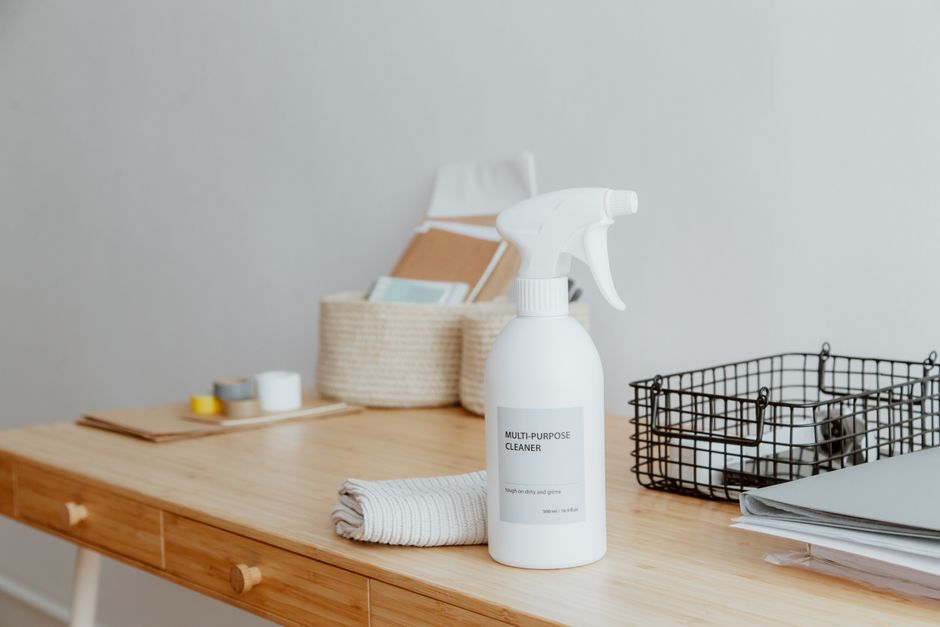
These micro-failures compound into macro-anxiety. iRobot solved the autonomy problem but introduced the charging dock as permanent floor clutter—which undermines the minimalism it supposedly serves. The solution lies in designing the “cleanup after the cleanup” as the primary use case. HEPA-sealed dustbin ejection mechanisms, retractable cords that store tension without whipping, and attachment docks integrated into the main body rather than separate bags. If the user has to touch a second object to store the first, the system has failed.