Surface Finish as Signal Processing
The most expensive industrial design mistake in e-commerce electronics is specifying surface finishes by touch alone. A soft-touch coating that feels premium in the hand can read as greasy under diffused LED panels. High-gloss piano black creates specular highlights that bloom across camera sensors, requiring photographers to flag every light source until the product looks flat. Conversely, ultra-matte finishes absorb so much light that they lose dimensional definition, rendering as two-dimensional cutouts against white backgrounds. Apple’s anodized aluminum succeeds in hero shots because the surface scatter is engineered to create gentle gradients rather than harsh reflections. When Nothing designed the Phone (2), the Glyph interface was positioned specifically to act as its own light source in dark photography, eliminating dependency on external lighting rigs—a strategy that reduced photographer dependency on complex setups and accelerated shoot cycles. Surface specifications must include reflectance values at 45-degree incidence angles and roughness measurements (Ra) that predict light behavior, not just haptic coefficients.
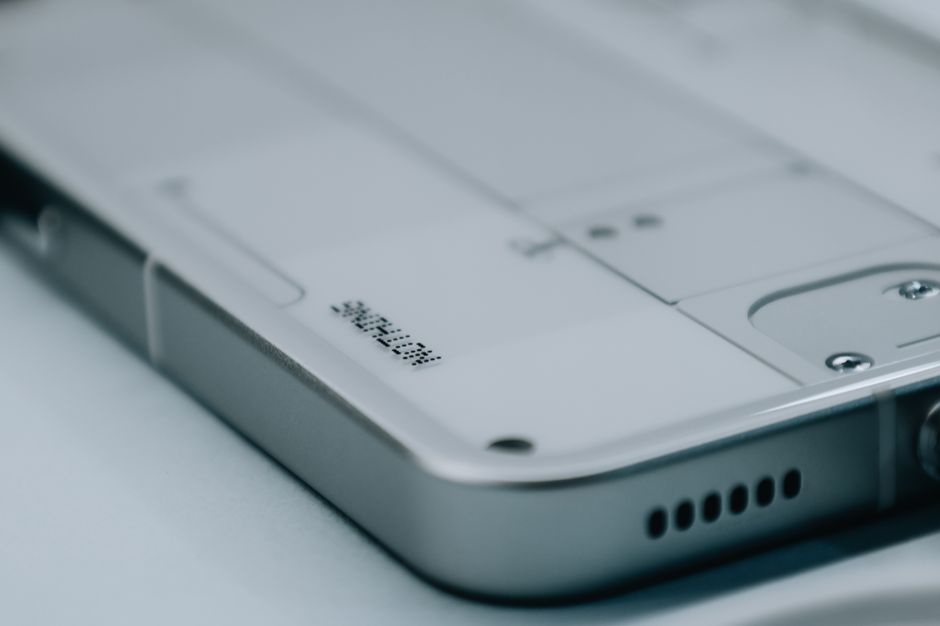
Photo by Prashant Gautam on Pexels
Geometry That Disappears on Command
Surface preparation fails if the geometry creates uncontrollable shadows. Consumer electronics photography relies heavily on the three-quarter hero shot—the 45-degree angle that shows both top surface and profile. At this specific viewpoint, a hairline parting line between housing components becomes a black canyon. Draft angles optimized for injection molding ejection create subtle surface distortions that catch light unevenly, reading as manufacturing defects in macro photography. Dyson’s continuous surfacing eliminates parting lines entirely, which serves ergonomic purity but critically ensures no shadows break the form in e-commerce renders. Teams must validate CAD models not just for assembly clearance, but for continuity under orthographic camera angles, ensuring that what appears as a perfect curve to the eye reads as continuous to a 100mm lens in the final product visual.
Color Calibration for Sensors, Not Retinas
Human eyes and camera sensors interpret color through different physics. A deep charcoal that reads as sophisticated black in daylight becomes a detail-void under 5600K studio strobes. Apple’s “Midnight” colorway exists specifically because pure black absorbs too much light for digital sensors to retain dimensional information. Photogenic consumer electronics require color specifications that include studio lighting conditions—anodization dyes must be validated under tungsten, daylight, and strobe spectra. Manufacturing tolerances must tighten when producing e-commerce SKUs; batch variations invisible to the eye become obvious color shifts when 12 units are shot for Amazon thumbnails. This means adding spectrophotometer checks under artificial lighting to your QC protocol, treating the photo studio as an extension of the factory floor rather than a post-manufacturing filter.

The 2:00 AM Shoot
The photographer racing to deliver hero assets before launch reveals where industrial design breaks. A device designed without considering the studio rig becomes a production bottleneck. If the product cannot stand upright without a visible stand, every shot requires digital compositing. If cable routing exits from multiple sides, “in-use” photography becomes a spaghetti tangle of retouching. Bang & Olufsen’s speakers often include hidden mounting threads or weighted bases specifically for studio stability. When designing product photo-ready hardware, consider the invisible infrastructure: flat-bottomed stability for hero angles, hidden 1/4-20 mounting points, and cable management channels that allow clean connection without entering frame. These details determine whether a shoot takes four hours or four days.