Tunnel Vision Changes How Display Geometry Works
Normal wearable UX assumes users can refocus their eyes, interpret icons, and navigate hierarchical menus. A racer at 180 beats per minute experiences actual tunnel vision; blood flow redirects from peripheral retinas to core muscles and the central visual field. This means the display must communicate through pre-attentive processing, using contrast and position rather than detail. The Wahoo Elemnt Bolt succeeded partly by eliminating touchscreens entirely, opting for physical buttons and high-contrast LED matrices that register in peripheral vision. Font geometry matters more than pixel density. A seven-segment display layout outperforms high-resolution graphics because the brain processes angular shapes faster under stress. The geometry must work when the user cannot look directly at it, which means every non-essential pixel is active noise.

Photo by Andrey Matveev on Pexels
That visual clarity depends on mechanical stability that consumer mounts ignore.
The Handlebar Mount Functions as a Vibration Isolation System
At speeds exceeding 40 miles per hour on rough tarmac, micro-vibrations transform readable text into a blur. Professional teams often secure their devices with additional tape or proprietary clamps not because the stock mount fails structurally, but because millimeters of movement destroy legibility. Advanced cycle computer engineering treats the mount interface as a damping system, not an accessory. The housing material choice affects this directly; a carbon-reinforced nylon housing transmits different frequencies than aluminum, changing how the display behaves at 100 RPM cadence. The interface between device and bar must prevent the harmonic resonance that occurs when wheel frequency matches the mount’s natural frequency. This mechanical precision determines whether the rider can read their power numbers without slowing down.
Mechanical stability buys you the right to display data that racers actually trust.
GPS and Power Data Must Arrive Synchronized, Not Just Accurate
A power meter cycling device measures wattage at the crank or pedal, while GPS calculates speed and position from satellite triangulation. These systems operate on different clock domains and processing loops. If the power reading arrives 200 milliseconds before the speed calculation, the rider perceives a surge that did not happen, or a lag in acceleration that confuses pacing. Race data cycling UX fails not from missing data, but from temporal misalignment. The engineering architecture must timestamp both data streams against a master clock before rendering, even if that means delaying the faster signal. This synchronization requirement determines your processor selection and antenna placement, because a GPS module placed for signal strength might introduce processing latency that breaks the fusion algorithm.
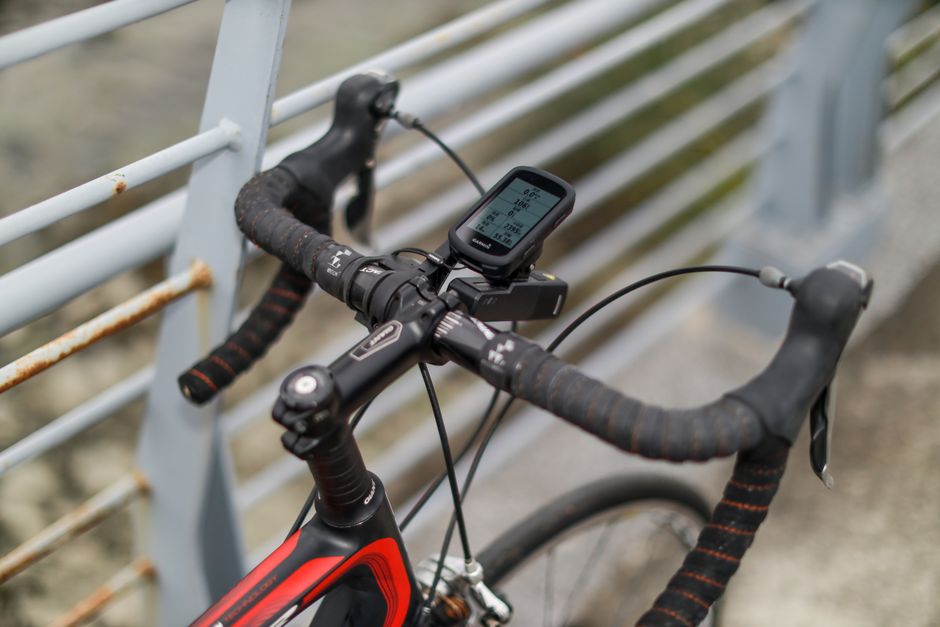
Photo by chunhsien shih on Pexels
Data synchronization matters most when the race decision happens in seconds.
The Final Kilometer Reveals Design Debt
Consider the specific moment: a breakaway rider enters the final kilometer of a hilly classic, oxygen debt maxed, needing to know exact power output versus remaining distance. They cannot tap the screen. They cannot interpret color gradients. They need one number, immediately, with absolute certainty. This is where performance cycling computer design proves itself. The screen must auto-configure to race mode without input, displaying only power, distance, and time gap. Every additional metric competes for the limited bandwidth of a hypoxic brain. The teams that ship hardware for this moment treat firmware updates as race-day risk factors rather than feature deliveries, because new code introduces timing uncertainty that could corrupt that critical display state.
That conservatism creates the competitive opening for new hardware.