The Radio Must Be Carrier-Neutral Before the Brand Is Applied
That brand flexibility fails if the hardware is locked to one carrier’s band plan or certification requirements. The baseband module selection determines whether your MVNO device platform can migrate between host networks, or if you’re trapped in a single radio configuration that becomes obsolete when wholesale agreements shift. Engineering teams must specify modems with full Category support across bands 2, 4, 5, 12, 13, 66, and 71, then pursue FCC Part 27 certification and PTCRB approval as a superset, not a subset, of requirements. This often means accepting higher BOM costs for global modems like the Quectel EG25-G or Telit FN980, which support the full range of North American and European bands, rather than region-locked alternatives that save three dollars but eliminate future carrier options. A radio configuration chosen for one host network becomes a liability when the MVNO pivots infrastructure partners or targets enterprise customers on different carriers.
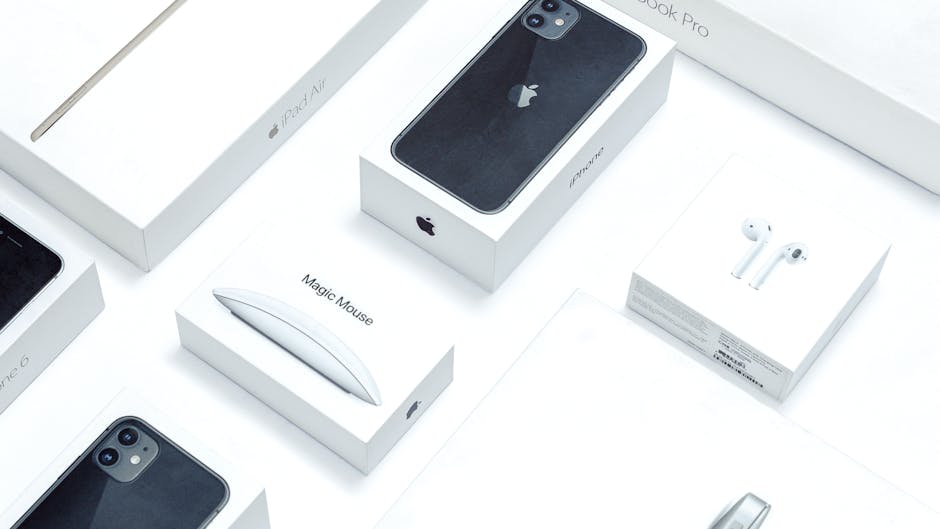
Photo by Alan Quirván on Pexels
Surface Finishes Communicate Brand Intent Without Tooling Changes
The physical differentiation must happen at the enclosure level without opening the mold. Family mold concepts allow the same core housing to receive distinct texture libraries—matte soft-touch for a premium consumer brand, or ribbed industrial tactility for a construction-focused MVNO serving field technicians. The product design specification must account for draft angles and wall thicknesses that accommodate secondary operations like laser etching or pad printing without structural redesign. Packaging architecture becomes equally critical; the insert tray and outer sleeve represent fixed costs that scale across brands while offering infinite graphic variability. Mint Mobile’s aggressive lime green and Ultra Mobile’s purple can originate from identical injection molding tools with different surface treatments and packaging inserts. The moment a user holds the device, the surface finish and unboxing sequence communicate brand DNA more immediately than the processor specification.
Firmware Architecture Enables White-Label Identity
That surface impression collapses if the software boots to a generic Android splash screen. The bootloader and partition table architecture must accommodate “brand packs”—discrete software layers containing boot animations, default wallpapers, carrier apps, and update endpoints that reside in separable memory partitions, accessible only to signed brand certificates. This rebrandable device architecture requires engineering the firmware update mechanism to check brand-specific OTA servers, not a generic manufacturer endpoint. The MVNO’s margin depends on customer lifetime value and service bundling; the device must feel like their ecosystem from second one, because a generic software experience signals to the user that they’re holding commodity hardware, undermining the brand premium that justifies the MVNO’s pricing strategy.

Photo by Andrzej Gdula on Pexels
Certification Modularity Determines Market Reach
Identical hardware faces different regulatory requirements depending on which host network the MVNO rides today or tomorrow. Verizon’s Open Device Initiative imposes different RF exposure and protocol testing than AT&T’s whitelist approach—a gap that narrows when you engineer for certification modularity from the start. International MVNOs require GCF certification alongside regional variants. Design a single PCB that can satisfy multiple carrier certification regimes without respin, while maintaining IMEI allocation schemes that allow the MVNO to register devices as their own brand in carrier databases, not as the manufacturer’s generic SKU. The test reports must be structured to allow the MVNO to assume regulatory responsibility without revealing the underlying white-label relationship. A carrier-neutral hardware platform that fails Verizon’s PTCRB process forces the MVNO to abandon 40% of the US market regardless of the radio’s theoretical capability, rendering the white-label economics unviable.