MTBF Requirements Reshape the Validation Budget
That decade-long lifecycle assumption immediately redefines failure modes. Consumer devices fail gracefully when screens crack or batteries degrade; operator-grade hardware fails catastrophically when moisture ingress corrupts a modem after three years of seasonal temperature cycling. Telecom device reliability engineering starts with the understanding that mean time between failures specifications above 100,000 hours aren’t marketing claims but procurement requirements. A carrier evaluating a fixed wireless access point calculates the fully loaded cost of a truck roll, technician time, and customer churn against the upfront hardware premium. The device must survive not just the installation environment but the maintenance schedule, which is often never. This shifts validation budgets toward environmental stress screening and HALT testing rather than user experience refinement.
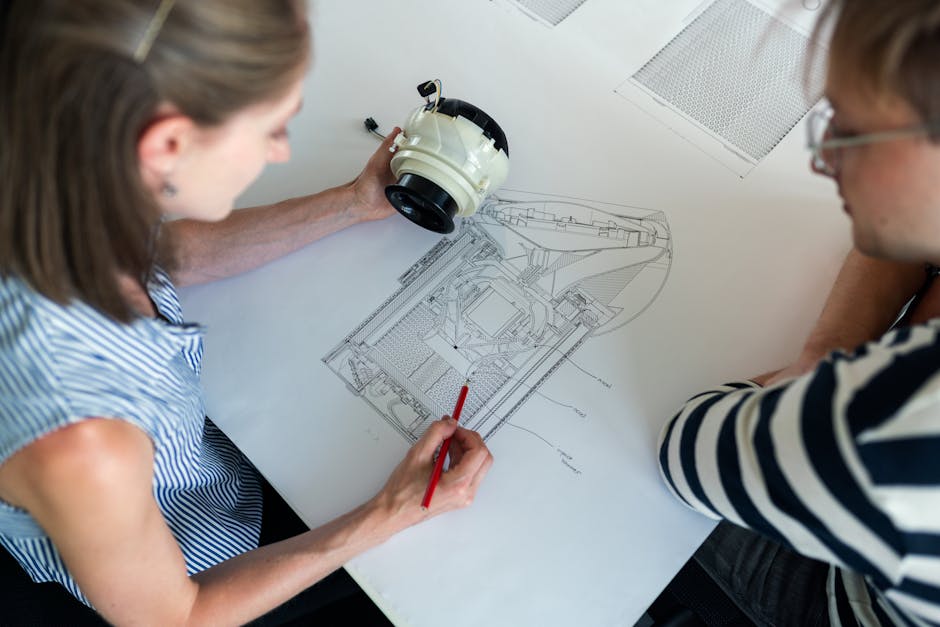
Photo by ThisIsEngineering on Pexels
IP67 and MIL-STD as Foundational Constraints
This economic pressure transforms environmental standards from compliance checkboxes into foundational architecture. An IP67 telecom device rating requires complete dust ingress protection and submersion resistance to one meter, which eliminates standard PCB conformal coatings in favor of potting compounds or hermetic sealing. MIL-STD telecom hardware specifications for shock and vibration demand that RF connectors maintain phase stability after thousands of resonance cycles, disqualifying standard FPC antennas for vehicle-mounted applications. These requirements dictate connector families, PCB mounting strategies, and antenna isolation techniques during schematic capture, not during mechanical refinement. The housing isn’t designed to protect the electronics; the electronics are arranged to survive the housing’s sealing requirements. Gasket groove geometry and screw boss patterns become RF enclosure design elements that determine signal integrity.
The Sealing Paradox and Thermal Conflict
Perfect sealing creates its own failure modes. Hermetic enclosures develop internal pressure differentials across altitude and temperature swings, drawing moisture through micro-cracks during the vacuum phase of thermal cycling. Robust telecom device design requires managing the breathability-to-sealing trade-off: hydrophobic vents allow pressure equalization while blocking liquid water, but they add acoustic attenuation for voice-enabled devices and potential RF shadowing near cellular antennas. Thermal management compounds this conflict. Sealed enclosures cannot convect heat; they rely on conduction through the housing, which requires thermally conductive plastics or metal castings that complicate antenna design. The material stack becomes simultaneously a heat path, an RF window, and a moisture barrier—three functions that typically demand contradictory material properties. Resolving this trilemma determines whether the device survives its first winter.

Material Stability Across Temperature Extremes
Those -40°C to +70°C operational swings break assumptions about material behavior. Carrier-grade device engineering must validate that antenna patterns remain consistent as plastic housings expand and contract, shifting ground planes relative to radiating elements. Battery chemistry presents hard limits: lithium-ion cells freeze below -20°C and degrade rapidly above 60°C, forcing remote power architectures or solid-state alternatives for outdoor units. Display and touchscreen technologies face similar disqualifications; consumer-grade LCDs fail in direct sunlight thermal loading. The device must boot at arctic temperatures and maintain cellular connectivity during thermal shock, which requires derating semiconductor specifications and validating solder joint integrity across the entire temperature coefficient range. Every material interface becomes a potential delamination point requiring specialized adhesives with matched thermal expansion coefficients.