Retail 5G Showcase Hardware Faces an Impossible Standard
Retail demonstration units must render visible what is fundamentally imperceptible. A speed test showing “1.2 Gbps” communicates nothing to a customer whose three-year-old iPhone loads Instagram acceptably fast. Early operator strategies failed because they treated demonstration units as display screens rather than experiential instruments. The hardware must create a side-by-side comparison where the latency differential is felt in haptic response, video quality, or file transfer animation. If the demo requires understanding Mbps, the industrial design has failed. The device must engineer a visceral gap between 4G and 5G performance that persists even when the customer looks away from the bitrate counter.
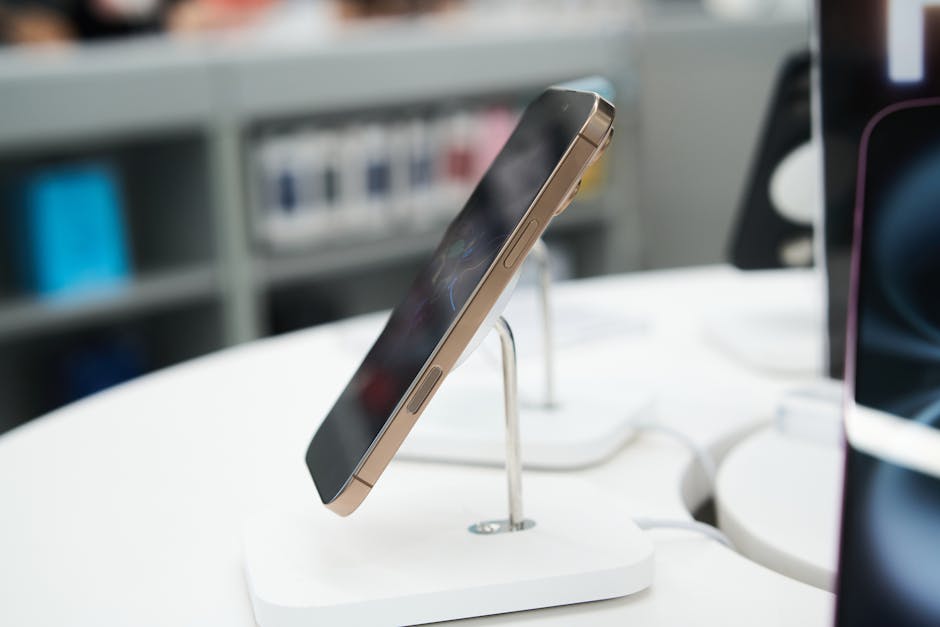
Photo by webber Amir on Pexels
Thermal Engineering Determines Credibility
5G speed demo hardware operates under a constraint that consumer phones rarely face: sustained maximum throughput. A typical smartphone transmits in bursts; a retail unit streams 8K video, runs concurrent speed tests, and maintains cloud gaming sessions for twelve hours daily. This continuous load triggers processor throttling within minutes unless actively managed. For 5G experience device engineering, the enclosure becomes a thermal management system first and an aesthetic object second. Qualcomm’s reference designs for carrier demonstration units specify heat spreaders and vapor chambers that would be excessive in consumer hardware—because a demo unit that stutters at minute four destroys the network credibility being sold. The specification is straightforward: maintain maximum antenna throughput indefinitely at 40°C ambient retail temperature, or do not ship.
Form Factor Must Signal Velocity Without Distraction
Industrial design must communicate speed while solving for retail security without clumsy tethers that signal “kiosk” rather than “future.” Early carrier 5G showcase devices adopted aggressive angular forms and LED light pipes that competed visually with their content. Successful designs use materials that conduct heat while implying velocity: machined aluminum unibodies with anisotropic surface finishes that create directional light play, or ceramic composites that remain cool to the touch despite internal heat. Magnetic low-profile mounts integrated into the base housing allow the unit to sit on the table as an object, not hang as a display, preserving the tactile intimacy required for a convincing device demonstration.
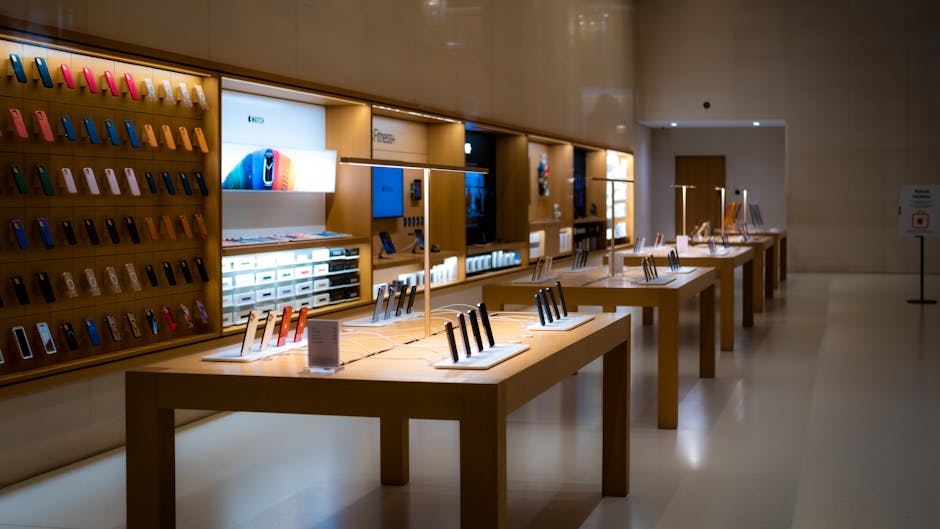
Photo by Mathias Reding on Pexels
The Thirty-Second Conversion Moment
A shopper enters a Verizon store skeptical that 5G matters; their current phone streams YouTube adequately. They approach the demo table where the experience unit sits beside an LTE reference device. The associate invites them to download a 4K movie trailer simultaneously on both units. The 5G unit finishes in three seconds; the LTE unit spins for forty. This is the conversion moment, and it requires hardware engineered for instantaneous response. The touchscreen controller must have direct hardware priority for input registration, bypassing software queues that create micro-lags in consumer tablets. If the demo involves cloud gaming, controller latency must stay sub-15ms or the user perceives disconnect between input and action, blaming the network for what is actually local processing delay. The device is not displaying 5G; it is performing it.