RF Front Ends Require Certification-First Architecture
Regulatory bodies in Brazil (Anatel), Japan (TELEC), and the Emirates (TDRA) enforce transmit power masks and spurious emission limits that differ by fractions of a decibel. Global roaming device engineering cannot optimize for a single carrier and hope to scale; it requires maximum aggregation upfront. The difference between a regional thirteen-band front end and a global twenty-band architecture is not marginal utility; it is the difference between connecting to Band 28 in rural Australia and having no signal at all.

Photo by Dan Cristian Pădureț on Pexels
A multi-band travel router optimized only for FCC or CE marking will fail certification in secondary markets, and unlike software-defined radios, you cannot firmware-patch a power amplifier that violates local emission ceilings. This means the RF chain—diplexers, PAs, and antenna tuners—must be selected for the worst-case regulatory limit across the entire target market list. It increases BOM cost by 15-25%, but it prevents the scenario where inventory sits in a warehouse because a firmware update cannot reduce conducted emissions below the Anatel ceiling. Teams that skip this step find themselves redesigning hardware for each new territory, destroying the margin that makes consumer electronics viable.
Continuous Network Scanning Creates Thermal Load That Battery-Powered Devices Cannot Handle
That aggressive RF architecture generates consequences downstream. A stationary router maintains steady-state associations; a travel device perpetually scans, reselects, and re-registers as users move between cells and countries. The modem never sleeps. The duty cycle assumptions from residential hardware do not apply. A travel Wi-Fi device can draw twice the power of stationary use while negotiating bands in weak signal, generating heat that degrades lithium polymer cells above 45°C.
This is why consumer power banks repurposed as hotspots fail: their thermal design assumes intermittent load, not continuous uplink transmission at maximum power. When a user packs the device in a pocket and moves through warm climates—the exact moment of use—the enclosure cannot shed heat through convection. Choosing between a sealed aluminum unibody and a vented plastic shell determines whether the modem throttles to 2G speeds in Bangkok humidity, leaving the user stranded without maps or boarding passes.
SIM Slots and Screens Become Customer Support Cost Centers
Hardware decisions about physical interfaces determine support ticket volume when users lack local technical literacy. Multi-country SIM device hardware presents a paradox: the more flexible the connectivity, the more complex the provisioning. Physical SIM trays require users to handle nano-SIMs in airport lighting, often with wet hands or gloves. eSIM travel device design eliminates the physical handling but introduces QR-code workflows that fail when the user has no primary connectivity to download the profile.
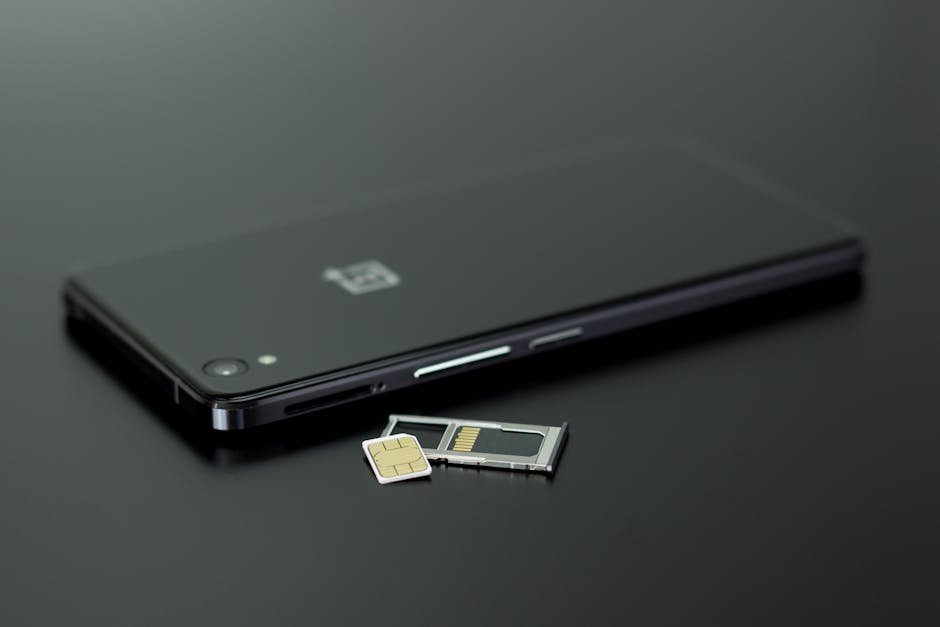
Photo by Silvie Lindemann on Pexels
The display becomes critical. Models with touchscreen interfaces reduce “how do I connect” tickets by displaying QR codes directly on the device, eliminating the chicken-and-egg problem of needing internet to set up internet. But that display adds cost and failure points. For international connectivity device design, the safer path is often a hardware button that forces network reselection, giving users tactile control when algorithms inadvertently choose premium roaming partners that bankrupt prepaid balances. Every unlabeled LED or undocumented reset sequence becomes a customer service call from a jet-lagged user in a foreign time zone.