Hardware-Based Limiting Outlasts Software Governors
Many first-generation products treated volume limiting as a digital feature. Early entries from established audio brands proved this insufficient. A software limit can be bypassed by adapter cables, alternative input sources, or simply toggling the limit off in parental settings that children eventually navigate. True child-safe audio product engineering requires passive acoustic limiting—selecting drivers with specific impedance characteristics and enclosure volumes that physically cannot produce dangerous SPL regardless of input voltage. The electronics become a redundant check, not the primary defense.
Photo by Torsten Dettlaff on Pexels
Once you accept that the driver itself must constrain output, industrial design choices narrow dramatically. A sealed enclosure for toddler headphone design must account for the smaller volume of a child’s ear canal, which amplifies pressure differently than adult anatomy. The 85dB measurement at the eardrum depends entirely on coupling efficiency. This is why volume-limiting kids speaker products present different constraints than headphones; controlling the listening distance removes the variable of fit entirely. Smart speaker designs for children incorporate fixed amplification circuits that assume the device will be held 15-20cm from the face, matching the near-field listening habits of toddlers who pull speakers close during independent play.
Retention Design Prevents Volume Escalation
The most dangerous headphone is the one that leaks. When a child pulls the earcup slightly away to hear a parent calling, or when a headband lacks the clamping force to maintain seal on a smaller head, the perceived volume drops. The natural response is to press the up button. Ergonomic retention is therefore a critical safety mechanism, not a comfort feature. Onanoff engineers their BuddyPhones with memory foam and adjustable sliders that resist the “partial wear” pattern common in three-to-five-year-olds. The hardware must assume the user will not wear it correctly and still protect them.
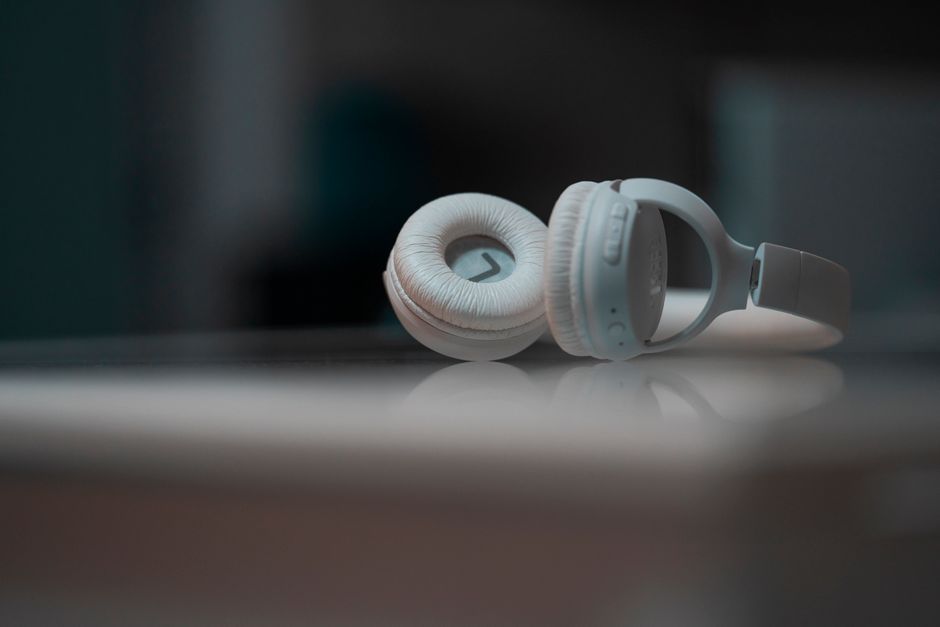
Photo by Omar Ramadan on Pexels
CPSC guidelines and EN 71-1 standards establish baseline requirements, but compliance does not equal real-world validation. The actual test occurs in moments of high friction—the car ride, the flight, the waiting room—when a frustrated parent hands a device to a child in a confined space. Does the headband survive being twisted? Does the volume limit survive being dropped on concrete and reassembled incorrectly by small hands? JLab designed their JBuddies Studio with breakaway cables and flexible headbands because damaged equipment often gets parent-jury-rigged back into service, frequently bypassing safety features in the process.