Deployment Logic Replaces Consumer Delight
Enterprise buyers evaluate operator-customized tablets against total cost of ownership across three to five years, not upfront hardware cost. A millimeter of thickness becomes irrelevant if the device requires individual box opening, manual SIM insertion, and manual app configuration for each of ten thousand units. This shifts the primary design variable from industrial design flair to deployment architecture. Devices must support zero-touch provisioning—arriving pre-enrolled in the customer’s MDM-managed tablet environment, imaged, and kiosk-locked before the box is opened.
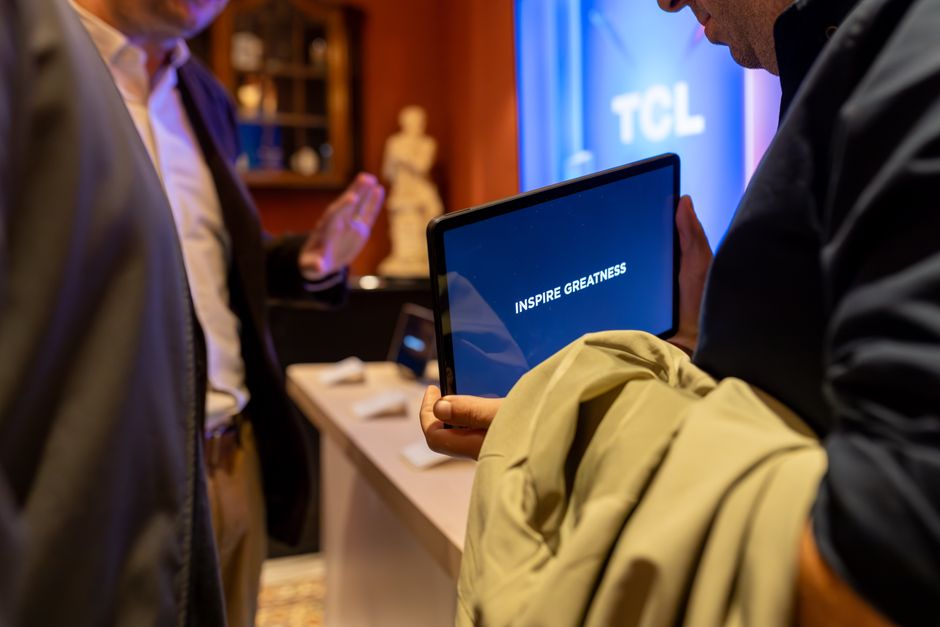
Photo by Matheus Bertelli on Pexels
Consider the 6:00 AM shift change at a regional distribution center. A pool of twenty tablets must move from charging cradles to picking carts without IT intervention. If the hardware lacks pogo-pin alignment guides or requires precise USB-C orientation, docking failures accumulate into hours of lost productivity. That reality dictates hardware choices: pogo pin charging arrays eliminate wear-prone ports for docked warehouse use; integrated NFC enables tap-to-authenticate workflows for shift workers; and boot-to-enterprise-mode switches prevent consumer OS detours. Samsung’s Knox Configure and Apple’s Device Enrollment Program show that operators can offload enrollment to software, but the hardware must still expose the physical interfaces—POE compatibility, RJ45 dongles, or serial pass-through—that legacy systems require.
Hardware as Infrastructure Topology
If the tablet is to live in a fixed mount in a delivery van or on a factory line, the enclosure cannot follow consumer conventions. Rounded edges and uniform thickness conflict with RAM mount compatibility and Kensington lock integration. This is where operator tablet engineering diverges from consumer product development; it starts with mounting geometry, not sketch models.
The device requires flat rear surfaces with standardized VESA patterns or custom dock receivers molded into the housing, not stick-on accessories that fail at temperature extremes. Thermal management must account for constant AC power and enclosed dashboard mounts, not intermittent consumer use. IP ratings matter, but the threshold is usually IP54—protection against industrial dust and coffee spills—rather than IP68 submersion, because the real failure mode is particle ingress in a warehouse, not drowning. Material selection follows suit: glass-filled polycarbonate survives drop tests better than aluminum when the device lives in a shared pool, and replaceable corner bumpers turn fatal impacts into consumable parts that extend fleet life.
The Operator as Systems Integrator
For the carrier, branding the device is an assertion that the hardware, connectivity, and support stack are unified. This changes the design brief from “build a tablet” to “build a platform.” The operator needs SKU consolidation—one mechanical platform that serves the logistics fleet, the retail floor, and the field service engineer through configuration, not hardware variation. Enterprise tablet hardware must accommodate modular variants: a barcode scanner sled for inventory, an MSR module for payments, or a Smart Card reader for government use, all without industrial redesign.

Photo by RDNE Stock project on Pexels
This modularity extends to radios. Dual-SIM or eSIM architectures must support network switching logic hard-coded in firmware, because the operator’s value is connectivity arbitrage, not just the device. Zebra Technologies proved that the margins lie in the integration layer—software that binds the scanner, the tablet, and the carrier network into a single workflow, not in the hardware itself. An operator that controls only the enclosure competes on price; one that owns the software layer that orchestrates the fleet captures recurring revenue.