The Regulatory Ceiling Reshapes Cell Economics
The 100Wh limit set by TSA and ICAO is not a suggestion; it is the structural boundary of the product definition. Any TSA-approved power bank must stay beneath this threshold or face airline-by-airline approval chaos. This constraint eliminates the easy solution of adding more 21700 cylindrical cells until the capacity feels sufficient. Instead, it forces designers toward high-density lithium-polymer pouch cells that cost more per watt-hour but pack flatter. Anker’s Prime series achieves 99.54Wh using stacked pouch cells in a 0.7-inch profile, a chemistry choice that dictates the entire thermal pathway. The cell format determines the surface area available for heat spreading, which means your sourcing decision happens before any CAD work begins.
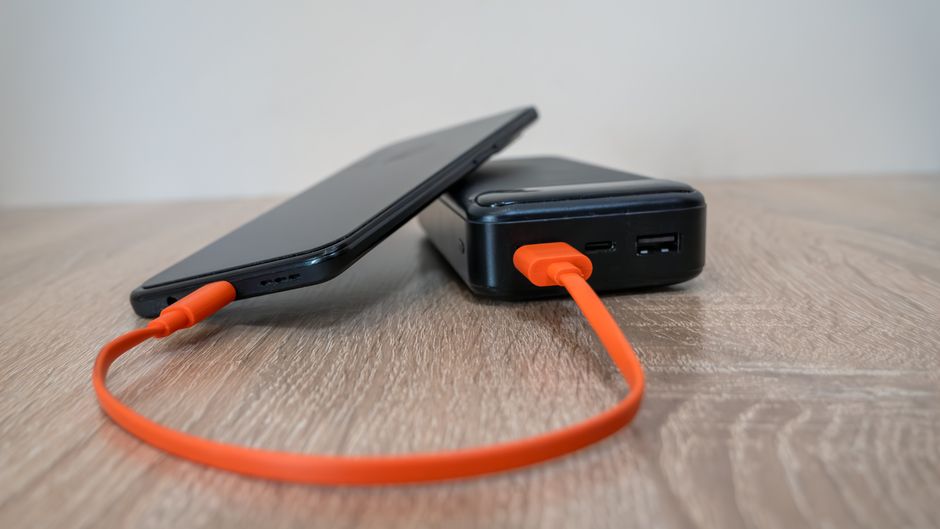
Photo by Eleonora Vokueva on Pexels
Enclosure Materials Determine Thermal Throttling
High-density cells in a slim travel battery pack generate significant heat when delivering the 45W or 100W Power Delivery that modern laptops demand. Plastic enclosures act as thermal insulators, trapping heat near the cell stack and forcing the battery management system to throttle output to safe levels within minutes. Aluminum unibody designs, like those in the Nitecore NB20000, use the chassis itself as a heat spreader, pulling thermal energy away from the cell stack through thermal interface pads and radiating it through the exterior surface—a material choice that trades grams of cell capacity for minutes of sustained output. The trade-off is immediate: aluminum adds weight that could have been allocated to cell mass, and machined unibodies cost more to manufacture than injection-molded polycarbonate. This is the central physics problem of lightweight power bank design: every material choice either stores energy or dissipates heat, never both. A design that ignores this will advertise 45W output but deliver it for only three minutes before stepping down to 18W, rendering the laptop charging feature theoretical.
The Moment of Use Against Soft Surfaces
The thermal math changes completely when the device leaves the engineering lab. Consider the 45-minute connection at Chicago O’Hare: the user plugs a MacBook Pro and an iPhone into a multi-port travel charger, then drops the unit into a nylon backpack or sets it on a wool coat draped over their lap. These materials insulate the base, eliminating the convective cooling that aluminum chassis rely upon. Surface temperatures that read 42 degrees on a test bench can exceed IEC 60950-1 limits of 48 degrees when surrounded by polyester. Port orientation becomes critical here. Side-facing ports place cable strain perpendicular to the device’s insertion into a bag, risking connector fracture; upward-facing ports expose the connector to downward pressure when the bag is set down. The travel power bank design must assume the device will be used inside soft luggage or against human skin, not on hard desks, which means thermal throttling algorithms need ambient temperature sensors, not just cell monitors, to prevent discomfort or safety shutdowns.
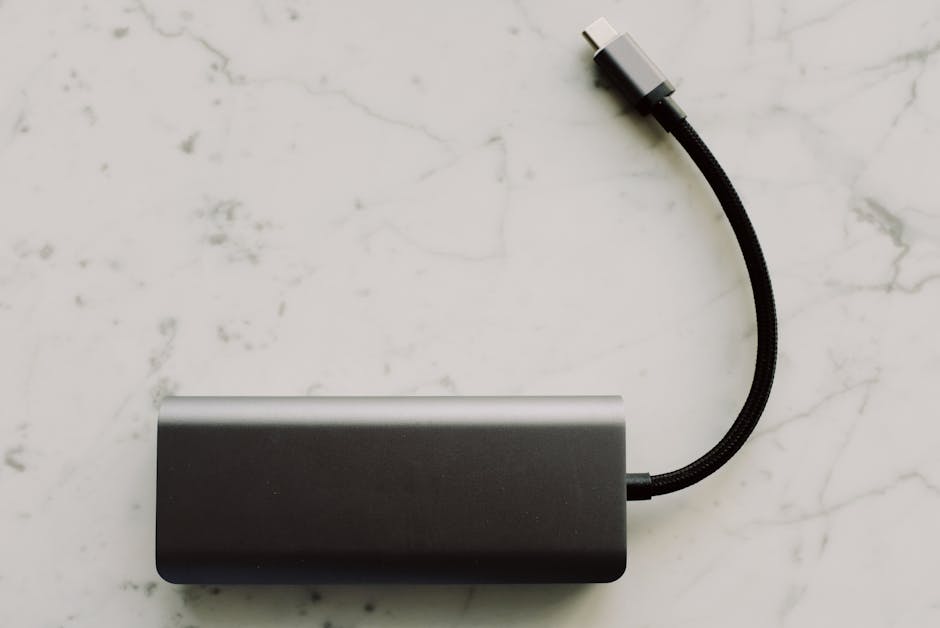
Photo by ready made on Pexels