Why Standard Accelerometers Fail Under Impact
Consumer-grade IMUs typically top out at ±16g or ±200g full-scale ranges. A tennis ball strike transmits a shock wave through the carbon fiber layup in under 4 milliseconds, peaking well above 1000G at the throat of the racket. If the sensor sees that unattenuated signal, the data clips instantly. You lose the subtle kinematics of the swing—the wrist pronation, the racket head speed through contact—that differentiate a topspin drive from a flat winner.
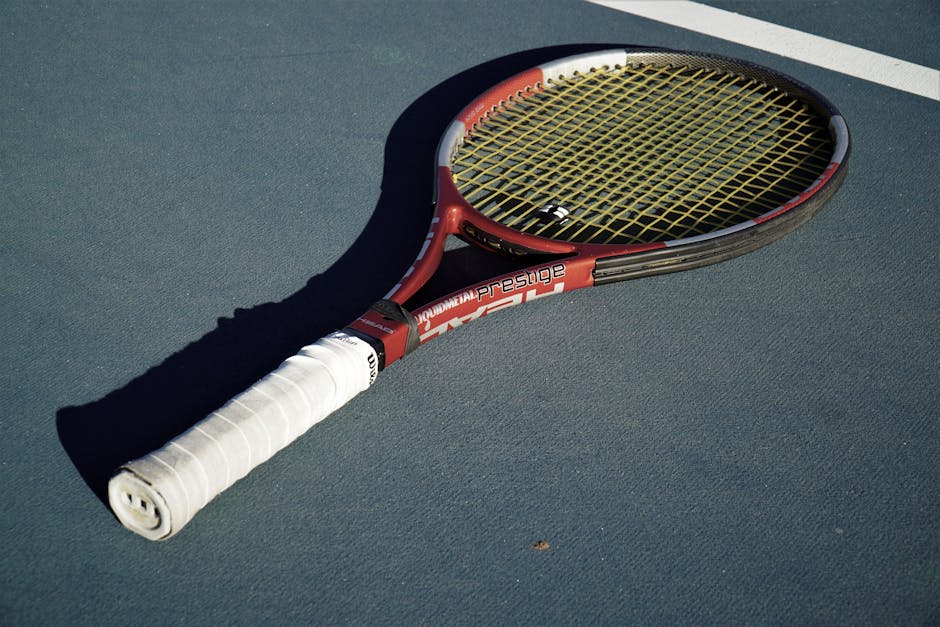
This changes your component selection immediately. High-G accelerometers rated for ±5000g exist, but they sacrifice resolution and drift stability. The alternative is mechanical isolation: decoupling the sensor from the impact path while maintaining orientation fidelity. That trade-off between shock survivability and signal fidelity is the central engineering tension in sports motion sensor design, because you cannot filter your way out of saturation—only isolate yourself from reaching it.
Mount Location Determines What Data Survives
Dampening the shock without introducing latency or rotational slop requires understanding the racket as a vibrating beam, not a rigid body. The handle end experiences lower peak accelerations than the throat, but it also captures more hand noise—muscle tremor, grip pressure changes, counter-movement. Mount at the throat and you get cleaner swing planes but higher shock; mount at the butt cap and you protect the PCB but obscure the face angle data that determines shot placement.
Zepp’s original clip-on design failed here: it attached near the throat to capture “face angle,” but the cantilevered mass amplified shock transmission rather than reducing it. Sony’s Smart Tennis Sensor screwed into the butt cap, which protected the electronics but sacrificed the rotational data that defines spin generation. Both approaches treated the sensor as a passenger rather than a structural load. In racket swing tracking, the mounting hardware must function as a mechanical filter with a specific cutoff frequency, not an afterthought clamp.
Every Racket Layup Demands Specific Calibration
Carbon fiber rackets, aluminum training frames, and modern graphene-infused layups each propagate impact vibrations at distinct resonant frequencies. A sensor calibrated on a Babolat Pure Drive will misread shot power by 15-20% on a Wilson Blade because the damping characteristics differ. This is not a calibration offset you can store in a lookup table; the modal response changes with string tension, grip wear, and temperature.
This destroys the business model of universal aftermarket attachments. If your sensor hardware claims to work across racket brands, you are either averaging away accuracy or shipping a device that drifts as the composite material ages. The teams that solve this treat each racket model as a unique mechanical system requiring its own transfer function, pushing you toward OEM partnerships—Babolat’s Play technology integrated the sensor into the handle during manufacturing—or toward disposable adhesive mounts tuned to specific frame families, raising unit economics by $8-12 per device.
The Moment of Attachment Changes the Swing Itself
A player feels 4-6 grams of added mass at the butt cap as a shift in balance point, making the head feel lighter and reducing plow-through on volleys. During a competitive match, that change alters timing. The sensor must attach in under ten seconds without tools, survive sweat and temperature swings, and leave no residue that voids the manufacturer’s warranty—yet add no perceptible weight.
Head’s tennis sensor attempted this with a vibration-dampening mount that added 8 grams. Reviews consistently cited “changed feel” as the reason for abandonment after two weeks. The hardware decision to use a metal clip for security created a stiffness that transmitted rather than absorbed shock. When designing for the moment between points—when a player wipes their grip and checks their phone for serve statistics—you are designing for trust. If the device shifts during a smash, the athlete stops using it. If it leaves adhesive on a $300 frame, they return it.