Why Standard Sensors Fail at Rebound
Traditional load cells assume point-source impacts with predictable vectors. A basketball hitting a backboard at 40mph deforms across a contact patch the size of a credit card, shifting as spin grips the surface. In rebound sports engineering, this means a sensor mounted behind the strike zone receives a composite signal: the initial impact, the rolling deformation, and the release oscillation. A training wall must distinguish between a flat strike and a glancing blow carrying topspin through vibration signature analysis across the entire panel, not algorithmic guesswork. The ball return mechanism cannot treat impact as a binary event. You need triangulation from multiple sensing zones to reconstruct the collision geometry, which requires the wall to behave as a tuned mechanical system rather than a rigid slab.

The Surface as Signal Conditioner
Which brings you to material composition. If the wall face is too rigid, you get acoustic ringing that masks the impact signature; too soft, and energy absorption destroys the return velocity needed for realistic practice. Smart rebound manufacturers typically laminate a sensing substrate—piezoelectric film or strain-gauge arrays—between a high-durometer rubber face and an aluminum honeycomb backing. This sandwich dampens high-frequency noise while preserving the low-frequency flex that carries impact location data. The tuning point is critical: enough compliance to generate a measurable signal, but not so much that a wet tennis ball or cold squash ball creates a different rebound angle than a warm one. The surface must normalize the chaos of the collision before the electronics attempt to interpret it.
Architecting for Redundancy
Training wall sensor placement follows from these mechanical constraints. Edge-mounted accelerometers work for large deflections but miss the subtle cues of a soft drop shot. Embedded capacitive arrays map location precisely but struggle with the dynamic range between an overhead smash and a gentle volley. Most viable architectures use a hybrid: piezoelectric cables woven in a grid behind the striking surface for location and force, coupled with acoustic sensors to detect the sharp transient of ball-on-surface contact. The acoustic channel provides the timestamp; the mechanical channel provides the vector. This redundancy matters because sweat, dust, and ball fuzz accumulate on the surface, changing the acoustic signature within a single session. Your firmware must calibrate against baseline “silent” impacts during setup, then track drift as the surface seasons.
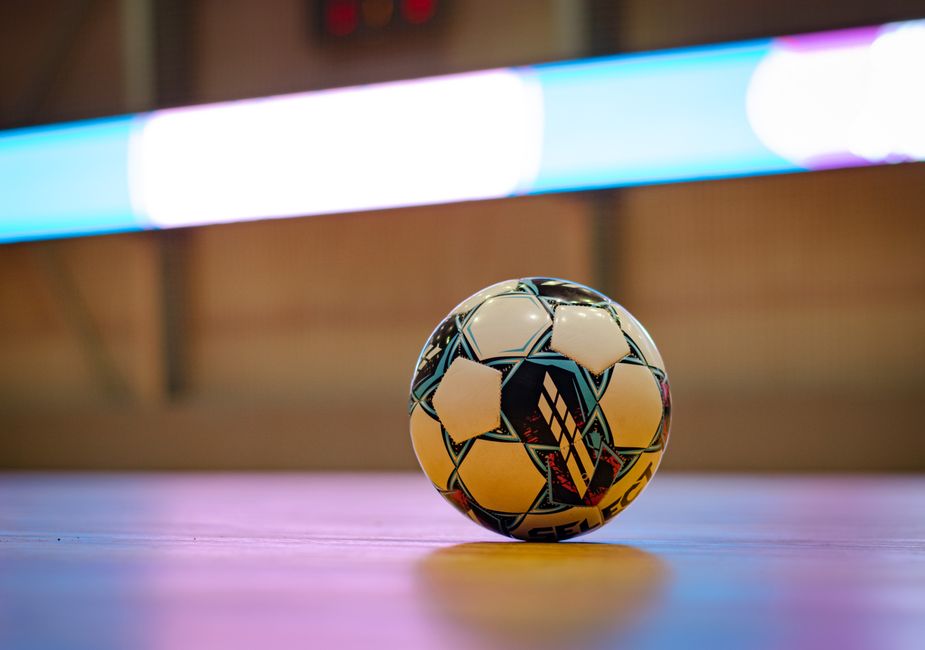
Photo by Володимир Олейніков on Pexels
UX in the Flow State
All of this technical infrastructure exists to serve a user who is not looking at a screen. Practice wall design fails when it requires app navigation between sets or creates latency in feedback loops. The athlete is in flow state; the wall should respond like a training partner. This means haptic or LED feedback embedded in the periphery, not a phone screen. It means the ball return mechanism must reset within the natural cadence of the sport: roughly six seconds for tennis, four for squash. Picture the garage athlete at 6 AM—they need immediate confirmation that their last forehand hit the target zone, delivered through a colored halo or tactile rumble, not a notification that arrives thirty seconds later after they have already hit three more balls.