Sensor Selection Driven by App Data Models
Strava does not record “exercise.” It records runs, rides, swims, and hikes—each with specific required fields. Garmin Connect segments mountain biking differently than road cycling, with distinct calorie algorithms and GPS tolerances. When you design for Strava or Garmin Connect, you are not building a generic data logger; you are building a peripheral for an existing ontology.
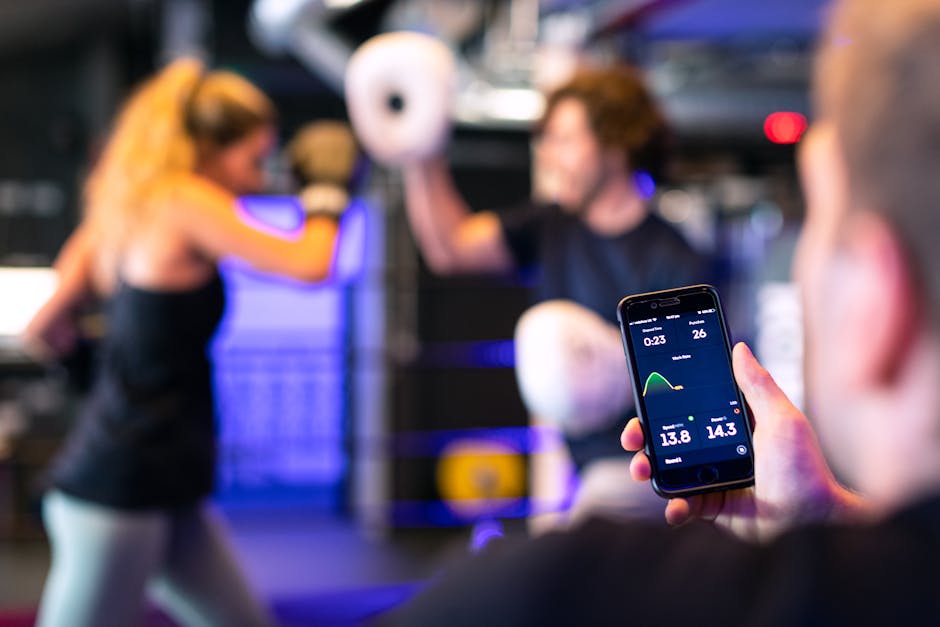
Photo by ThisIsEngineering on Pexels
This changes your sensor selection and UI immediately. A power meter designed for Zwift requires crank-angle resolution that a generic cycling computer ignores. A heart rate strap built for Peloton’s ecosystem must broadcast on ANT+ and BLE simultaneously with specific advertising intervals to appear in their discovery flow. Wahoo’s Elemnt computers mirror the lap-marking gesture in their companion app because the hardware team mapped the API endpoints before freezing the enclosure, ensuring that physical actions translate directly to cloud-side data events.
If your device generates data the app cannot parse—custom metrics without standard FIT file mappings, or proprietary coordinate systems—you create a translation layer that introduces latency and error. The design decision here is architectural: adopt the app’s data model as your own, or accept that your device will always feel like an accessory rather than a native extension of the athlete’s digital body.
The Sync Moment as Trust Event
The highest-stress moment in connected sport UX is not during the exertion. It is the ten seconds after the athlete stops the timer, heart rate still thumping, when they pull out their phone to confirm the interval registered before the cooldown begins.
In this moment, Bluetooth stack stability matters more than industrial design aesthetics. If the sync hangs, or if the lap splits arrive truncated, the user does not blame the app. They blame the $400 piece of hardware strapped to their wrist. Garmin’s dominance in the watch market rests partly on their ability to make this handoff invisible; the Forerunner series buffers data locally and pushes to Connect with a haptic confirmation that arrives before the athlete has wiped sweat from their eyes.
This requires designing for radio physics as deliberately as ergonomics. Metal enclosures block 2.4GHz signals. The wrist is a lossy environment for antennas. If your integration relies on real-time streaming rather than store-and-forward, you must account for the fact that gyms are Faraday cages of competing signals. A device that requires manual sync workflows will see substantial user drop-off within three months, regardless of sensor accuracy.
Physical Controls as API Endpoints
When the user interacts with your device mid-effort, they are not controlling hardware. They are manipulating data that will live in the cloud. Every button press must map to a specific JSON payload or FIT file marker that the app recognizes as meaningful.

Photo by MART PRODUCTION on Pexels
Consider the lap button. In Strava, marking a lap creates a segmentable data point that enables social comparison. In TrainerRoad, it marks the boundary between workout intervals. In Apple Health, it may not register at all. The physical design of the button—its resistance, its position relative to the grip, whether it requires a thumb or index finger—must align with the frequency and urgency of that API call.
Whoop eliminated buttons entirely because their ecosystem prioritizes passive, always-on monitoring over event-marking. Coros watches use a digital crown for precise elevation calibration that feeds into their proprietary gradient algorithms before syncing to third-party apps, turning a physical control into a data input method that precedes cloud transmission. The hardware is the input method for a database schema you do not own. This is API sports device engineering made tangible: the enclosure must telegraph the data structure beneath.