Bang Design

How to design access control devices for factories

Industrial Access Control Hardware: Engineering for Contamination, Not Around It

The 4:47 PM shift change at a food processing plant represents a $2.4 million annual liability if authentication fails. Three hundred workers converge on twelve ingress points, hands coated in proteins and plant oils, attempting to clock out through readers calibrated for clean office environments. Factory entry device engineering fails when it treats contamination as an edge case rather than the primary operating condition. The successful industrial access control hardware design accepts that grease, vibration, and thermal shock are the baseline environment, and builds the authentication protocol around physiological friction rather than despite it.

Contamination Physics as the Primary Design Variable

That physiological friction manifests first as surface contamination on the sensor interface. Capacitive fingerprint sensors fail when moisture or dielectric grease creates false capacitance paths. Optical sensors blind when aerosol cutting fluid films across the prism. In product engineering terms, this is not a maintenance schedule problem but a signal-to-noise issue at the boundary layer. Invixium markets touchless biometric terminals for environments where glove use is mandatory, eliminating the hand-contact surface entirely. HID Global’s iCLASS SE platform emphasizes chemical resistance for manufacturing deployments, accepting contact but hardening against it. Because a false rejection at shift change costs overtime labor and throughput delays while a false acceptance merely logs an anomaly, sensor selection prioritizes environmental immunity over template matching precision.
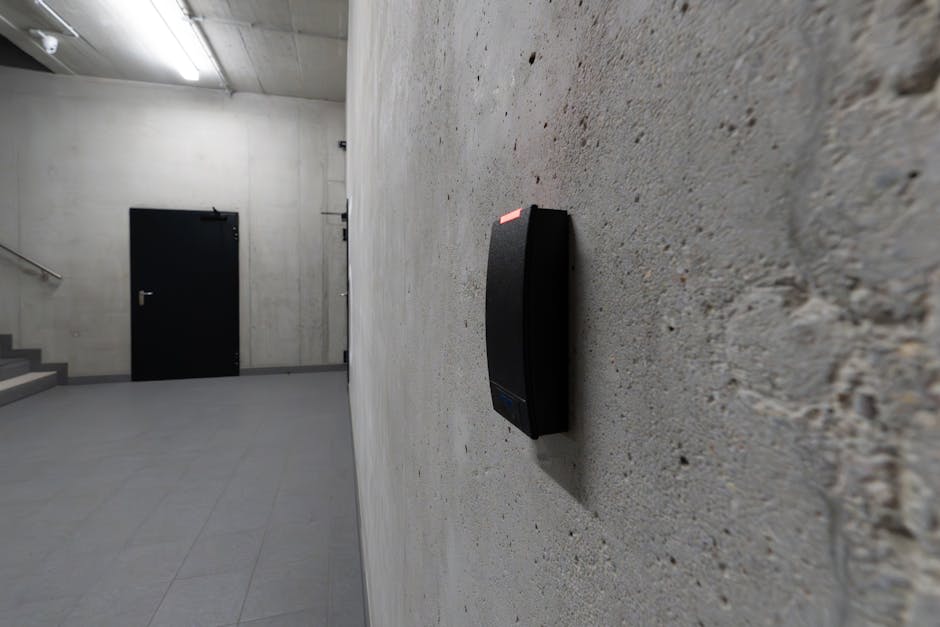
A smart electronic access terminal mounted on a concrete wall in an industrial interior for enhanced security.

Photo by Jakub Zerdzicki on Pexels

Ergonomics Override Security Posture in Production Environments

Contamination compounds when combined with mandatory personal protective equipment. Cut-resistant Kevlar gloves conduct poorly through capacitive screens. Nitrile coatings slip on glossy authentication panels. Workers often carry tools in both hands, leaving only an elbow or a badge clipped to a belt available for interaction. The worker authentication device must accept that the user has one free hand at best, and that hand may be holding a fifteen-pound torque wrench or be covered in thermal paste. Mounting height and angle cannot follow ADA office standards when the user population averages six-foot-two in hard hats and cannot stop walking to focus on a screen. At 4:47 PM, the device must work in the ambient chaos of shift overlap, not in controlled testing conditions.

Environmental Hardening Defines the User Experience

The physical abuse extends beyond the interface to the entire device envelope. IP67 sealing is table stakes for factory floor deployment, yet thermal cycling from minus twenty degrees Celsius at loading dock doors to fifty degrees Celsius near curing ovens creates condensation inside sealed units. Vibration from nearby stamping presses loosens M12 connectors over months. High-pressure washdowns during sanitation cycles blast directly into reader bezels. Industrial security device UX is not about interface animations but about tactile feedback through welding gloves and readable contrast in sodium vapor lighting. Manufacturing specifications become usability specifications when the alternative is a device that functions perfectly in the lab but fails during a safety-critical lockdown when seconds matter.
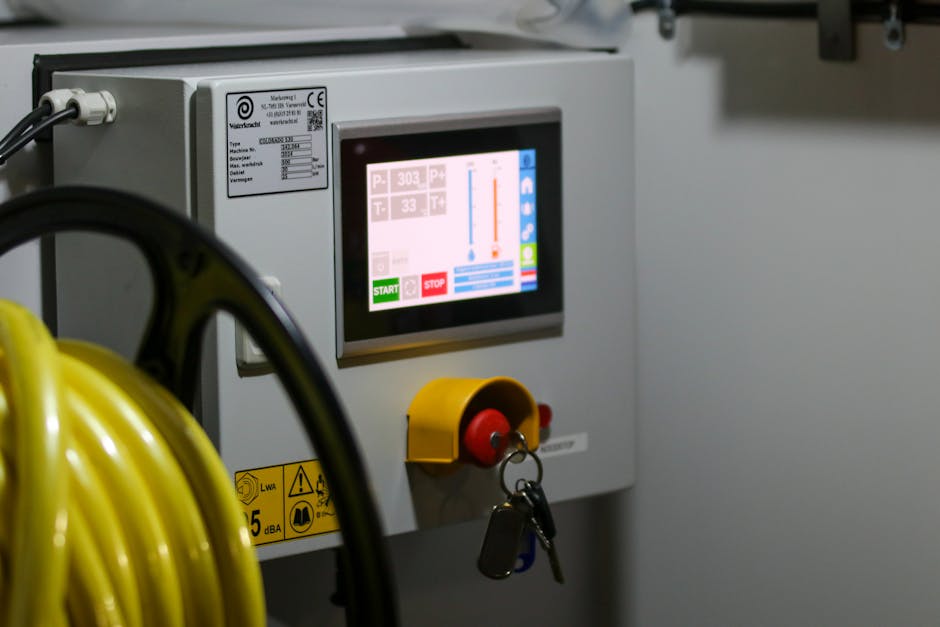
Close-up of an industrial control panel displaying safety features and a digital screen.

Photo by Freek Wolsink on Pexels

Modality Selection Determines System Reliability

These constraints force a re-evaluation of which authentication factors actually function in production environments. RFID access control factory implementations dominate heavy industry because proximity cards tolerate grease and vibration that destroy capacitive sensor reliability, though cards themselves get lost, shared, or left in lockers during emergency evacuations. Biometric access control industrial deployments using iris recognition bypass hand contamination entirely, but require precise positioning that conflicts with safety glasses or welding helmets. The factory gate control system architecture must support modality failover, card plus PIN, or biometric plus supervisor override, because single-factor reliability is a statistical impossibility in these environments. This redundancy acknowledges that authentication is workflow lubricant, not barrier, and workflow stoppage is the actual security failure.

If you’re designing the next generation of industrial perimeter security, the difference between a pilot and a full deployment often comes down to whether the device survives its first week of sanitation cycles. Bang Design has spent 25 years taking products from concept to manufactured reality across industrial environments. Their subscription-based model means you get a full-stack team, design, engineering, visualization, and production, without the overhead of a traditional agency. Explore their industrial authentication work and start your next project with a team that builds for factories, not offices.

See all plans

Get in touch with us

By registering, you confirm that you agree to the processing of personal data by BangDesign as described in our privacy policy