Mechanical Mounting on Legacy Equipment Surfaces
That constraint inheritance starts with the physical envelope. A greenfield cabinet arrives with DIN rails spaced to IEC standards, cutouts pre-stamped for cable glands, and clearance zones calculated for thermal management. Brownfield reality is constraint archaeology: a cramped 1989 panel with irregular hole patterns, conduit already occupying every serviceable path, and paint layers that laugh at adhesive mounts. When Augury deploys vibration sensors on legacy rotating equipment, the industrial design must accommodate everything from smooth cast housings to ribbed motor frames without custom brackets. Magnetic bases fail on aluminum; adhesive fails in oil mist; drilling voids warranties. Picture a maintenance technician at 2 AM, flashlight in mouth, trying to secure your sensor to a vibrating pump with gloved hands. The successful factory retrofit device design treats every surface texture, clearance gap, and environmental rating as a design constraint to be solved, not a specification to impose. A mounting decision made for a 1997 servo drive becomes a vibration isolation problem for your accelerometer, and your device has to solve it anyway.

Photo by Julio Muebles on Pexels
Power Harvesting and Protocol Bridging for Brownfield Plants
The electrical layer compounds the mechanical problem. Greenfield devices assume 24V DC regulated power and Cat6A drops to every node. Brownfield devices discover their environment: 120V AC tapped from a nearby junction box, 24V buses already loaded to 85% capacity, or worse, no low-voltage infrastructure within ten meters. Banner Engineering solved this for wireless retrofit sensors by designing for battery life measured in years and connectivity that bypasses plant networking entirely. Industrial device retrofit engineering means treating power and data as found objects. You harvest energy from vibration or solar because running conduit costs more than your hardware. You use RS-485 transcievers because the PLC speaks Modbus, not OPC-UA. You design for electrical noise immunity because variable frequency drives emit harmonics that scramble unshielded signals. Every protocol bridge is a failure point and a margin killer, and IT departments will view your Ethernet connection as a security threat to be quarantined behind VLANs you cannot access.
Fifteen-Minute Installation as Hard Constraint
Those adapter decisions determine your business model. In greenfield plant device engineering, you optimize for BOM cost because installation is amortized across thousands of identical skids. In brownfield device deployment, you optimize for installation time because a controls engineer billing $175 per hour stands between your product and revenue. The threshold is brutal: if installation exceeds fifteen minutes, you compete with duct tape solutions; if it requires a PLC programmer, you compete with consulting engagements. Legacy machine integration device design succeeds when a maintenance technician, armed with only a work order and a flashlight, can complete the physical and logical integration before the production line restarts. The hardware must contain the entire complexity budget because the installer is the customer. This is why retrofit devices often ship with configuration apps that require zero coding, while greenfield devices expose APIs for system integrators. You are selling time reduction, not feature accumulation.
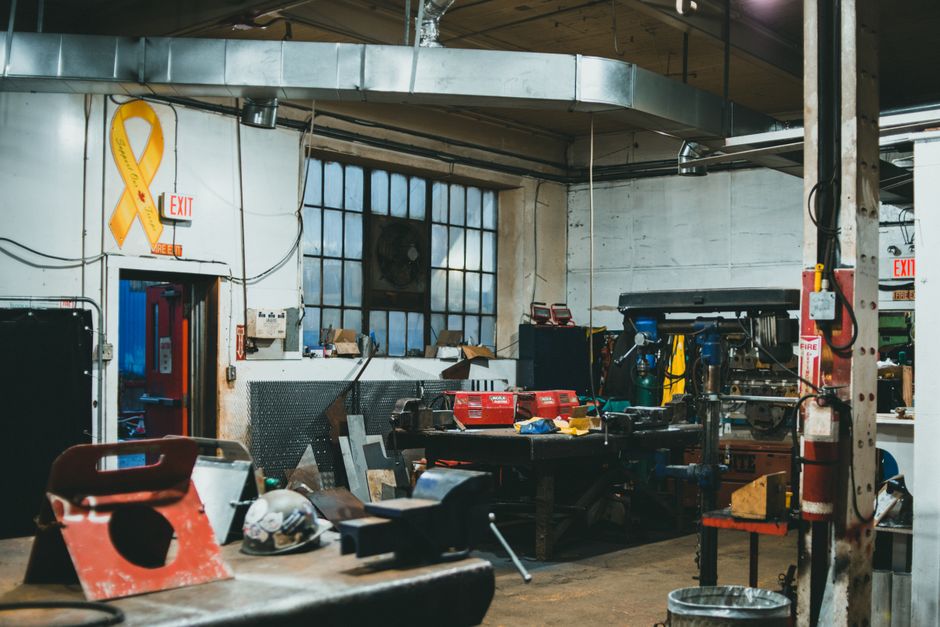
Photo by Jonathan Cooper on Pexels