The 2.4-Second Cycle Determines Everything
Production economists measure garment assembly in Standard Allowed Minutes (SAMs). A side seam on a basic tee requires roughly 0.04 SAMs. That translates to approximately 2.4 seconds of permitted handling time. Within that window, the operator must position the fabric, guide it through the machine, and remove the finished piece. Sewing line device UX that requires a button press adds half a second. A touchscreen interaction adds three. Either deviation pushes the operator below minimum wage thresholds. This means textile production devices cannot use interfaces that exist in the same dimensional plane as the work. The device must collect data or deliver instruction through the operation itself, via machine vision that tracks fabric alignment without markers, or audio cues that harmonize with the motor’s natural rhythm rather than interrupting it. Any interaction that forces the operator to break eye contact with the needle creates a quality defect or a repetitive strain injury.

Photo by Tima Miroshnichenko on Pexels
Hands Occupied, Eyes Locked
The physical reality of apparel factory hardware is that operators handle fabric with both hands while maintaining visual fixation on a moving needle. The haptic sensitivity required to align slippery knits or bias-cut silks leaves no cognitive bandwidth for secondary tasks. Gerber Technology’s automated cutting systems succeed because they remove fabric handling entirely from the operator’s station, a model that works only at scale. For devices that must coexist with manual sewing, the interface must migrate to foot pedals, ambient audio, or postural sensors. Consider the fabric inspection device category. Traditional inspection tables require workers to stop, spread the cloth, and examine it under fixed lamps, a process that breaks the production cadence. Modern implementations use overhead machine vision arrays that scan fabric as it moves from cutting to sewing, flagging defects via projected light on the table surface rather than screen-based alerts. The worker notices the anomaly through peripheral vision without halting the feed.
The Environment Fights Back
Garment factories generate specific industrial hazards that consumer electronics cannot survive. Cotton lint accumulates in vents at densities that would suffocate standard cooling fans. Mineral oil from sewing machines aerosolizes into a fine mist that coats every surface. Vibrations from needle bars at 4,000 RPM create harmonic resonance that loosens standard screws within weeks. Textile factory device design must prioritize sealed acoustic mesh over active cooling, potted PCBs over socketed components, and vibration-isolated mounts that account for the specific frequency spectrum of Juki or Brother industrial heads. Ingress protection ratings here are not marketing specifications but survival metrics. IP54 is the minimum viable threshold; anything less fails within a quarter. The mechanical architecture must assume that maintenance windows occur quarterly, not weekly, and that compressed air is the only cleaning tool available on the floor.
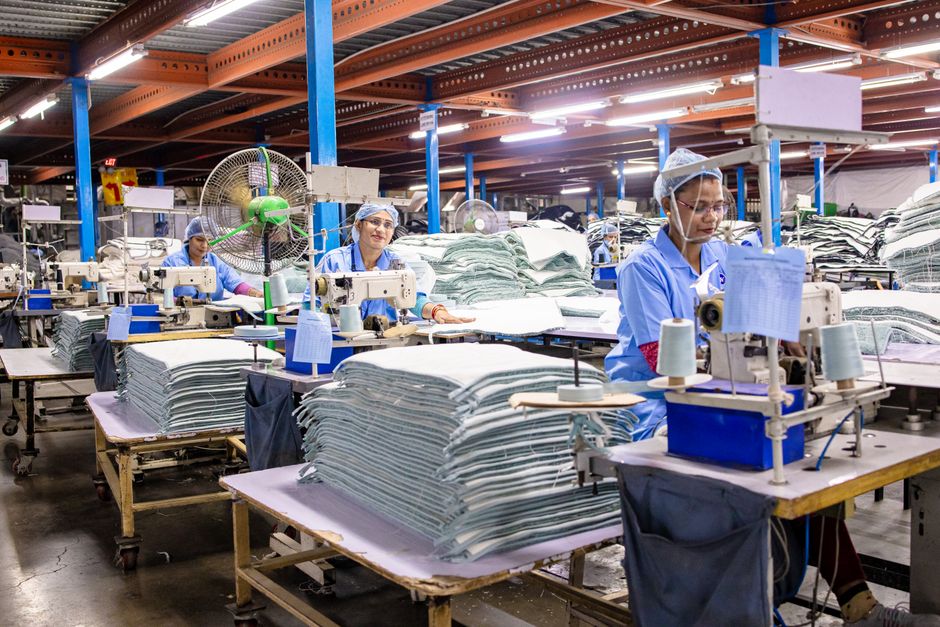
Photo by EqualStock IN on Pexels
Data Extraction Without Interruption
The connectivity requirement creates the deepest paradox. Factory managers need real-time visibility into line balancing, defect rates, and operator efficiency to compete with automated micro-factories in Portugal or Turkey. Yet the previous constraints make traditional IIoT dashboards impossible. The solution lies in passive sensing modalities. RFID tags embedded in fabric bundles can trigger line-of-sight readers as the material moves through stations, logging timestamps without worker interaction. Acoustic sensors trained on sewing machine motor signatures can detect thread breaks or skipped stitches from sound alone, eliminating the need for operator-reported downtime. These garment manufacturing device engineering choices prioritize signal inference over explicit input. When Bang Design develops hardware for these environments, the engineering specification treats operator interaction as a failure mode rather than a design feature.