Signal Triage: Separating Stop-Now From Log-It
Modern production equipment generates simultaneous fault states, predictive maintenance alerts, cycle completions, and quality deviations. In the eight seconds it takes an operator to cross a work cell, they can physically perform one intervention. Yet most HMI state display design attempts to show everything, everywhere. This creates a dangerous latency: the operator must stop, locate the specific screen, navigate menus, and interpret symbols while the machine continues its trajectory toward failure.

Photo by jordan besson on Pexels
The hardware solution is aggressive signal filtering. Your device architecture needs to sort machine telemetry into three action categories: stop now (safety-critical), decide within sixty seconds (economic-critical), and log for shift handover (analytical). This triage logic lives in the edge computing layer, not the cloud. A production machine state indicator that waits for server round-trips to display a thermal runaway warning has already failed its primary use case. The device firmware must contain deterministic logic that can override the plant network and trigger local alerts when latency exceeds 50 milliseconds.
Encoding Urgency Without Relying on Color or Text
Once filtered, these signals must reach the operator through channels that don’t require foveal vision. Red-amber-green status lights are insufficient; they assume optimal viewing angles and color-accurate vision that safety glasses, welding helmets, or age-related macular degeneration distort. An operator state awareness device needs a multi-modal hierarchy: directional audio to locate the fault source, pulsing frequency to encode urgency (2 Hz for caution, 8 Hz for immediate action), and haptic feedback for environments above 85 dB where hearing protection is mandatory.
Rockwell Automation‘s Allen-Bradley PanelView terminals provide visual fault data but require operator gaze, a gap when the operator is loading parts or clearing chips. Toyota’s Andon systems solve this by using stack lights with physical height and flash patterns visible across 50 meters, shifting the burden from the operator’s eyes to the environment. Your hardware must extend this principle into wearables or environmental projections, because a vibration pattern on a wristband can convey “Tool 3 temperature rising” without the operator looking away from the part they are loading. This means your device form factor must escape the machine enclosure and enter the operator’s personal space.
Distributed Placement Across Machine, Aisle, and Operator
Machine status display design traditionally assumes an operator standing at ergonomic height facing a fixed panel. Actual production work involves kneeling to clear chip conveyors, reaching into fixtures, and walking between cells carrying components. The device must occupy the operator’s natural field of motion, not just their line of sight.
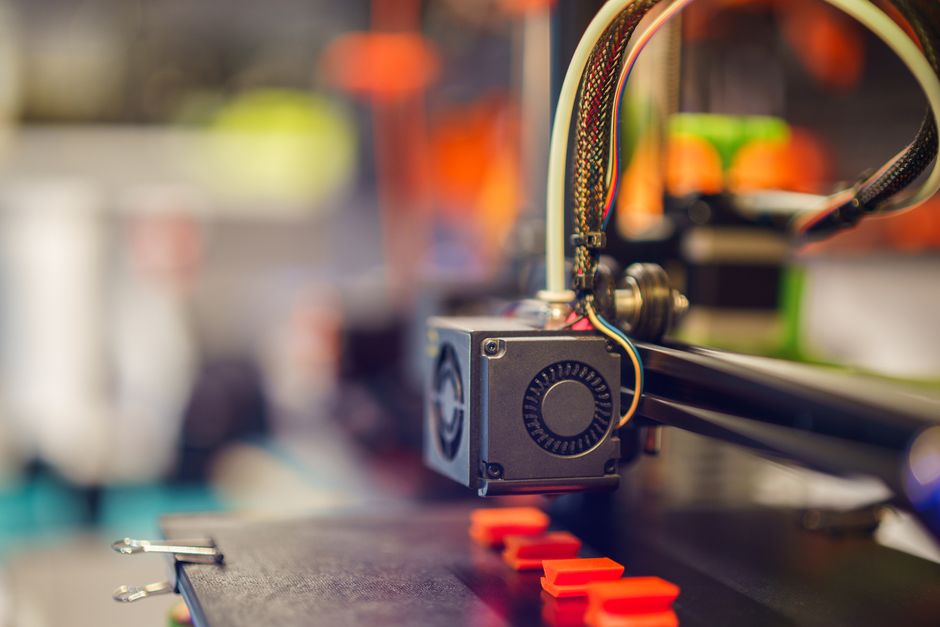
Photo by Jakub Zerdzicki on Pexels
This means distributing state indication across three zones: the machine itself (for localized faults), the aisle (for cell-level status), and the operator’s body (for personal alerts). A light bar mounted above the machine at 2.5 meters provides ambient awareness to passing supervisors. A floor projector casting the current cycle time onto the concrete in front of the operator maintains awareness during loading tasks. The hardware decision here is architectural: you are not building a display unit but a distributed sensor-to-actuator network. This means your industrial design must standardize mounting systems, cable management, and ingress protection across three distinct environmental contexts, machine oil, foot traffic, and human sweat.