Tactile feedback under gloved operation
That muscle memory depends on consistent tactile feedback, which factory environments systematically destroy. An inspector wearing cut-resistant gloves cannot operate a capacitive touchscreen designed for bare fingers, and vibration from adjacent machinery renders delicate haptic feedback useless. This changes the input paradigm entirely. Physical buttons with distinct travel distances and audible clicks become signal integrity features, not nostalgic design choices. The spacing and profile of these controls must accommodate nitrile or leather work gloves without button hunting, because in high-speed line inspection, a two-second pause to locate a control is a two-second window for the next defect to pass unchecked. Ingress protection requirements complicate this further; sealing a device to IP65 standards often muffles acoustic button feedback and stiffens actuation force. The acoustic design of the housing becomes as critical as the switch mechanism itself.
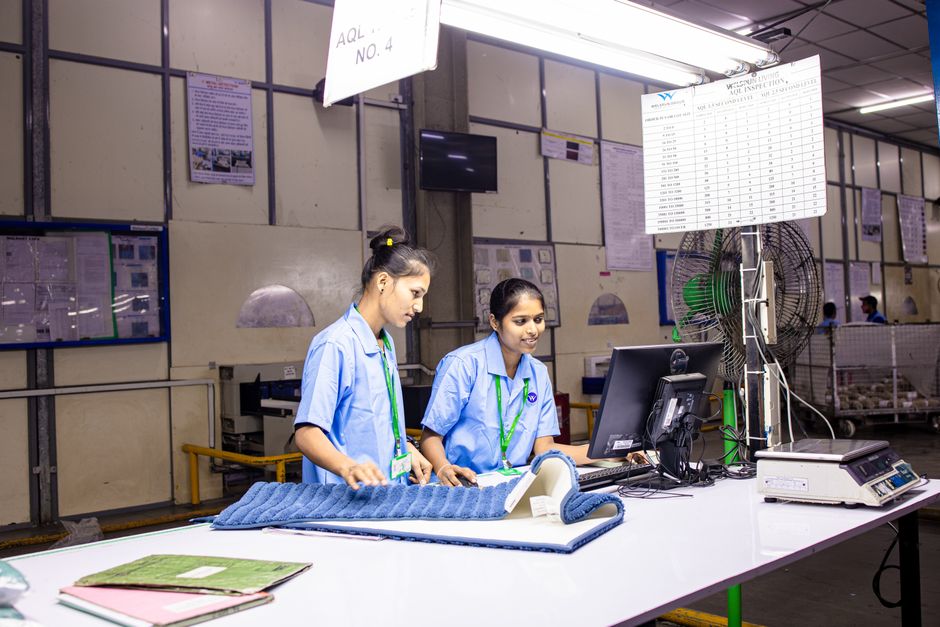
Photo by EqualStock IN on Pexels
Thermal expansion as a measurement variable
The grip geometry that enables blind operation creates a deeper conflict. Ergonomic contours require polymer materials that absorb impact and provide thermal insulation, yet precision metrology demands the dimensional stability of aluminum or engineered ceramics. This is where many quality control handheld device projects fail within their first production year. A device calibrated at laboratory temperature drifts measurably when the housing warms in a 35°C injection molding bay, or when the inspector’s hand heat transfers through a thin-walled grip section. The coefficient of thermal expansion for the housing material becomes a specification in the measurement algorithm. Some non-destructive testing devices solve this by isolating the sensor in a thermally stable ceramic sub-assembly while surrounding it with a compliant polymer exoskeleton, accepting the engineering complexity of floating mountings to preserve measurement integrity.
Optical isolation from impact forces
Surface inspection device design compounds these thermal challenges with optical constraints. Gloss measurement, defect photography, and colorimetry require consistent lighting geometry, yet the device must survive repeated drops onto concrete and exposure to cutting fluids. The solution is not ruggedizing a smartphone approach, but isolating the optical path from the structural frame. A flexure-mounted sensor assembly inside a compliant outer shell maintains lens alignment during impacts while allowing the outer housing to deform and absorb energy. This architecture separates the sealing strategy; the optics live behind a replaceable sapphire window with its own IP rating, while the electronics occupy a separate sealed chamber. Devices that maintain calibration after field impact rely on this kinematic isolation rather than brute-force rigidity, a principle that protects measurement credibility in high-consequence environments.
Photo by EqualStock IN on Pexels
Software design for peripheral-vision workflows
The software layer faces the same environmental hostility. Inspection workflows should progress without nested menus, because menu navigation requires foveal vision that should remain on the part, not the screen. Progressive disclosure, where the device presents only the next required input based on the previous measurement, reduces cognitive load to the reflex level. High-contrast monochromatic displays often outperform color screens in direct sunlight, and the information architecture must support peripheral reading. The inspector should know a measurement is out of spec from the color of the screen glow in their peripheral vision, without breaking focus on the seam or surface being examined.