Downtime Costs More Than Replacement
Traditional rugged device design targets lifetime value for a single owner. A field engineer might tolerate a day of downtime for depot repair because they own the tool. Rental fleet rugged device economics invert this calculation. If a construction tablet rents for $80 daily, five days in transit to a service center erases the entire hardware margin. Zebra Technologies learned this with their TC5x series, designing hot-swappable batteries and modular I/O boards specifically for rental partners who could not afford depot-only service.

Photo by Jan van der Wolf on Pexels
This shifts the definition of ruggedization from surviving extreme drops to surviving uninterrupted deployment. The device must fail gracefully and announce its failure before it dies completely. Shared device design requires that critical components degrade predictably rather than catastrophically, giving fleet managers visibility to stage replacements before the unit goes offline.
Designing for Anonymous Abuse
Consumer ruggedization assumes the user will eventually learn not to drop the device. Device rental pool hardware assumes the opposite: every handoff is a first interaction with zero learning curve. Users jam connectors upside-down, operate touchscreens with work gloves, and toss units into truck beds in rain. Panasonic Toughbooks survive these environments not merely through thick magnesium shells, but through port designs that physically prevent incorrect cable insertion and screen assemblies that tolerate repeated pressure from cleaning solvents.
This behavioral reality requires redundant protection systems. A sealed enclosure protects against weather; a secondary conformal coating protects the PCB if the seal fails. Drop specifications must account for the fact that rental users do not use hand straps or cases. The device must survive the floor of a pickup truck without accessories, because accessories get lost in the first week of a rental cycle.
Field Repair Is the Only Repair
When protection layers finally fail, the device cannot return to a factory service center. Ruggedized fleet hardware must support modular field repair by technicians with minimal training. This affects every design decision: battery compartments need mechanical latches, not adhesive; displays must separate from digitizers; mainboards must expose test points for diagnostic tools without full disassembly.
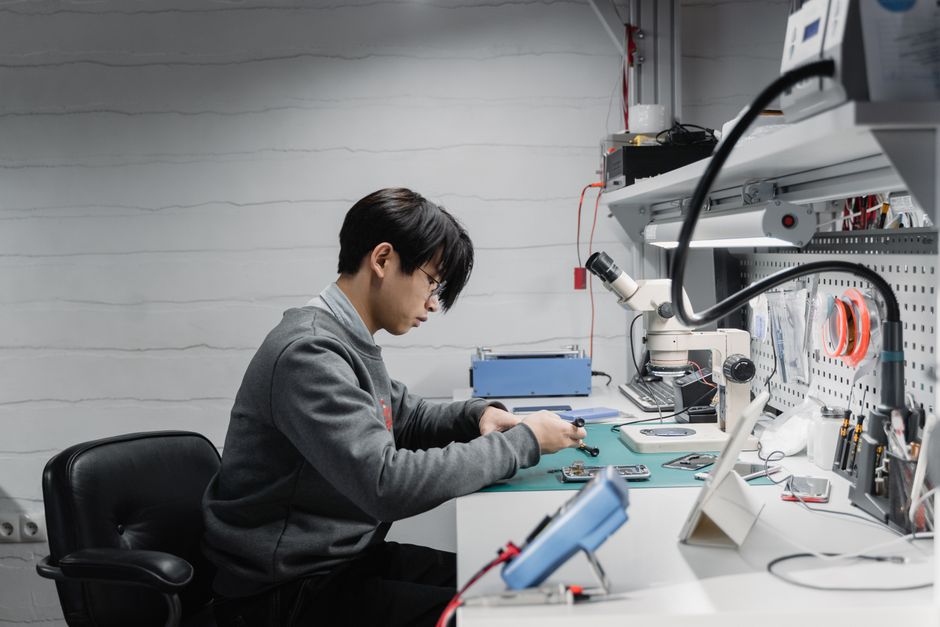
Photo by Tima Miroshnichenko on Pexels
IP ratings complicate this architecture. A device rated IP65 requires gasket management protocols that survive repeated opening by rental depot staff. Getac addresses this with color-coded torque-limiting screws and captive gaskets that cannot be lost during battery swaps. The goal is a 15-minute turnaround in a parking lot, not a two-week cycle in a clean room, which matters because a device shipped back to base is revenue stopped cold.
Telemetry as a Physical Component
To prevent failures entirely, rental device lifecycle engineering requires the hardware to report its own state. Accelerometers log drop events. Humidity sensors detect seal breaches before corrosion begins. Battery management systems track cycle counts to predict end-of-life within a specific rental window. This transforms fleet management from reactive logistics into predictive operations.
These sensors are not software features; they are physical components that affect PCB layout, power budgets, and antenna placement. A cellular modem for telemetry becomes as essential as the CPU. Caterpillar phones integrate this deeply, with shock sensors that trigger automatic diagnostic uploads after impact events, shifting liability from the rental company to the data trail. The enclosure protects the electronics, but the telemetry protects the business model.