
Introduction
Design for Injection Moulding is an emerging specialist practice under the Design for Excellence (DFX) ideology. DFX is a set of fast maturing methods for managing design and production processes. These methods find more and more use in product design today because of the fast product lifecycle and focus on costs.
Injection molding is a high-volume manufacturing process that produces parts by injecting molten plastic into a precisely engineered mold. Design for Injection Molding (DF-IM) is the crucial process of designing parts specifically for efficient and cost-effective production via this method. Understanding DF-IM is critical for anyone involved in product development, from engineers and designers to procurement and manufacturing teams. Its importance is growing as manufacturers seek to optimize production and meet increasingly demanding product requirements.
Why DF-IM Matters Today
Industry experts often estimate that well over 70% to 80% of all manufactured consumer and industrial products contain at least one injection moulded part. Ignoring DF-IM principles can lead to significant manufacturing delays, increased costs, and even product failure. DF-IM ensures parts are manufacturable, functional, and meet quality standards while minimizing waste and maximizing efficiency.
Definition: What is Design for Injection Molding?
DF-IM is a proactive design methodology that integrates manufacturing considerations into the initial stages of product design. It’s not just about creating a 3D model; it's about understanding the limitations and capabilities of the injection molding process and incorporating them into the part's design. This ensures the final product is not only aesthetically pleasing and functional but also manufacturable efficiently and economically.
Key Principles and Core Concepts
Several key principles guide effective DF-IM:
1. Material Selection:
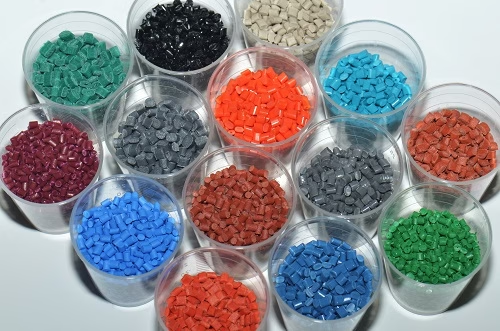
Choosing the right plastic material is fundamental. The material's properties (strength, flexibility, heat resistance, etc. ) directly impact the part's functionality and the molding process itself. Factors like melt flow index (how easily the plastic flows) and shrinkage rate must be carefully considered.
2. Wall Thickness Consistency:
Uniform wall thickness is crucial for consistent cooling and minimal warping. Uneven wall thicknesses can lead to stress concentrations, sink marks (indentations), and structural weaknesses. Designers aim for consistent wall thickness throughout the part, with gradual transitions where thickness changes are necessary.
3. Draft Angles:
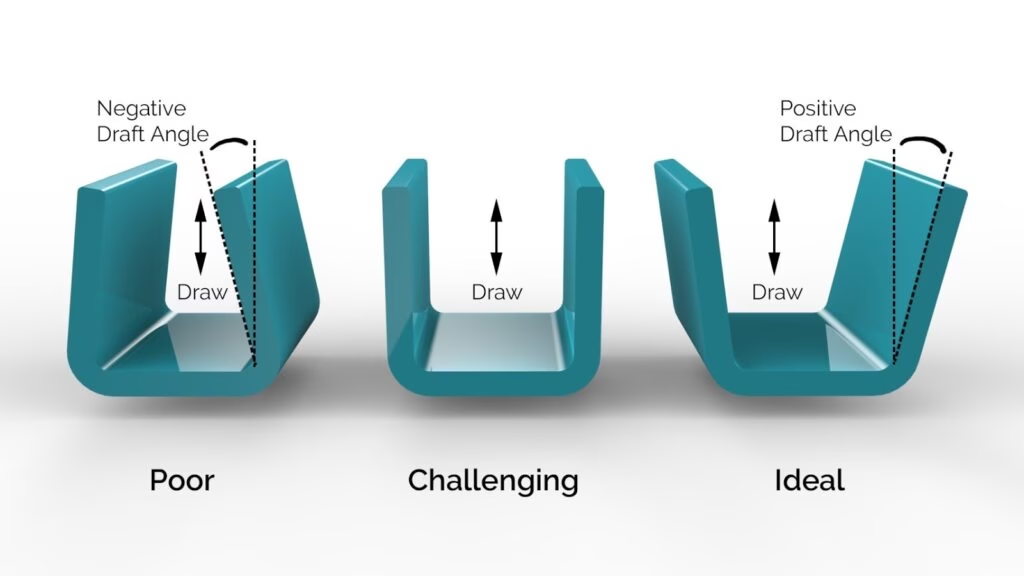
Draft angles are tapered angles built into the part's walls. They allow the molded part to be easily removed from the mold without damage or excessive force. The necessary draft angle depends on the hardness and pliability of the material after moulding and the part's geometry. Insufficient draft can result in parts sticking in the mold and requiring costly corrective actions.
4. Undercuts and Ribs:
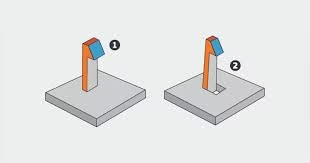
Undercuts (features that prevent simple ejection) and ribs (internal or external strengthening features) require special mold designs, potentially increasing complexity and cost. Designers should minimize undercuts whenever possible, exploring alternative design solutions if unavoidable. Ribs, when used, should be strategically placed and sized to optimize strength without adding unnecessary complexity.
5. Gate Location and Design:
The gate is the point where molten plastic enters the mold cavity. Its location and design influence filling characteristics, weld lines (weak points where plastic flows meet), and part quality. Poor gate placement can lead to incomplete filling, air traps, or excessive stress in specific areas.
6. Ejection System:
The ejection system removes the molded part from the mold cavity. Properly designed ejection features (like ejector pins) ensure that parts are removed cleanly and without damage. If not accounted for during design, ejection problems can significantly hinder the production process.
7. Mold Flow Analysis:
Mold flow analysis (MFA) is a simulation technique that predicts how molten plastic will fill the mold cavity. MFA helps identify potential problems, like short shots (incomplete filling) or air traps, before actual mold fabrication, allowing for design modifications to optimize filling and part quality.
8. Production Volumes:
The part has to be designed for the intended process, such as,
- Insert molding: Insert Moulding process is a popular plastic injection molding technology that allows manufacturers to incorporate engineering plastics with inserts (made of a different material) to achieve products with wear resistance, low weight, and improved tensile strength.
- Double-shot and multi-shot Molding: Two-shot and multi-shot processes combine two or more different polymers during one moulding cycle, allowing for the production of complex parts, such as shoe soles and rugged plastic housings..
How DF-IM Differs From Related Concepts
How does it differ from 3D printing design guidelines?
While both 3D printing and injection molding create physical parts, their design considerations differ significantly. 3D printing allows for complex geometries and intricate details with relatively little constraint on wall thickness or undercuts. Injection molding, however, is constrained by mold design and the need for efficient filling and part ejection. 3D printing is often used for prototyping, short-run production, or highly customized parts, whereas injection molding excels in high-volume, cost-effective manufacturing of standardized parts. A design suitable for 3D printing might be completely unfeasible for injection molding, and vice versa. A comparison table highlights these key differences:
| Feature | 3D Printing Design | Injection Molding Design |
|---|---|---|
| Geometry | Highly complex geometries possible | Simpler geometries preferred |
| Wall Thickness | Wide variations acceptable | Consistent thickness crucial |
| Undercuts | Easily incorporated | Should be minimized or avoided |
| Draft Angles | Often unnecessary | Usually required for easy ejection |
| Material Choice | Wide range, often experimental | Limited by molding process capabilities |
| Production Cost | High for high volumes | Lower for high volumes |
| Production Speed | Relatively slow | Very fast for high volumes |
Real-World Applications
DF-IM principles are applied across various industries:
- Automotive: Interior and exterior parts, dashboards, bumpers, etc.
- Consumer Electronics: Housing for phones, laptops, and other devices.
- Medical Devices: Housing for equipment, disposable components.
- Packaging: Bottles, containers, closures.
- Aerospace: Lightweight structural components.
- Consumer Products: Footwear soles are injection molded
Companies like Toyota, Apple, and Johnson & Johnson routinely employ DF-IM experts to ensure their products are designed for optimal manufacturing.
Common Misconceptions
- DF-IM is only for engineers: DF-IM requires collaboration among designers, structural engineers, and moulding and manufacturing specialists.
- DF-IM adds unnecessary complexity: Effective DF-IM actually simplifies manufacturing and reduces costs in the long run.
- DF-IM is an afterthought: It's most effective when integrated into the early stages of design.
Challenges and Controversies
- Balancing design aesthetics with manufacturability: Sometimes creative designs need to be rethought to meet manufacturing constraints.
- Cost-benefit analysis of mold design: Complex molds can be expensive but may be necessary for intricate parts.
- Environmental impact of plastic use: Sustainable material choices and efficient manufacturing processes are crucial.
Trends and Future Outlook
- Additive manufacturing integrated into DF-IM: 3D printing is increasingly used for prototyping and temporary tooling in injection molding.
- Advanced simulation techniques: MFA is becoming more sophisticated, enabling more accurate predictions and optimization.
- Focus on sustainable materials: Bioplastics and recycled plastics are gaining prominence in injection molding.
- Automation and digitalization: Data-driven design and automated manufacturing processes are improving efficiency and quality.
FAQs
Q1: What is the difference between a gate and a runner? The runner is the main channel carrying molten plastic into the mold, while the gate is the smaller opening where the plastic actually enters the mold cavity.
Q2: How important is draft angle? Draft angle is crucial; insufficient draft can prevent part removal, leading to damage or production delays.
Q3: Can I 3D print a part and then injection mold it? While a 3D-printed part can serve as a prototype, the design typically needs significant modification to meet injection molding requirements.
Q4: What if my part design has an undercut? Undercuts require more complex and expensive molds. Redesigning the part to eliminate the undercut is often preferable.
Q5: How can I learn more about DFM? Many online resources, courses, and workshops provide detailed information on DFM principles and best practices.
Summary
Design for Injection Molding (DF-IM) is a critical methodology for efficient and cost-effective plastic part production. By understanding and applying the key principles of DF-IM, designers and manufacturers can ensure high-quality, functional parts are produced while minimizing waste and maximizing efficiency. DF-IM's importance is only growing as manufacturers face increasing pressure to optimize production and meet demanding market needs. Integrating DF-IM early in the design process is essential for success in today's competitive landscape.