Managing Heat When Metal Must Protect Impact
Every millimeter of elastomer over-molding that absorbs a 1.8-meter drop onto concrete also insulates the processor. In a firefighter rugged handheld, the chassis is not a case; it is the heat sink. Consumer devices dissipate thermal energy through the screen and back glass. A device sealed to IP68 cannot use the display as a thermal pathway because the bonding adhesive required for waterproofing creates a thermal barrier. This forces heat through dedicated copper vapor chambers to the frame, which must be thick enough to survive torsion but light enough to carry for twelve-hour shifts. The Panasonic Toughbook G2 solves this through a magnesium alloy exoskeleton that doubles as a heat spreader, accepting that the surface temperature will reach 48°C under load, acceptable for vehicle-mounted use but problematic for body-worn EMT devices where skin contact limits surface temperatures to 41°C, forcing designers to choose between throttling the CPU or increasing device thickness by 4mm to accommodate graphite sheets.
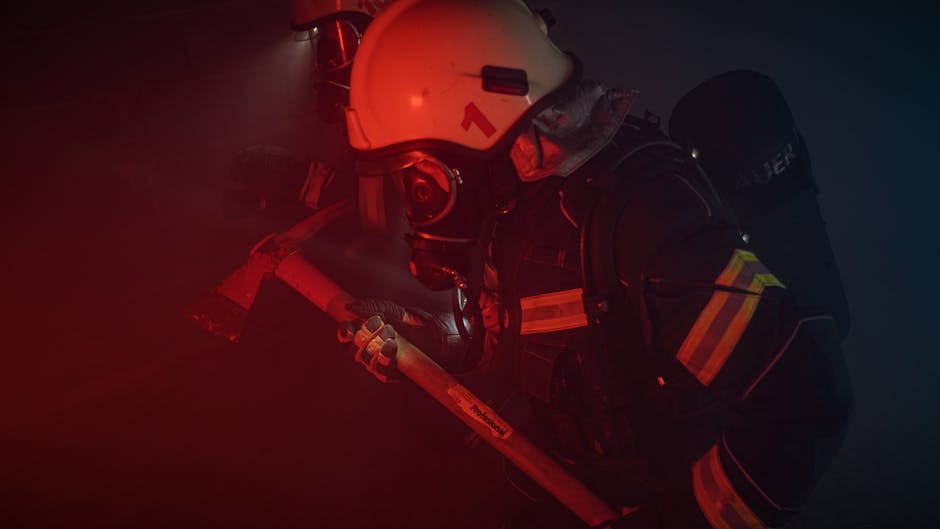
Photo by Nejc Soklič on Pexels
Metal Shielding Blocks Cellular and GPS Signals
That magnesium frame creates the next constraint. Metal enclosures block cellular and GPS signals, yet search and rescue devices often operate at the edge of network coverage where every decibel of antenna efficiency matters. The solution, polymer windows in the metal chassis, creates stress concentration points exactly where the device impacts door frames during forced entry. First responder mobile hardware must use selective metallization or liquid silicone rubber antenna integration, techniques that add forty to sixty dollars in BOM cost and require RF co-design during industrial design rather than after. Bullitt Group’s Cat S62 sacrifices 5G millimeter-wave support entirely to maintain structural integrity; LTE performance in dust-filled air outweighs fragile next-gen connectivity when signal must reach across rubble.
The Glove Problem: interface design for Tactile Barriers
If the radio works and the processor stays cool, the interface still fails when the user wears structural firefighting gloves rated to 250°C, which measure four millimeters thick at the fingertip. Capacitive touchscreens assume a conductive contact area smaller than a gloved fingertip. Paramedic devices in pre-hospital settings face the same constraint with nitrile gloves contaminated by blood or saline, which create phantom touches on standard projected capacitive arrays. The interface must shift to physical buttons with three-millimeter travel and five-millimeter spacing, resistive touch with forced activation pressure, or scanned-array capacitive sensors calibrated for gloved input. Sonim‘s XP8 uses three programmable buttons with tactile ridges spaced for NFPA glove compliance, accepting that the UI must function without pinch-to-zoom or swipes because a firefighter cannot perform fine motor control while wearing PPE.

Photo by Anna Shvets on Pexels