Salt, Steel, and the Chemistry of Failure
In a marine terminal, port worker rugged hardware faces a chemical environment that invalidates most laboratory test assumptions. Salt spray accelerates galvanic corrosion between dissimilar metals, while diesel exhaust particulate creates conductive films on circuit boards. A device that survives submersion in fresh water for thirty minutes may fail in three days of port humidity because the seal material swelled after thermal cycling from 50°C sun exposure to air-conditioned crane cabs.
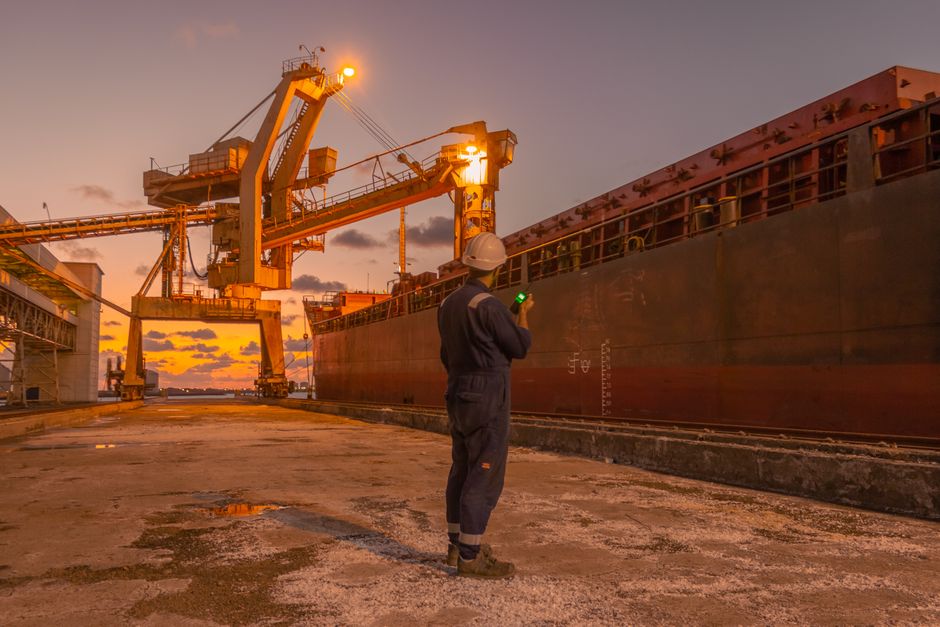
Photo by abdo alshreef on Pexels
The steel infrastructure compounds the risk. When dockworker handheld design assumes drops onto concrete, it misses the reality of container corners, rail bollards, and crane steps. Impact forces concentrate on small radii, stressing housing walls at angles that flat-drop testing never replicates. Gloved operation adds another variable: gloves trap grit that abrades seals and changes grip mechanics, increasing the likelihood of torsional impacts that twist housings and break gasket compression.
When Thermal Management Fights Corrosion Resistance
Waterproof port device specifications usually default to aluminum housings for their thermal conductivity and strength. But aluminum creates electrochemical cells with stainless steel fasteners in salt air, generating oxidation that expands and cracks seals within months. Engineers then turn to polymer housings or specialized coatings, yet polymers trap heat. A processor running at 3W in a sealed polycarbonate enclosure can reach skin-burn temperatures in direct sun, forcing thermal throttling that renders the device useless during peak operations.
The solution requires isolating thermal paths from environmental seals. Some container terminal rugged hardware now uses magnesium alloy with ceramic coatings, or aluminum housings with polymer overmolding that creates the grip surface while isolating metal-to-metal contact. These material systems add cost and assembly complexity, but they prevent the galvanic corrosion that otherwise turns a precision seal into a leak path after six months of exposure.
The Housing as Heat Sink
Without ventilation ports, the enclosure itself must become the radiator. This shifts the industrial design problem from aesthetics to thermodynamics. Fins increase surface area but snag on cargo nets and pockets. Smooth surfaces stay clean but limit dissipation. The effective port logistics device finds a middle geometry: textured patterns that increase surface area minimally while channeling water away from ports, or internal graphite heat spreaders that move processor heat to the housing perimeter where it will not burn a worker’s palm.
Photo by abdo alshreef on Pexels
Battery placement follows the same logic. Lithium polymer cells degrade faster when hot, yet they often sit directly against the motherboard in compact layouts. Separating the battery thermally, using the housing as a heat shield between CPU and battery, extends cycle life beyond the 18-month replacement threshold common in failed deployments. This is thermal architecture before component selection.
The Scan at 3:00 PM
All of this engineering collapses into a single moment: a crane operator scanning a refrigerated container barcode at 3:00 PM in July. The device has been in direct sun for four hours. Rain has started. The operator wears neoprene gloves and cannot feel vibration alerts. The screen must remain readable against glare from wet steel, and the trigger button must work when encrusted with salt residue.
This dockworker handheld design challenge reveals why consumer-derived platforms fail. Capacitive touchscreens register false inputs from water droplets. Glossy screens reflect crane booms and sky. Software timeouts lock the device while the worker climbs down to dry his hands. The successful marine terminal rugged device uses optical bonding to eliminate internal screen reflections, physical scan triggers with 500g activation forces, and palm-rejection algorithms tuned for wet conductivity. These are not feature additions. They are the difference between a tool that survives the environment and one that stops the supply chain.