Environmental Sealing vs. Temporal Serviceability
The rugged hardware industry has optimized for the wrong survival metric. Most devices prioritize IP68 sealing and MIL-STD-810H drop ratings above all else, creating monolithic blocks of resin and adhesive. This achieves day-one invulnerability at the cost of year-three mortality. When the battery capacity drops below 80% after 500 cycles, or when the USB-C port wears out from thousands of insertions, the sealed unit becomes landfill.

Photo by abdo alshreef on Pexels
True long-lifecycle rugged device design requires treating environmental protection and serviceability as concurrent systems, not trade-offs. Panasonic‘s Toughbook series and Zebra‘s enterprise tablets use gasket-sealed back panels and modular internal trays, allowing field technicians to replace batteries and I/O boards without breaking the environmental envelope. The sealing happens at the gasket level, not the adhesive level, and the design accepts a 0.1mm tolerance cost to gain a three-year service window, a meaningful extension when replacement is otherwise impossible.
Battery Architecture as a Lifecycle Design Variable
That service window matters most for the power system. Lithium-ion cells lose 20–30% capacity within 18–24 months under heavy fleet use, yet batteries remain the most common reason for premature device retirement. A non-replaceable battery turns a $2,000 rugged tablet into a brick when ion degradation sets in.
Five-year device durability requires designing the battery as a consumable component, not a permanent fixture. This means standardized cell formats (18650 or 21700 cylindrical cells rather than custom pouches), accessible release mechanisms, and firmware that maintains calibration across swaps. More critically, it requires thermal design that isolates the battery from the processor’s heat. Heat accelerates chemical aging; a device running hot internally ages its battery twice as fast as the calendar suggests. The chassis must act as a thermal buffer, not merely a structural shell.
Component Standardization Outlasts Custom Engineering
The same logic applies to computational modules. Custom carrier boards and proprietary flex cables optimize space and cost for the initial build, but they create parts-availability risk that destroys field device lifecycle management. When a fleet operator needs 500 replacement screens in year four, a custom part that went end-of-life with the chipset generation kills the entire investment.
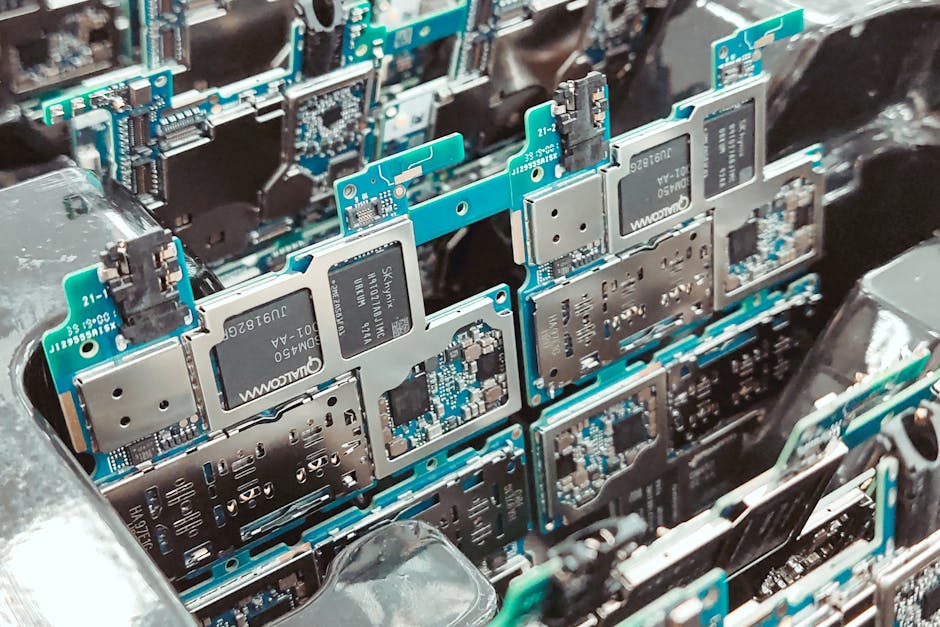
Photo by Andrey Matveev on Pexels
Fleet renewal rugged hardware depends on standard interfaces that outlast any single component generation. M.2 slots for storage, standard mini-PCIe for cellular modules, and MIPI-DSI for displays ensure that replacement parts remain available from multiple vendors years after the original manufacturer stops production. This shifts the design philosophy from integration density to interface longevity. The device becomes a chassis for standards, not a sculpture of bespoke electronics.
The Repair Event as a User Experience
This architecture only delivers value if repairs happen in the field, not in a centralized depot. Depot repair adds weeks of downtime and logistics cost that erase the TCO advantage of durable hardware. The design must assume the technician is wearing gloves, working under a truck, and carrying only basic tools.
Serviceable rugged hardware requires visible, tactile fasteners; Torx or captive screws, not hidden clips or adhesive. Internal components need color-coded connectors and physical keying that prevents incorrect insertion. Handheld Group’s Nautiz devices and some Trimble field computers use modular “sleds” for I/O and power that swap without tools. The goal is a repair that takes less than ten minutes in failing light, because breakdowns happen on schedules that ignore operational convenience. When a device returns to service in minutes rather than weeks, the fleet manager sees the ROI of the initial specification.