Vibration Signatures Differ by Vehicle Type
The vibration spectrum of a reach truck differs from a counterbalance forklift by an order of magnitude in the 20-200Hz range, yet most design teams test only for the 26-drop sequence specified in MIL-STD-810. Consumer tablets die in weeks on warehouse floors not from the occasional falls, but from the eight-hour daily exposure to harmonic resonance that loosens fasteners and fractures BGA solder joints. In rugged vehicle computer engineering, you must characterize the specific vehicle’s powertrain and mast hydraulics before selecting isolators, because a mount tuned for a clamp truck will amplify vibration on an order picker.

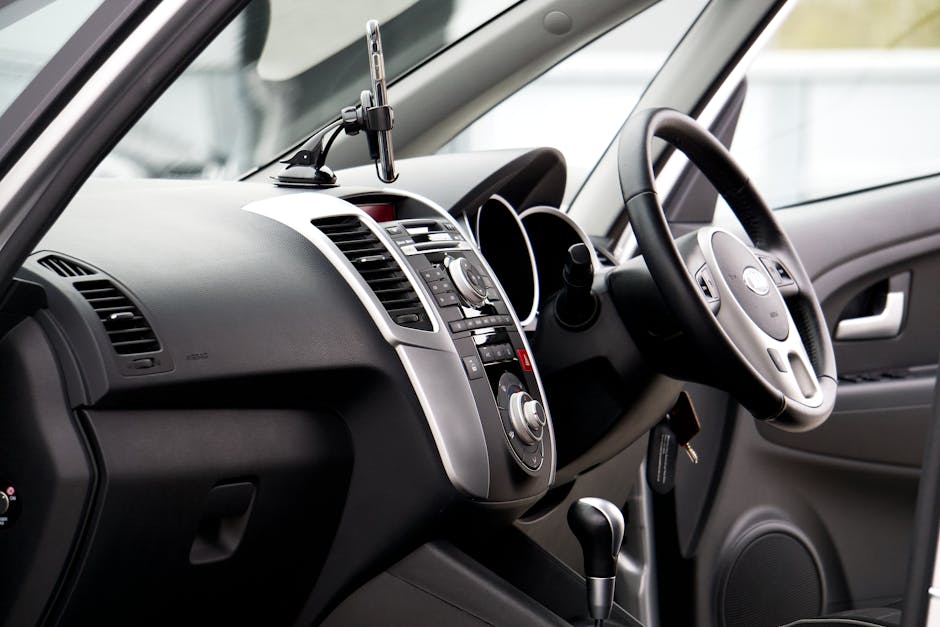
Photo by Anton Ivanov on Pexels
This continuous vibration creates fretting corrosion in every connector. Standard USB-C ports fail because the micro-movements between mated surfaces oxidize the contact plating until resistance rises above the signaling threshold. Vehicle-mount computer design requires either locking connector geometries with positive retention or cable harnesses with strain relief that absorbs motion before it reaches the PCB. The connector is often the first failure point because it concentrates all the differential movement between the vibrating chassis and the isolated electronics.
The Dock Station Becomes a Consumable Component
That vibration management happens primarily at the interface between vehicle and electronics. The vehicle terminal mounting system functions as a mechanical low-pass filter that should sacrifice itself before the compute module dies.
Effective dock station vehicle design treats the mounting cradle as a consumable wear component with a designed-in replacement interval. Rubber isolators compress and harden after eighteen months of cyclical loading; ball joints develop play that transfers shock directly to the screen. If the dock requires replacement every two years but protects a $3,000 computer for seven, the total cost of ownership drops below that of rugged tablets that fail quarterly.
Honeywell‘s Thor VM3 and Zebra‘s VC8300 both use quick-release dock mechanisms that allow operators to hot-swap the terminal while leaving the mount permanently attached to the vehicle frame, recognizing that the mechanical interface will outlast the compute module. The mounting hardware uses over-molded elastomer compounds specifically tuned to damp the dominant frequencies of warehouse vehicles, typically between 50 and 150 Hz.
Sealing Creates a Thermal Prison
Once you isolate the electronics from vibration, you must seal them against pressure washers and conductive dust. But every gasket line and sealing screw adds thermal resistance. In-vehicle rugged display units face a unique thermal trap: the sealed enclosure that achieves IP65 protection against washdowns traps heat from the processor, the backlight, and solar loading through the windshield.
Warehouse vehicles often traverse ambient temperatures ranging from -20°C in cold storage to +50°C in upper rack zones during summer. The display backlight generates 3-5 watts of heat; the processor another 10-15. Without conductive paths to the vehicle chassis, internal temperatures can rise 20°C above ambient. LCD polarizers shift color and lose brightness when they exceed 70°C, rendering pick lists unreadable.
Thermal design requires heat pipes or graphite sheets that conduct heat through the mounting plate while maintaining the compliance needed for vibration isolation. Some designs use the dock station itself as a heat sink, creating a thermal bridge only when the terminal is mechanically locked in place. This simultaneous mechanical and thermal load drives the selection of specific aluminum alloys and engineered polymers capable of conducting heat while damping vibration.