Acme Laundry: From Rags to Innovation

The Rag Merchant Created a Time Machine
In the depths of the Great Depression, a circus worker named Richard Farmer began collecting discarded rags from factory dumpsters around Cincinnati. He washed them by hand in a rented garage and resold them to the same factories the next week. The business was called Acme Laundry, and it was barely distinguishable from survival. But in the 1940s, Farmer’s son Hershell made a subtle alteration that transformed the enterprise from a commodity resale operation into an economic time machine: instead of selling the rags, he leased them.
This shift from transaction to relationship created the first recursive revenue stream. Factories no longer owned their shop towels; they rented them indefinitely, paying weekly for cleanliness while Acme retained ownership of the inventory. The model removed capital expenditure from the customer’s balance sheet and replaced it with an operating expense that renewed automatically. When Richard Farmer Jr. took the helm in the 1960s at age twenty-five, he expanded this logic from industrial wipers to uniforms, and Cintas was born.
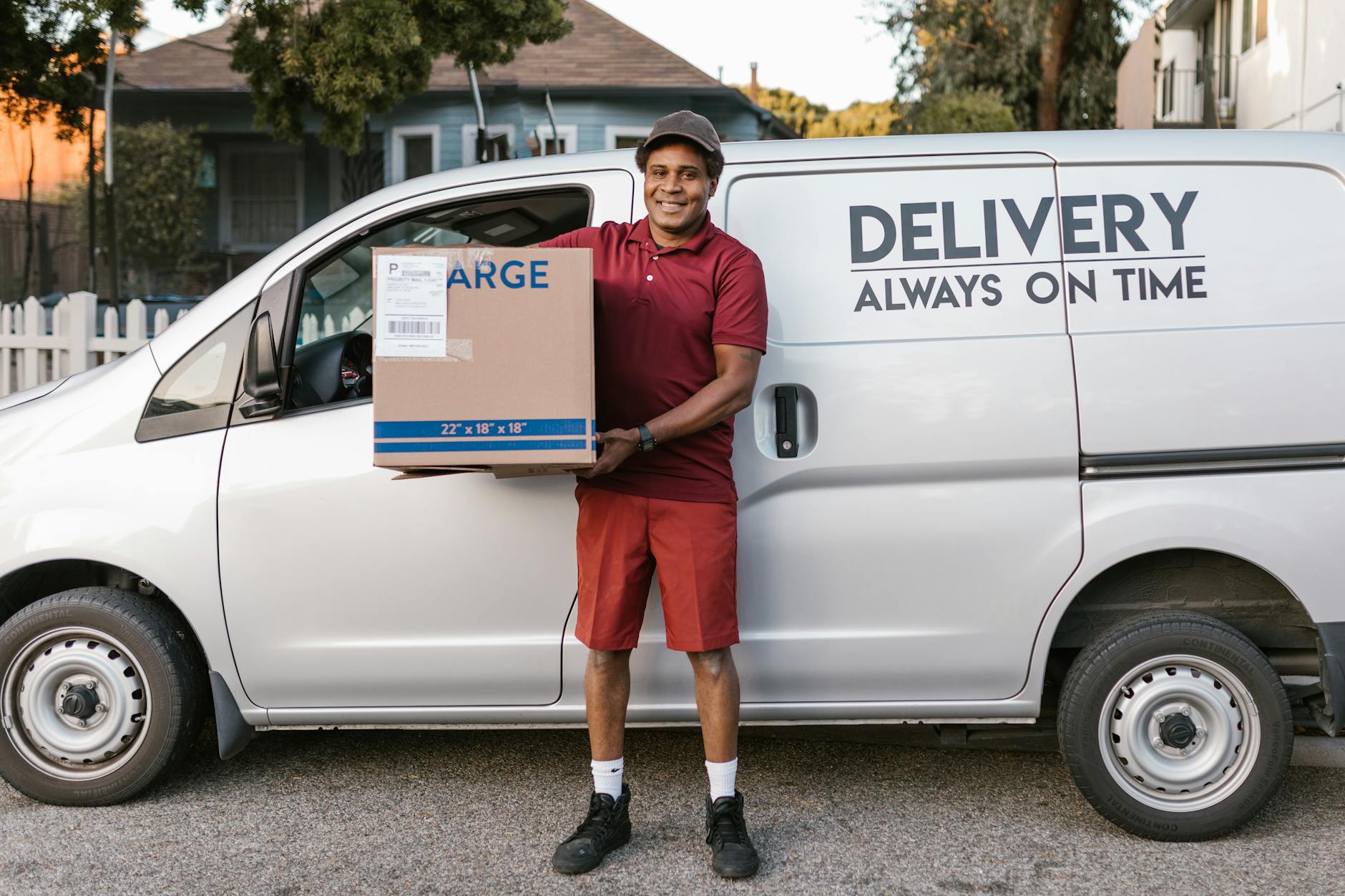
Today, Cintas operates 400 laundry and distribution branches across North America, deploying 21,000 delivery vans to serve one million business locations. It generates approximately $9 billion in annual revenue with operating margins of 23 percent, early triple those of its nearest public competitor, Vestis. The company’s return on operating assets exceeds 50 percent, compared to roughly 10 percent for peers. These numbers describe not merely a market leader but a different category of business entirely: a compounding machine that turns route density into structural inevitability.
The mechanism works like this. Cintas signs multi-year contracts (typically three to five years) with built-in price escalators of zero to two percent annually. It delivers weekly or monthly service through dedicated routes, embedding itself in the operational rhythms of its customers. Approximately 60 percent of organic growth comes from “greenfield” opportunities, businesses outsourcing uniform rental or facility services for the first time, while 40 percent comes from cross-selling additional services (first aid cabinets, fire extinguisher inspections, floor mats) to existing accounts. Customer retention stands at 96 percent, translating to an average customer lifetime of twenty-five years. Competitors run at 85 to 90 percent retention, meaning they must replace 10 to 15 percent of their customer base annually simply to maintain flat revenue.
But the true engine is not merely the recurring revenue; it is the operating leverage hidden inside the route structure. Over the past decade, Cintas has grown organic revenue by 9 percent annually while increasing its route count by only 1 percent. Revenue per route has expanded substantially, spreading the fixed costs of drivers, vehicles, and branch infrastructure across an ever-larger revenue base. Operating margins have expanded from 14 percent to 23 percent over this period, not through pricing power alone but through geometric efficiency. Each additional service added to a stop, whether a first aid cabinet check or a uniform delivery, costs almost nothing incremental while generating full marginal revenue.
Density Is the Actual Product
Most analyses of Cintas focus on the uniform rental market, the size of the addressable base, and the outsourcing trend. These matter, but they miss the essential unit of value. Cintas does not sell uniforms; it sells density. The company is a physical network economics play disguised as a service business.
Consider the infrastructure. To serve one million customers with weekly or monthly regularity, Cintas maintains 400 facilities where garments are washed, sorted, tracked, and distributed. Each facility supports a web of routes optimized for stop frequency. The density of this network creates a local monopoly dynamic: once Cintas achieves sufficient stop concentration in a geographic market, the economics become impossible for competitors to match. A rival entering a Cintas-saturated territory must either accept sub-scale route efficiency (driving vans across town for sparse stops) or engage in ruinous price competition to win accounts from an incumbent with a 96 percent retention rate.
This density compounds. More stops per route justify more frequent service, which improves customer satisfaction and retention. Higher retention justifies investment in specialized salespeople organized by vertical (healthcare, hospitality, manufacturing), who can speak the language of specific industries and identify cross-sell opportunities. Vertical expertise attracts larger national accounts, which bring multiple locations into the network, further densifying routes. The result is a self-reinforcing flywheel where scale begets lower procurement costs, better service quality, and higher pricing power, which funds further branch expansion.
The numbers reveal the mechanism’s power. While revenue grew 9 percent recently, route count grew only 1 percent. This 8-percentage-point gap represents pure operating leverage, ixed costs growing slower than variable revenue. Competitors cannot replicate this without matching Cintas’s century-long accumulation of customer relationships and capital investment. Vestis, the second-largest player, is roughly one-third Cintas’s size and carries six times the net debt-to-EBITDA leverage. UniFirst, the third player, is smaller still. Neither can afford the branch network density required to achieve comparable revenue-per-route economics. Cintas has effectively cornered the physical infrastructure of business uniform logistics, leaving competitors to fight over the scraps of geography where density is thin.
The Greenfield Paradox
Yet this strength contains a structural tension that shapes every strategic decision. Cintas grows primarily through two vectors: greenfield outsourcing conversions (businesses that previously bought uniforms or managed laundry in-house) and density-deepening cross-sales to existing customers. The former drives top-line expansion into new markets; the latter drives margin expansion through route efficiency. These vectors pull in opposite directions.
Greenfield expansion, accounting for 60 percent of organic growth, requires geographic reach. To convert a first-time outsourcer in a new exurb or secondary market, Cintas must extend routes or open new branches before density justifies the fixed costs. This is high-margin growth because it involves no competitive displacement, but it temporarily dilutes route efficiency. Conversely, optimizing for density means saturating existing markets, adding services to current stops, and maximizing revenue per route. This expands margins but risks saturating addressable markets, potentially slowing growth below the 6.5 percent baseline that supports Cintas’s valuation multiple.
The company navigates this paradox through disciplined capital allocation and patience. Rather than chasing growth indiscriminately, Cintas expands its branch network methodically, ensuring that new facilities can quickly achieve the stop density required for profitability. The 2017 acquisition of G&K Services for approximately $2 billion exemplified this approach: G&K added 20 percent to revenue but, more importantly, filled geographic gaps in Cintas’s network, allowing for immediate route consolidation and density gains.

However, the tension remains acute. Overweight greenfield expansion, and Cintas leaves local density gaps that smaller regional competitors can exploit, gradually eroding the route economics that enable 23 percent margins. Overweight density optimization, and the company risks ceding the outsourcing conversion opportunity to competitors willing to absorb short-term losses for long-term relationships. The 1 percent route growth amid 9 percent revenue growth suggests Cintas is currently optimizing for density, extracting efficiency from existing infrastructure rather than building new capacity. This is rational given the margin expansion it produces, but it cannot continue indefinitely without eventually constraining volume growth.
Technology You Cannot Download
Analysts often miss the nature of Cintas’s technological advantage because they search for it in the wrong place. There is no sleek consumer app, no viral software platform, no AI dashboard. Cintas’s technology is physical, embedded, and operationally inseparable from its infrastructure.
Every garment in the Cintas system carries a unique barcode, tracked through proprietary logistics software that manages sorting, washing, repair, and delivery. Routing optimization algorithms determine the most efficient paths for 21,000 vans. Laundry facilities feature automated handling systems integrated with the tracking database. This is not technology that can be licensed from a vendor or replicated by purchasing enterprise software. It is woven into the layout of 400 branches, the training of thousands of workers, and the workflow of garment processing.
A competitor attempting to match this capability would face a simultaneity problem. They would need to redesign logistics, rebuild facilities, retrain labor forces, and replace operational workflows across a national footprint, ll while maintaining service continuity. Cintas’s scale justifies the research and development investment; smaller competitors cannot amortize the cost across sufficient revenue. The result is a durable moat not of intellectual property but of organizational complexity. The technology works because it is invisible, buried in the operational substrate of the business, making it expensive and risky to replicate.
This embedded infrastructure also creates switching costs that transcend contractual terms. When Cintas serves a national hotel chain or manufacturing conglomerate, it integrates with the client’s procurement systems, safety compliance protocols, and employee onboarding processes. Displacement requires not merely finding a cheaper vendor but retraining thousands of employees, renegotiating contracts across hundreds of locations, and absorbing the operational risk of transition. These are structural, not tactical, barriers to exit.
Twenty-Five Years Is a Long Time
The 96 percent customer retention statistic deserves closer scrutiny. In most B2B services, retention in the mid-80s is considered healthy. Cintas’s performance, six to ten percentage points higher, represents a fundamentally different economic outcome. At 90 percent retention, a company must replace 10 percent of its revenue base annually just to stand still. At 96 percent, the effective customer lifetime stretches to twenty-five years, and the mathematics of compound growth shift dramatically.
This longevity transforms customer acquisition economics. Cintas can afford to invest heavily in salesforce expansion, its sales organization is roughly three times larger than competitors’, because the lifetime value of each account justifies the upfront cost. The salesforce visits customers weekly or monthly, building relationships that deepen switching costs and surface cross-sell opportunities. First aid cabinets, fire extinguisher inspections, and facility services ride along existing routes, adding revenue with minimal incremental cost.
But the twenty-five-year assumption contains fragility. Cintas built this retention rate serving primarily local and regional accounts where relationships were personal and service flexibility high. As the company scales to serve massive national accounts with thousands of locations, think Marriott, Toyota, major healthcare systems, the surface area for service failures expands. A quality lapse in one location can trigger corporate-level contract reviews. The culture that enabled high-touch service in Cincinnati may dilute when managing accounts across continents.
The fire inspection business offers a cautionary tale. When Cintas initially expanded into fire safety services, it relied on third-party contractors who had not internalized the company’s operational culture. Quality failures followed, requiring a course correction to bring the service in-house and retrain personnel. This suggests that the 96 percent retention rate is not an automatic feature of the business model but a contingent outcome of cultural discipline. Lose that discipline, and Cintas reverts to industry-average retention, forcing the company to rebuild 10 to 15 percent of its base annually: proposition that would crush the route density economics and margin expansion that define its value.
Culture as Operating Leverage
Cintas remains 14 percent owned by the Farmer family, with governance structures that reflect long-term stewardship rather than quarterly optimization. This is not a soft factor. It is an economic variable that directly determines returns.
Family control enables what might be called “patient aggression”: he willingness to invest through downturns, to prioritize route density over short-term growth, and to avoid debt-funded acquisitions that might damage the balance sheet. While competitors like Vestis operate with six times net debt-to-EBITDA, Cintas maintains roughly one times leverage. This conservatism is not timidity; it is strategic optionality. The strong balance sheet allows Cintas to invest in proprietary technology, acquire distressed competitors during recessions (as it did with G&K), and maintain service quality when leveraged peers must cut costs.
More critically, the family’s influence preserves a hiring philosophy summarized by the phrase “Spirit is the Difference.” Cintas recruits for attitude and trains for skill, emphasizing service orientation over technical credentials. This approach directly affects the economic engine: service quality drives the 96 percent retention rate, which enables the twenty-five-year customer lifetimes, which justify the salesforce investment, which drives the cross-sell revenue that expands route density.
The risk is cultural dilution. As Cintas scales to serve national accounts with thousands of employees across geographies, maintaining the “Spirit is the Difference” ethos becomes operationally challenging. The company attempted diversification into document management (paper shredding and recycling) in the late 1990s, acquiring small players in a market with different service dynamics and lower value-add. The experiment failed, and Cintas divested the business in the mid-2010s after recognizing that the service faced structural headwinds from declining paper usage and that the operational culture did not transfer. The fire inspection misstep followed a similar pattern. These episodes demonstrate that Cintas’s competitive advantage is not merely structural but cultural, nd that culture is harder to scale than routes.
When the Music Stops
For all its structural strength, Cintas rests on a fragile assumption: that employment growth and outsourcing penetration will continue indefinitely. The company’s growth is tied to headcount. More employees wearing uniforms means more garments in circulation; fewer employees mean shrinkage.
This dependency creates vulnerability to three forces: recession, automation, and remote work. A sustained economic downturn reducing employment would immediately compress the addressable market. Automation of manufacturing and hospitality roles eliminates uniform-wearing positions entirely. The shift to remote work, already evident in office-based sectors, reduces demand for corporate apparel. While Cintas has historically shown resilience through cycles, often gaining share as weaker competitors fail, a structural decline in employment would present a headwind that route density cannot overcome.
The outsourcing assumption is equally consequential. Currently, 50 to 60 percent of uniform needs are outsourced, with Cintas capturing the majority of greenfield conversions. If this penetration plateaus, if businesses begin insourcing to cut costs or if new industries fail to adopt uniform programs, the 60 percent of organic growth derived from first-time outsourcing evaporates. The company would be forced to rely entirely on cross-selling and competitive displacement, shifting from a market-expansion story to a market-share battle against entrenched peers.
There is also the question of whether the 96 percent retention rate can survive the transition to massive scale. As Cintas serves increasingly large corporate entities with procurement departments incentivized to cut costs, the relationship-based switching costs that protected smaller accounts may give way to price-driven RFP processes. If retention declined to peer levels (85 to 90 percent), Cintas would need to replace 10 to 15 percent of its customer base annually. Given the twenty-five-year average lifetime, this would represent a structural step-down in the compounding rate, transforming Cintas from a perpetual motion machine into a more conventional service business with higher customer acquisition costs and lower margins.
Patient Capital in an Impatient Industry
The final tension concerns the balance sheet. Cintas generates substantial free cash flow, fifty cents on every dollar of operating assets, and reinvests it at returns exceeding 50 percent. This is capital allocation at its most efficient. Yet the company maintains conservative leverage (1x net debt-to-EBITDA) in an industry where competitors use debt to accelerate consolidation.
This conservatism creates strategic optionality but also strategic risk. A private equity firm or well-capitalized industrial conglomerate could acquire Vestis or UniFirst, load their balance sheets with cheap debt, and undercut Cintas on price while investing aggressively in technology and acquisitions. Cintas’s refusal to lever up leaves capital on the table and cedes speed of consolidation to better-capitalized rivals. In a race to capture the remaining greenfield markets, the tortoise risks losing to hares with access to abundant credit.
Yet aggressive leverage would violate the operational stability that underpins Cintas’s customer relationships. Businesses rely on Cintas for critical infrastructure, mployees cannot work without uniforms, facilities cannot operate without safety compliance. A leveraged buyout or debt-funded expansion campaign that triggered service disruptions or financial distress would invite customer defection precisely when retention matters most. The family’s patient capital enables Cintas to invest through downturns when leveraged competitors retrench, effectively consolidating through quality rather than credit.
The irony is rich. Cintas built its empire by convincing businesses to stop owning their uniforms, o rent rather than buy, to pay for service rather than capital. Yet Cintas itself must resist the temptation to rent its own balance sheet, to leverage its equity for speed. The company that taught America to outsource its laundry must itself avoid outsourcing its strategic patience to creditors.
Richard Farmer’s rag collection has become a machine that turns route density into fifty-percent returns, that transforms weekly service visits into twenty-five-year relationships, that converts cultural discipline into economic moats. Whether that machine continues to compound depends on maintaining the tension between growth and density, between scale and culture, between the aggression of expansion and the patience of the family office. The rags have become riches, but the riches remain ragged, ependent on the continued movement of vans through morning traffic, on the continued trust of a million businesses, and on the continued willingness of employees to wear uniforms to work.
The G&K Services acquisition in 2017 reveals how Cintas actually deploys its balance sheet strength to resolve the greenfield-density tension. G&K was the fourth-largest uniform rental company, operating roughly 170 branches across North America with approximately $1 billion in annual revenue. Cintas paid approximately $2 billion, roughly two times revenue, a premium that reflected not G&K’s standalone value but its strategic fit within Cintas’s existing network. Within eighteen months of closing, Cintas had closed or consolidated nearly half of those facilities, folding G&K’s customer routes into adjacent Cintas branches and eliminating redundant delivery capacity.
The mechanics of this consolidation illuminate the true nature of route density. When Cintas acquires a competitor, it does not simply add customers; it reoptimizes the entire service geography. A G&K branch in suburban Chicago might serve customers scattered across the metro area, each stop requiring a dedicated van trip. Cintas, with existing facilities in the region, could absorb those same customers into routes already passing nearby, eliminating the need for separate facilities and dedicated drivers. The revenue remains; the cost structure collapses. This is why Cintas could pay a premium for G&K while expecting rapid margin expansion: he acquisition was not a bet on G&K’s operational excellence but on Cintas’s ability to extract geometric efficiency from G&K’s linear revenue.
The integration required precise operational choreography. Each G&K customer’s garments had to be transferred into Cintas’s tracking system, requiring the application of Cintas barcodes to existing inventory and the retraining of drivers on Cintas routing software. The company retained approximately 95 percent of G&K’s revenue base during this transition, a figure that would have been impossible without Cintas’s existing branch density to absorb service disruptions. A smaller acquirer would have faced a simultaneity crisis: unable to consolidate routes immediately, they would have operated overlapping facilities at a loss while attempting the integration, bleeding cash until density improved. Cintas’s scale allowed it to skip this phase, achieving density within quarters rather than years.
Yet the G&K acquisition also tested the cultural infrastructure. G&K had developed its own service ethos, distinct from Cintas’s “Spirit is the Difference” philosophy. Rather than impose Cintas culture immediately, the company initially retained G&K’s local management structures, gradually introducing Cintas training protocols and performance metrics over a two-year period. This patient approach preserved the customer relationships that constituted G&K’s value, but it slowed the realization of full operational synergies. The tension was acute: move too fast on cultural integration and risk the service failures that drive defection; move too slow and leave margin expansion on the table. Cintas chose relationship preservation over immediate optimization, accepting a temporary drag on returns to maintain the retention rates that make the model work.
The Garment in the Machine
To understand why competitors cannot simply purchase their way to parity, one must examine the specific operational reality of Cintas’s proprietary technology. When a Cintas driver collects soiled uniforms from a manufacturing plant, each garment, approximately ten to fifteen items per employee, bears a unique barcode woven into the fabric or attached to the label. These garments enter a facility where automated sorting systems, designed specifically for Cintas’s workflow, scan and route each item to specific washing tunnels based on fabric type, soil level, and customer specifications.
The critical detail is that this technology is not a software layer sitting atop generic infrastructure; it is embedded in the physical layout of the facilities. The sorting machines occupy specific footprints within buildings designed around their dimensions. The barcode scanners integrate with conveyor systems that move garments through wash cycles, repair stations, and inventory storage in a continuous flow. The routing algorithms that dispatch drivers each morning account for the specific processing capacity of each facility, the real-time location of every van, and the service windows promised to each customer.
A competitor attempting to replicate this system faces a capital allocation problem that borders on the existential. To match Cintas’s efficiency, they would need to simultaneously: retrofit or replace existing facilities with automated sorting infrastructure; install proprietary tracking software integrated with route optimization; retrain thousands of drivers and facility workers on new workflows; and maintain service continuity throughout the transition. The cost would run into the billions, the operational risk of service failures would threaten customer retention, and the disruption would last years. Meanwhile, Cintas continues to refine its systems, adding incremental improvements, faster scanning, predictive maintenance algorithms, dynamic routing adjustments, that compound the initial advantage.
Cloud-based software solutions cannot bridge this gap. Third-party logistics providers offer route optimization and inventory tracking, but they cannot replicate the physical integration between garment processing and delivery logistics. The software that determines which uniforms go on which truck must communicate seamlessly with the facility automation that ensures those specific uniforms are clean, pressed, and sorted by size before the truck departs. This integration required decades of iterative development, with each facility modification informing software updates and vice versa. The result is not a technology stack but an operational organism, iving infrastructure that learns and adapts to local conditions.
The Fire Inspection Correction
Cintas’s expansion into fire safety services illustrates what happens when the cultural and operational model encounters resistance. In the early 2010s, Cintas identified fire extinguisher inspection and maintenance as a logical adjacency: the service required periodic visits (like uniform delivery), involved safety compliance (like first aid), and could leverage existing customer relationships. The company entered the market through acquisition, purchasing local fire safety contractors and folding them into the Cintas sales structure.
Initially, Cintas treated fire inspection as it treated uniform rental: hire for spirit, train for skill, embed the service in the customer relationship. But fire inspection required technical certifications and specialized knowledge that could not be taught quickly through Cintas’s standard training programs. Rather than slow growth to develop internal expertise, Cintas relied on third-party contractors, echnicians who were not Cintas employees but independent operators paid per inspection.
The quality failures were predictable in retrospect. Contractors, incentivized by inspection volume rather than relationship depth, cut corners on safety checks. Customer complaints increased. Retention in the fire safety division lagged the core uniform business by nearly fifteen percentage points. Cintas faced a choice: exit the business, accepting the strategic failure, or rebuild it from the ground up according to the core model.
The company chose reconstruction. Between 2014 and 2018, Cintas gradually terminated contractor relationships, recruiting and training W-2 employees specifically for fire safety roles. They extended the “Spirit is the Difference” hiring criteria to these technicians, selecting for customer service aptitude and training the technical skills, rather than the reverse. They integrated fire safety routes with uniform delivery routes where possible, allowing drivers to perform basic inspections while delivering garments, and created specialized fire safety routes for complex commercial facilities. The transition was expensive, revenue growth in the segment stalled for three years, and required the write-down of contractor relationships and acquired goodwill.
The episode reveals the boundaries of Cintas’s model. The company cannot simply append any service to its route network and expect the culture to transfer. Services requiring highly specialized technical skills that resist rapid cultural indoctrination break the hiring model. The document management divestiture followed similar logic: paper shredding required different customer interaction patterns (irregular pickups, security protocols) and faced structural decline as paper usage collapsed. Cintas recognized that these adjacencies were not merely low-margin distractions but cultural mismatches, ervices that could not be delivered by employees selected for uniform service aptitude. The discipline to divest, rather than persist in suboptimal markets, reflects the family governance that prioritizes long-term model integrity over short-term revenue diversification.
The Threat of the Levered Competitor
For all Cintas’s structural advantages, a specific competitive scenario threatens the equilibrium: the acquisition of Vestis or UniFirst by a private equity firm or well-capitalized industrial conglomerate with appetite for leverage and pricing aggression. Vestis currently operates with approximately six times net debt-to-EBITDA, a burden that constrains its ability to invest in technology or acquisitions. Yet this leverage also makes Vestis a potential acquisition target, ts distressed valuation could attract buyers willing to refinance the debt at current rates and deploy additional capital to challenge Cintas.
Consider the mechanics of such a challenge. A private equity acquirer of Vestis could accept near-term losses, using debt-funded subsidies to undercut Cintas pricing by 10 to 15 percent in select markets. Cintas would face a dilemma: match prices and sacrifice the margin expansion that drives its valuation premium, or maintain pricing and risk losing accounts, particularly the larger national customers whose procurement departments are incentivized to cut costs. The acquirer could simultaneously invest in rapid geographic expansion, using cheap capital to build branch density in markets where Cintas is thin, attempting to replicate the route economics before Cintas can achieve organic saturation.
Cintas’s conservative balance sheet, roughly one times net debt-to-EBITDA, would become a strategic liability in this scenario. Unable to lever up to match the pricing aggression without risking its investment-grade rating, Cintas would be forced into a war of attrition where its capital structure constrained its tactical flexibility. The family’s patient capital philosophy, normally an advantage, would appear as rigidity in the face of an aggressive, short-term competitor.
The scenario is not hypothetical. Private equity has consolidated fragmented service industries, security, pest control, waste management, using precisely this playbook: buy the number two or three player, load the balance sheet, cut prices to gain share, and sell the larger enterprise to a strategic buyer or take it public once scale is achieved. In uniform rental, the barriers to rapid density building are higher than in these other sectors, but not insurmountable given sufficient capital and tolerance for losses.
Cintas’s defense against this threat lies in its retention rates. A levered competitor can buy market share only if customers are willing to switch. With 96 percent retention, Cintas has effectively removed the inventory of available accounts that a price-cutting competitor would need to achieve scale. The switching costs, operational integration, employee retraining, contract complexity, mean that even a 15 percent price discount may not justify the disruption of changing providers. The competitor would need to sustain losses for years to build density organically, testing the patience of even aggressive private equity.
Yet this defense assumes that Cintas maintains the service quality that creates switching costs. A period of cultural dilution, or a misstep in technology investment that allowed competitors to match service reliability, could open the door. If retention dropped to 90 percent, the industry standard, the available market for a competitor would expand fivefold. The levered competitor scenario moves from theoretical threat to existential risk if Cintas loses its grip on the operational excellence that makes customers sticky.
The Hiring Filter
The resolution of these tensions ultimately returns to the “Spirit is the Difference” hiring philosophy: mechanism that functions as economic infrastructure rather than human resources policy. Cintas selects service representatives and salespeople not for industry experience but for specific behavioral traits: customer orientation, reliability, and the capacity to represent the company during weekly interactions with business owners. Technical skills, route driving, garment handling, safety inspection, are taught in comprehensive training programs that can last six to twelve weeks.
This approach inverts the labor market economics of the industry. Competitors often hire experienced drivers and technicians from rival firms, paying premiums for ready productivity. Cintas hires for attitude and accepts the upfront cost of training, betting that the resulting cultural cohesion will produce the retention and cross-selling rates that justify the investment. The model requires low frontline turnover, training is too expensive to repeat constantly, and Cintas achieves this through internal promotion pathways, equity participation, and the stability of recurring revenue that provides employment security through economic cycles.
The salesforce expansion illustrates the model’s capital intensity. Cintas maintains approximately three times the sales personnel per revenue dollar as Vestis or UniFirst. These are not transactional salespeople closing one-time deals but relationship managers who visit existing accounts monthly, identifying opportunities for additional services and ensuring satisfaction. The cost of this salesforce is substantial, but the twenty-five-year customer lifetime justifies the investment. A competitor attempting to match this coverage would need to triple their sales costs while accepting that their lower retention rates mean fewer of those relationships will mature into long-term revenue streams.
The fragility lies in the scalability of this human infrastructure. As Cintas expands into new geographies, particularly regions where the brand lacks multigenerational presence, it must replicate this hiring and training apparatus without the benefit of local reputation or employee referral networks. The G&K acquisition helped by providing established facilities and local workforces, but organic expansion into truly new markets tests the portability of the culture. The company has historically grown slowly in new regions, accepting lower initial market share to ensure that the first cohorts of employees fully internalize the service standards before rapid scaling commences.
This patience is possible only because of the family ownership structure. A traditionally governed public company, facing quarterly earnings pressure, might accelerate expansion using acquired workforces or contractor models to show rapid revenue growth. The Farmer family’s 14 percent stake and board influence insulate management from such pressures, allowing the deliberate, density-first approach that ultimately produces the fifty-percent returns on operating assets. The culture is not merely a nice-to-have attribute; it is the mechanism by which Cintas converts capital into compounding returns, and its preservation depends on governance that prioritizes decade-long outcomes over quarterly beats.
The rags-to-riches story, then, is not merely historical nostalgia. It is a description of ongoing process: the conversion of discarded labor, uniforms as consumables, into renewable relationships, the transformation of weekly service into quarter-century contracts, the alchemy of route density into margin expansion. The machine that Richard Farmer built from a rented garage continues to run, but its maintenance requires constant attention to the tensions between growth and efficiency, between scale and culture, between the aggression of the competitor and the patience of the family office. The vans continue moving through the morning dark, carrying barcoded garments to a million doorsteps, each stop a small assertion that some business models, properly constructed, can make time itself compound in their favor.