
Copart: How Wrecked Cars Became Gold

The Undertaker’s Inversion
In the flat industrial expanses of Dallas-Fort Worth, where the land is cheap and the freeways wide, Copart operates a facility that processes twenty thousand wrecked vehicles each month. The scale is difficult to comprehend until you walk the perimeter: row after row of twisted metal, flooded sedans, and crumpled SUVs awaiting their fate. These are not used cars in the conventional sense. They are casualties, total losses, in insurance parlance, deemed economically irreparable by the actuaries who initially promised to make their owners whole.
Copart is the undertaker of the automotive world, but it does not bury the dead. It auctions them. More precisely, it operates a two-sided marketplace connecting insurance companies, who need to dispose of damaged assets, with a fragmented global network of buyers, dismantlers, rebuilders, exporters, and hobbyists, who see value where insurers see only liability. The business appears straightforward: take possession of wrecked vehicles, store them, photograph them, and sell them to the highest bidder. Yet the economics are inverted in a way that reveals where power truly concentrates in this market.
In a typical marketplace, the seller pays the freight. eBay charges sellers; Amazon charges vendors; auction houses take commissions from consignors. Copart does the opposite. Insurance companies, the sellers, pay remarkably little, roughly $150 to $200 per vehicle. The buyers bear the weight: they pay fees ranging from $25 for low-value scrap to $800 or more for premium inventory, often structured as a percentage of the sale price that can reach 50 percent on inexpensive vehicles. This 80-20 split, with buyer fees generating four-fifths of revenue, indicates something unusual about the supply and demand dynamics. The insurance companies hold the formal power, they own the inventory, they choose the auction house, but the buyers hold the economic power, or rather, Copart extracts it from them on behalf of the entire system.
This inversion matters because it defines the company’s strategic posture. Copart does not compete for insurance contracts by offering the lowest seller fees; instead, it competes by offering the highest salvage returns. By building a liquid, global buyer pool, 36 percent of buyers now come from overseas, Copart increases the final sale price of damaged vehicles. This raises the “total loss ratio,” the threshold at which an insurance company decides that repair costs exceed the vehicle’s post-accident value. When salvage values rise, more vehicles cross that threshold. More vehicles become “totaled.” More volume flows to Copart. The company does not merely serve the salvage market; it expands the definition of what constitutes salvage, manufacturing its own supply through superior liquidity.
Manufacturing Supply
The standard analysis of Copart describes a network effect: more buyers attract more sellers, more sellers attract more buyers, and the flywheel spins. This is true but incomplete. The critical insight, one that Willis Johnson understood when he built the company from a single dismantling yard in California, is that liquidity in this specific market alters the underlying economics of the entire automotive lifecycle.
Consider the decision facing an insurance adjuster standing beside a damaged 2019 Honda Accord. The repair estimate is $8,000. The pre-accident value is $22,000. If the salvage value, the price the wrecked car will fetch at auction, is $6,000, the math favors repair: $8,000 is less than $16,000 (the value minus salvage). But if Copart’s buyer network, with its Mexican rebuilders and Ukrainian exporters and domestic parts harvesters, pushes that salvage value to $9,000, the equation inverts. Now the insurer faces a choice between spending $8,000 to fix a car worth $22,000, or taking the $9,000 salvage check and walking away. The car gets totaled. It moves from the repair stream to the salvage stream. Copart gains inventory not by stealing market share, but by making it rational for insurers to surrender vehicles they might otherwise have fixed.
This mechanism creates a virtuous cycle that is difficult for competitors to replicate. Copart currently handles roughly three million vehicles annually in the United States, giving it approximately 50 percent market share alongside its primary competitor, IAA. This volume attracts the deepest pool of specialized buyers, those seeking specific makes, models, or parts, which in turn drives salvage values higher. Higher salvage values increase total loss ratios, which increases the volume of cars flowing into salvage channels. Competitors face a chicken-and-egg problem: they cannot attract the buyers without the volume, but they cannot attract the volume without the buyers who drive the prices that justify the total loss decisions.
The durability of this advantage lies in the fragmentation of the buyer base. While Copart’s supply side is concentrated, the top five insurance companies control roughly half the market, the demand side comprises hundreds of thousands of small operators: family-run dismantlers, overseas exporters buying ten cars at a time, individual mechanics seeking specific engines. This fragmentation prevents buyers from organizing to demand lower fees, and it ensures that the marginal buyer, the one willing to pay a premium for a specific vehicle, is always present in Copart’s marketplace. If buyers were consolidated, they could squeeze margins. Instead, they compete against each other, driving up the effective price and, consequently, Copart’s take rate.
The Density Moat and Its Cost
To sustain this liquidity, Copart must solve a physical problem: proximity. Insurance companies want fast towing from accident scenes. Buyers want to inspect vehicles before bidding. Both want efficient title processing, which requires integration with state DMV systems. The solution is density, geographic concentration of yards in major metropolitan areas and insurance claim corridors, but density in this business requires a specific and costly form: land ownership.
Copart owns its real estate. This is not a trivial distinction. Competitors like IAA have historically leased property, which reduced capital requirements and improved short-term returns on invested capital. Copart chose the harder path. It buys land, builds yards, and holds it for decades. The company currently operates over two hundred locations globally and invests approximately $350 million annually in capital expenditures, primarily for land acquisition and yard expansion. This capital intensity is the defining structural constraint of the business model.

The economics of ownership compound slowly. When Copart establishes a yard in a new market, towing costs are high because the facility might be thirty miles from accident clusters. DMV integration is cumbersome because the company has no established relationships with state bureaucrats. Buyer traffic is light because the inventory is sparse. Over ten to twenty years, however, as the yard fills and local insurance adjusters learn the routine, towing distances shrink. The company invests in proprietary software to track titles and photograph vehicles, capitalized at roughly $100 million over decades, which integrates directly with state systems. Local buyers establish patterns of visitation. The yard achieves density, and margins expand.
This long-term horizon creates a competitive moat that is nearly impossible to replicate. A new entrant with billions in capital could not simply buy land and compete, because the value lies not in the land itself but in the 20-30 year accumulation of towing relationships, DMV integration, and buyer habits tied to specific locations. Copart’s real estate holdings are geographically distributed according to insurance claim patterns, creating a non-replicable infrastructure. Competitors leasing land face rising rents and no equity capture; they optimize for the short term because their landlords force them to. Copart optimizes for the 2040s.
Yet this strategy imposes a heavy burden. Land ownership requires capital that generates no immediate return. Yards run at 20-25 percent spare capacity most of the year, maintaining excess land and labor to absorb hurricane surges and other catastrophe events. This buffer is strategically vital, insurance companies remember who handled their overflow during Katrina or Harvey, but it means paying for idle capacity during normal periods. The business requires roughly one dollar of capital for every dollar of revenue, and while the incremental returns on that capital reach 40 percent pretax at scale, the journey to scale is long and expensive.
Strategic Opacity as Governance
Here is where Copart’s culture becomes an economic variable rather than a soft factor. When Wall Street analysts ask management to disclose the return on investment for specific land purchases, to calculate the IRR of a new yard in Tampa or the payback period for expanding a Dallas facility, the response is consistent and deliberate: “We don’t calculate it.” This opacity is not evasion; it is governance.
If Copart were to calculate and disclose granular ROI metrics for land investments, the pressure to optimize short-term returns would become unbearable. Investors, seeing a yard operating at 60 percent capacity, would demand cost cuts or leasebacks. Analysts, comparing land returns to software margins, would question the capital allocation. By refusing to provide the data, management protects the 20-30 year density play from the quarterly earnings cycle. They signal that they are building something that cannot be measured in three-year increments, and they dare the market to trust them or sell the stock.
This discipline traces back to Willis Johnson, who founded the company and still influences its culture through his son, Jay Adair, who now runs the business. Johnson began as a dismantler, buying wrecked Chrysler vehicles with $40,000 borrowed against his house and investing early in computer systems to track titles when competitors used index cards. He understood that the business was not about any single transaction but about throughput, oving volume efficiently through a physical network. The refusal to disclose land ROI is an extension of that philosophy: the metric that matters is the density of the network after decades of compounding, not the return on any specific acre.
The opacity extends to inventory management. Copart holds vehicles for 45 to 60 days from intake to sale, carrying the pooling costs on its balance sheet. The company could optimize for faster turns, reducing working capital, but that might sacrifice the liquidity that attracts the global buyer base. Instead, they accept the capital intensity as the price of market-making. This is a business run by operators who happen to report to public shareholders, not by financiers trying to impress public shareholders.
The Fragile Equilibrium
For all its structural strength, Copart rests on a fragile assumption: that insurance companies remain sufficiently fragmented to prevent the exercise of collective bargaining power. The current equilibrium depends on the top five insurers controlling roughly half the market but none controlling enough to dictate terms. If these insurers were to consolidate further, say, to three companies controlling 60 percent, or if they were to form a purchasing cooperative to demand lower seller fees or higher service standards, the fee structure would collapse.
Currently, Copart charges sellers almost nothing because the buyers pay everything. But if a single insurer representing 30 percent of volume threatened to move its business to a competitor unless Copart reduced buyer fees (to make the cars more attractive to specific buyer groups) or increased seller service levels, Copart would face a stark choice: lose a third of its volume or sacrifice margin. The 80-20 revenue split assumes that sellers cannot coordinate. History suggests such coordination is rare but not impossible, particularly as the insurance industry itself consolidates.
More ominous is the long-term threat to the supply of accidents themselves. Copart’s growth assumes that vehicle miles driven remain “pretty elevated,” to use the company’s own phrasing. This assumption faces pressure from multiple directions: autonomous vehicles that promise to reduce accident frequency, ride-sharing services that reduce per-capita vehicle ownership, and remote work that has permanently altered commuting patterns. The total loss ratio math assumes a certain baseline of accidents; if miles driven decline by 10 or 20 percent over the next decade, the volume of salvage vehicles contracts proportionally. Repair technology could also improve, making it cheaper to fix damaged cars and reducing the total loss threshold even as salvage values rise.
The company acknowledges these risks obliquely, noting that population growth and vehicle density in urban areas may offset efficiency gains. But this is an assumption, not a guarantee. Copart has thrived in an era of increasing road congestion and rising repair costs (due to complex automotive electronics). A structural break in either trend, say, a rapid adoption of autonomous fleets that slash accident rates, would test the model in ways that land ownership and software integration could not mitigate.

Hurricane Buffers and International Margins
The capital intensity reveals itself most starkly in two places: catastrophe response and international expansion. Copart maintains 20-25 percent spare capacity across its yard network specifically to absorb hurricane surges. When a major storm hits Florida or the Gulf Coast, insurance companies need to process thousands of flooded vehicles immediately. Copart absorbs this volume because it has the land and the staff waiting idle during normal periods. Competitors without this buffer lose the business; insurers remember who could take the cars when the alternative was leaving them in parking lots to rust. Yet this capacity buffer is expensive. It drags down reported margins during calm years, creating quarterly volatility that confuses investors who mistake a strategic asset for operational inefficiency.
International expansion presents a different challenge. Copart generates roughly 15 percent of its revenue from markets like the United Kingdom, Germany, and Brazil, but these operations yield EBIT margins in the low-to-mid twenties, compared to the 40 percent margins enjoyed in the United States. The difference is density. In the U.S., Copart has had decades to build yard networks, towing relationships, and buyer habits. Abroad, it is building from scratch, often in markets with different insurance regulations, less fragmented buyer bases, and established local competitors.
The strategic tension is acute: Copart can invest heavily to build international density, accepting years of low returns in the hope of eventual U.S.-level margins, or it can accept that these markets will remain structurally less profitable. The company has generally chosen patience, acquiring land in the U.K. and Europe with the same long-term horizon applied domestically. But the capital required is the same, one dollar of capital per dollar of revenue, while the returns are lower and the path to scale less certain. If international revenue grows to 25 or 30 percent of the total without margin improvement, the consolidated economics of the business change materially.
Copart has also expanded into whole cars and powersports, motorcycles, ATVs, recreational vehicles, through acquisitions like National Powersports. These categories introduce different buyer and seller dynamics. Banks and fleet operators selling whole cars have different procedures than insurance companies selling salvage. Consumer sellers are more demanding than institutional ones. The network must absorb this complexity without losing the efficiency that justifies the density moat. So far, these adjacent markets remain small relative to the core insurance salvage business, but they represent a drift toward complexity that could dilute focus.
The Logic of the Long Horizon
What ultimately defines Copart is a temporal mismatch between the speed of financial markets and the speed of physical infrastructure. The business creates value by owning land for thirty years, by integrating with DMVs over decades, by training buyers to expect certain inventory flows. Financial markets measure performance in quarters. Copart resolves this tension through a cultivated opacity, efusing to calculate land ROI, maintaining capacity buffers that appear inefficient, accepting working capital cycles that seem lazy.
This approach has created a moat that is simultaneously physical and economic. Competitors cannot replicate the yard network because they cannot replicate the time it took to build. They cannot match the buyer liquidity because they lack the volume that took decades to accumulate. And they cannot easily compete on price because Copart’s density allows it to extract value from buyers in ways that subsidize the seller relationships.
Yet the model remains vulnerable to the concentrated power of its insurance company suppliers and to secular shifts in transportation economics. If the assumptions about miles driven or insurance fragmentation fail, the density moat becomes a trap, xpensive land holding idle inventory in a shrinking market. For now, the undertaker prospers, collecting fees from both sides of the transaction while quietly determining which cars die and which survive.
The vulnerability to insurance consolidation is not merely theoretical; it is encoded in the fee structure itself. When Copart reports that 80 percent of revenue derives from buyer fees, the implication is that insurance companies currently capture the full value of Copart’s liquidity while paying only the service cost of towing and intake. This is sustainable only if insurers remain sufficiently competitive with one another that none can demand a share of the buyer fees without losing volume to rivals. But if the top five insurers, State Farm, Progressive, Allstate, Geico, and USAA, were to reduce to three through merger, or if they were to form a joint venture to negotiate auction terms collectively, the equilibrium shatters.
Consider the mechanics. A single insurer controlling 30 percent of the salvage market could credibly threaten to move its volume to IAA or to a captive auction platform unless Copart remits a portion of the buyer fees, say, 10 percent of the take, as a rebate. If Copart refuses, it loses 900,000 vehicles annually, immediately destroying the density that makes its remaining yards profitable. If it accepts, the 80-20 split compresses toward 70-30 or 60-40, and the 40 percent U.S. EBIT margins contract toward the mid-twenties. The moat does not prevent defection; it merely makes defection costly for the insurer in the short term, as IAA lacks the buyer liquidity to match salvage values. But if the insurer is patient, or if IAA invests heavily in land to match Copart’s density, the switching cost evaporates.
This is why Copart’s land strategy contains a defensive as well as offensive component. By refusing to calculate ROI on specific parcels, management prevents the market from forcing asset sales that would reduce capacity precisely when a competitor needs to expand. The land holdings function as a strategic reserve, a physical barrier to entry that says: even if you steal our customers, you cannot replicate our proximity to accident corridors without a twenty-year head start and $5 billion in capital. Yet this defense assumes that insurance companies value proximity over price. If a consolidated insurer decides that centralized, lower-fee processing in remote locations is acceptable, accepting longer tow distances in exchange for a $50 per car reduction, the density advantage becomes an albatross. Copart is locked into expensive urban land; the competitor operates from cheap exurban warehouses.
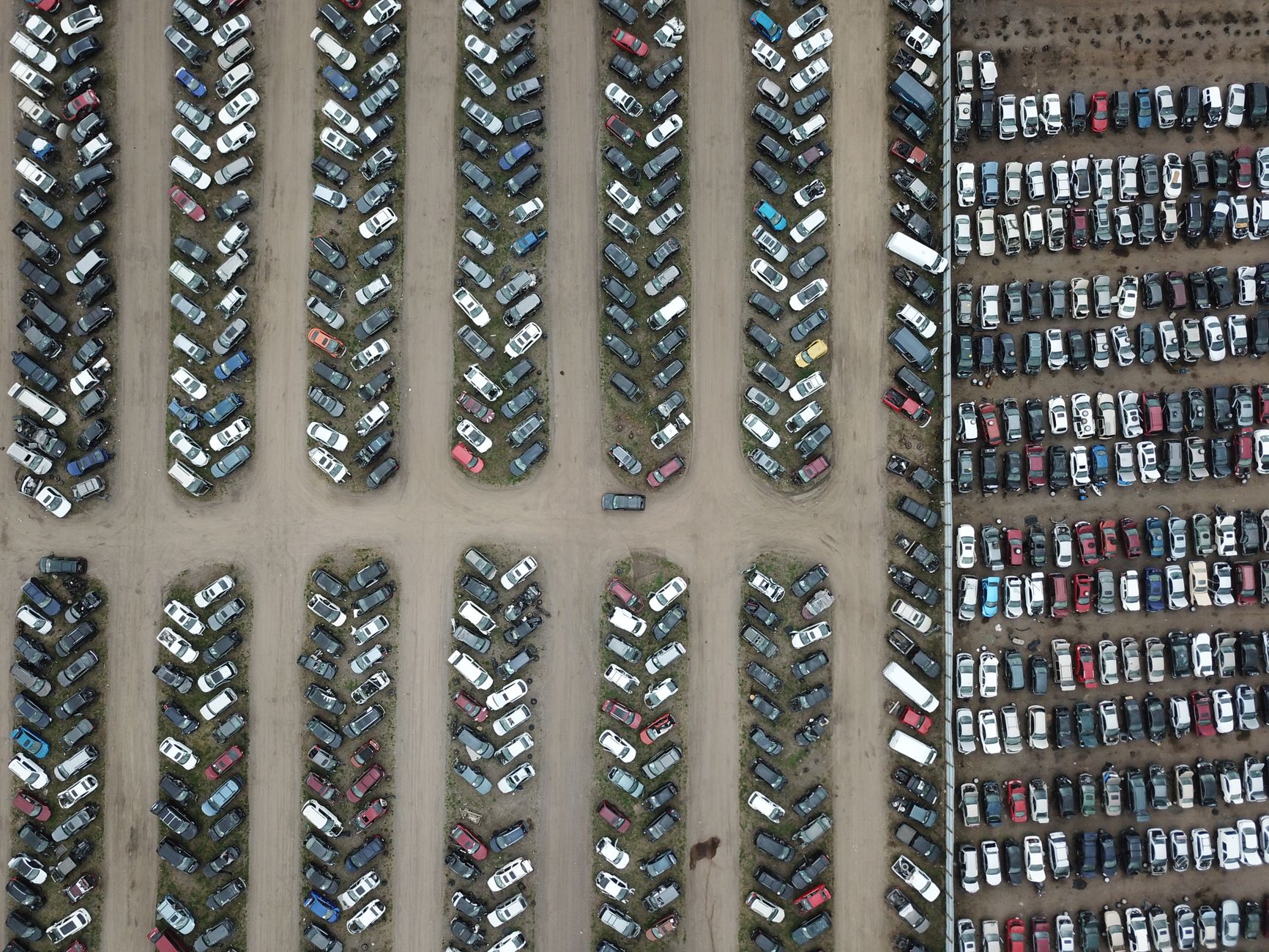
The hurricane buffer illustrates this capital intensity in its most extreme form. During Hurricane Harvey in 2017, Copart processed over 50,000 flood-damaged vehicles in the Houston market alone, expanding local yard capacity by 300 percent within weeks. The company achieved this not through temporary leases or overflow lots, but by maintaining permanent facilities in Dallas, San Antonio, and adjacent markets that normally ran at 60 percent utilization. The cost of this idle capacity is buried in the “Cost of Vehicles Sold” line, dragging down quarterly margins in years without major catastrophes.
The economic logic is subtle. Insurance companies do not pay premium prices during surges; Copart does not implement surge pricing for catastrophe volume. Instead, the relationship economics depend on reliability. When an insurer’s adjuster stands in six inches of water in a parking lot, they need a tow truck within two hours, not two days. Copart’s spare capacity buys the right to handle the steady-state flow during normal years. Competitors who optimized for efficiency, who run at 95 percent utilization to maximize ROIC, simply lack the physical room to absorb 40,000 cars in a month. They lose the catastrophe business, and insurers, remembering the abandonment, gradually shift their standard assignment patterns. The buffer is a loss leader for market share, but it requires a balance sheet willing to carry real estate that generates no revenue for 340 days a year.
This brings us to the whole cars problem, and to the National Powersports acquisition that marked Copart’s most significant departure from its core. When Copart purchased NPA in 2017 for $77 million, it acquired a network for auctioning motorcycles, ATVs, and recreational vehicles: market distinct from automotive salvage. More significantly, NPA dealt primarily with bank repossessions and dealer inventory, not insurance totals. This introduced a new seller profile: financial institutions seeking rapid wholesale liquidation, and a new buyer profile: dealers looking for inventory rather than dismantlers seeking parts.
The tension is structural. Insurance salvage operates on the total loss ratio logic: the higher the sale price, the more cars get totaled, creating supply. Bank repossessions operate on fixed supply: the car is already a total loss for the borrower; the bank simply needs to recover principal. There is no feedback loop where higher auction prices cause more defaults. Consequently, the buyer pool for whole cars is more price-sensitive and less fragmented. A Credit Acceptance Corporation or Ally Financial wants velocity, not maximum dollar, hey will accept lower prices for guaranteed turnover. This compresses margins. Moreover, the buyer base consolidates: dealers buy in bulk, creating negotiating power that the fragmented salvage dismantlers lack.
Copart’s response has been to silo these operations, running NPA through separate facilities and software systems, but the network effects do not transfer. A Mexican exporter looking for Honda Civic engines does not bid on Harley-Davidsons; a powersports dealer in Phoenix does not want flooded Toyota Camrys. The acquisition added complexity without adding liquidity to the core salvage engine. It represented a bet that Copart’s operational excellence could generate returns in adjacent verticals, but the economics suggest otherwise: whole car auctions generate lower take rates because the buyer base is thinner and the seller base more concentrated. If Copart continues pushing into whole cars, adding fleet lease returns and bank repos to the mix, it risks diluting the very buyer fragmentation that justifies the 80-20 fee split.
The autonomous vehicle threat, meanwhile, requires parsing the specific mechanics of accident severity rather than assuming catastrophic disruption. Copart’s volume depends on the equation: miles driven × accident frequency × accident severity × totaling rate. Autonomous vehicles promise to reduce accident frequency by 80 percent or more, but the timeline remains uncertain. The more immediate risk is repair cost deflation. As 3D printing of automotive parts, mobile repair services, and standardized electric vehicle architectures reduce the cost of fixing collision damage, the threshold for totaling rises. A vehicle that costs $12,000 to repair today might cost $8,000 in 2030. If the salvage value remains $7,000, the car is repaired rather than totaled, and Copart never sees it.
This is particularly acute for newer vehicles, which constitute Copart’s highest-value inventory. A 2024 Tesla Model 3 with structural battery damage currently gets totaled because the repair requires specialized welding and pack replacement costing $20,000. If Tesla, or third-party repair networks, develops certified battery repair procedures that cut that cost to $12,000, and the salvage value is $15,000, the car returns to the road. Copart’s liquidity becomes irrelevant because the supply never enters the salvage stream. The company’s historical growth has depended on repair costs rising faster than inflation, riven by sensors, cameras, and aluminum bodywork. A plateau or reversal in that trend starves the top of the funnel.
The international margin compression presents a final, slower-burning tension. In the United Kingdom, Copart has operated for two decades yet generates mid-20s EBIT margins compared to the 40 percent achieved in the U.S. The difference is not operational incompetence but market structure. UK insurance regulations encourage rapid settlement and repair; total loss ratios run significantly lower than in the United States. Additionally, the buyer base is less global, xport to Africa and Eastern Europe exists, but lacks the scale of the U.S.-Mexico-Guatemala corridor that drives premium pricing for American salvage.
Copart faces a capital allocation dilemma. To raise UK margins to U.S. levels, it must build density, cquire more yards in Manchester and Birmingham, integrate with the DVLA (the UK’s DMV equivalent) to the same depth as state systems in America, and wait twenty years for buyer habits to form. This requires the same $1 capital per $1 revenue ratio, but generates lower returns for longer. Alternatively, it can accept that international markets are structurally less profitable, cap investment there, and focus on the U.S. core. But with the U.S. market approaching saturation, Copart and IAA together control 80 percent, international growth is necessary for the valuation to hold. The market demands that Copart replicate its American economics abroad, but the physics of density suggest this may take a generation, if it happens at all.
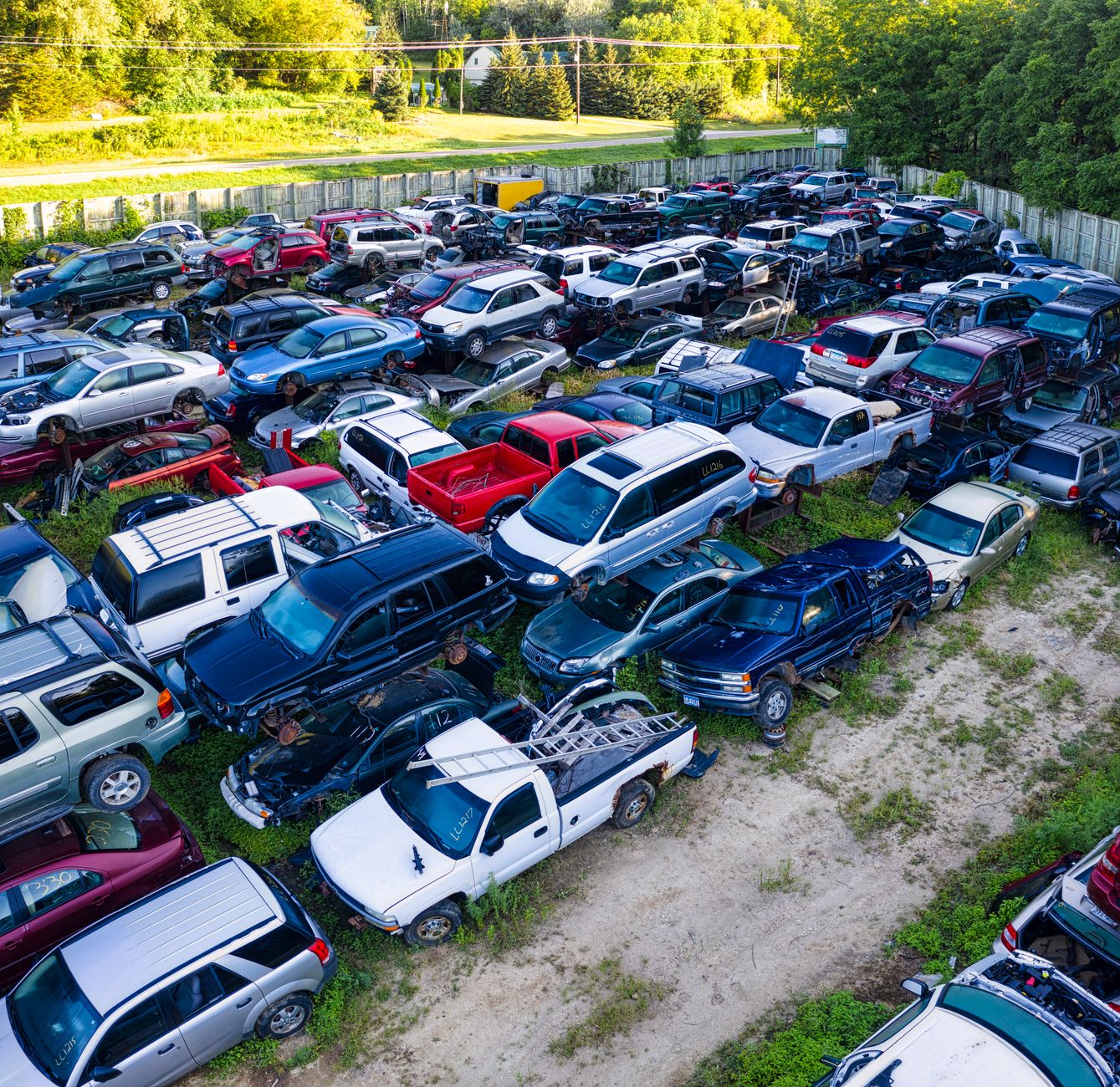
Underlying all these tensions is the temporal arbitrage that Willis Johnson identified four decades ago. He understood that the automotive lifecycle creates a peculiar information asymmetry: insurance companies know the car is damaged, but they do not know what it is worth to a dismantler in Guatemala or a rebuilder in Ukraine. By bridging that gap through physical proximity and software, Copart captures the spread. But the spread exists only because of friction, eographic friction, language friction, regulatory friction. If the world becomes more efficient, if insurance companies develop direct channels to foreign buyers, if blockchain titles eliminate the need for Copart’s DMV integration, the spread compresses.
The company’s refusal to disclose land ROI, its maintenance of hurricane buffers, its tolerance for low international margins, ll represent a bet that friction is permanent, that physical density will always matter more than digital efficiency, that insurance companies will remain too fragmented to squeeze the fees, and that Americans will continue crashing cars at rates sufficient to fill the yards. It is a bet on the stubborn persistence of inefficiency in a system that constantly promises to eliminate it. The undertaker prospers not despite the chaos, but because the chaos is reliably, structurally, and permanently messy.
The permanence of this messiness is exactly what makes the land ownership strategy defensible, yet it is also what creates the valuation discount that has persisted throughout Copart’s public life. When IAA, the primary competitor, spun off from KAR Auction Services in 2019, it carried a legacy of leased facilities, ver 70 percent of its yards operated under long-term leases rather than owned real estate. This appeared, on quarterly earnings calls, to generate superior returns on invested capital. IAA could expand into new markets by signing ten-year leases with options to extend, avoiding the $5-15 million capital outlay per facility that Copart incurs. In the short term, the metrics favored the lessee.
But the divergence emerges over the fifteen-to-twenty-year horizon that Copart thinks in. Consider the Dallas-Fort Worth metroplex, where Copart owns 240 acres across three facilities while IAA leases comparable acreage in adjacent counties. As the metropolitan area expanded northward toward McKinney and Frisco, accident density shifted with the population. Copart could reconfigure its yards, expand parking into buffer land purchased cheaply in the 1990s, and capture the towing radius efficiency without renegotiating lease terms or facing landlords who recognized the strategic value of proximity to I-35E. IAA, facing lease renewals in 2023 at triple the 2008 rates, faced a choice: accept margin compression by paying market rents, or relocate to exurban sites with lower rents but higher towing costs and reduced buyer access. They chose the latter, ceding the density advantage.
This dynamic plays out across the Sun Belt. In Phoenix, Copart acquired land near Sky Harbor Airport in 2004 for $2.1 million, today worth an estimated $18 million, that serves as the primary hub for Southwest salvage. The appreciation is nice, but economically incidental. The critical value is that the yard operates at 40 percent pretax margins because a tow truck can reach 80 percent of metropolitan accidents within 25 minutes, and because the specific gravity of 400 daily vehicles attracts every major dismantler in Arizona to maintain permanent offices nearby. A competitor attempting to replicate this today would need to purchase equivalent land in an industrial zone now surrounded by residential development, impossible at any price, or accept a 40-minute tow radius that insurance adjusters, paid by the hour, will not tolerate.
The opacity regarding land ROI thus serves a secondary function beyond merely protecting long-term thinking from quarterly pressure. It prevents the market from forcing a comparison with IAA’s asset-light model that would create immediate demands for “efficiency”, read: leasebacks, that would destroy the geographic moat. When Copart reports $350 million in annual CapEx against $3.5 billion in revenue, the apparent capital intensity looks like a liability. In reality, it is a pre-paid option on the next two decades of accident flow in the fastest-growing American metros. The company is not spending capital; it is storing it in dirt and asphalt, in a form that cannot be extracted by shareholders or taxed as inventory, but that compounds in economic value precisely because it is illiquid.
This creates a peculiar investment profile. The business generates 40 percent pretax margins on incremental revenue but reports “only” 25-30 percent returns on total capital because the balance sheet carries $2.8 billion in land and improvements at historical cost. If Copart were to mark its real estate to market and capitalize the implied rents, the returns would appear astronomical; if it were to sell the land and lease it back, the ROIC would rise and the business would die slowly, suffocated by rising rents and constrained capacity. The refusal to calculate yard-level ROI is therefore a form of corporate governance that protects the patient capital structure against the impatient capital markets. It is an admission that the relevant return calculation requires a twenty-year discount rate, and that any manager who could produce a precise IRR on a 2024 land purchase in Orlando would likely be optimizing for the wrong timeframe.
The fragility, then, lies not in the model’s economic logic but in the continued tolerance of public markets for this specific form of opacity. If an activist investor were to demand leasebacks to boost ROIC, or if rising interest rates were to make the $350 million annual CapEx burden appear unsustainable relative to free cash flow, the strategic architecture would face its gravest threat, ot from hurricanes, not from autonomous vehicles, but from the dismantling of the land bank that makes the undertaker’s work possible.