
Formula One: When Capital Intensity Becomes a Feature

The Asset-Light Mirage
Formula One presents itself as the apex of capital intensity. Twenty-four times annually, carbon-fiber machines worth millions explode across bespoke circuits that cost hundreds of millions to construct, maintained by traveling armies of engineers and logicians who freight forty tons of equipment across five continents in seventy-two-hour turns. The impression is of a business that devours capital: ne that requires massive fixed investment, heavy operational leverage, and the stomach for industrial-scale burn rates.
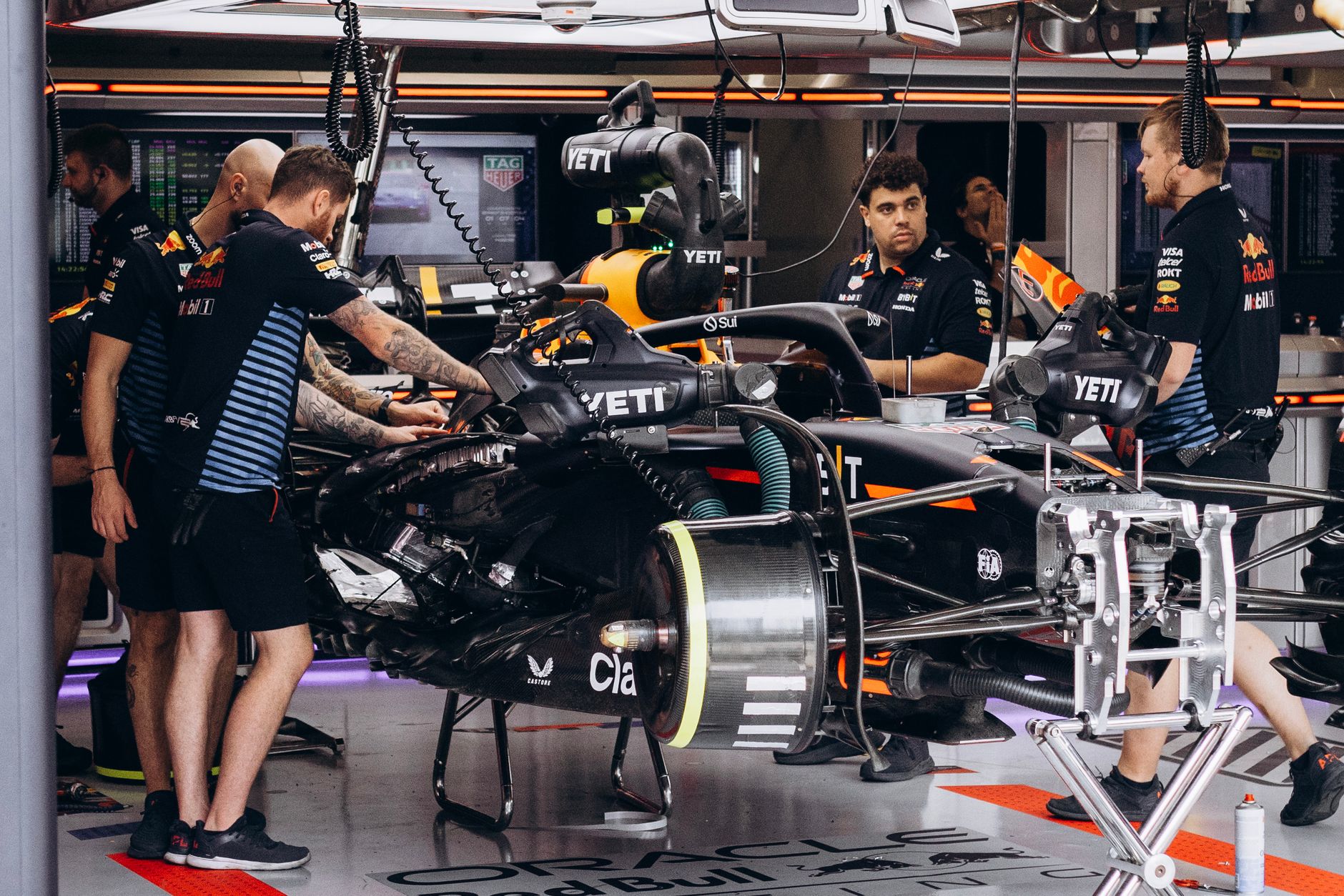
This is an illusion. Formula One Group, the commercial entity that controls the sport, owns no circuits, employs no drivers, builds no cars, and carries no team payrolls. It is, in essence, a licensing and content production company that happens to organize a traveling circus. The league bears only the cost of producing the broadcast signal, roughly $30 million annually in technical infrastructure, and collects revenue from three spigots: broadcast rights (33% of roughly $2 billion), promoter fees (32%), and sponsorships (15%). The remaining twenty percent flows from hospitality, logistics services, and junior series. This capital-light structure represents the most underappreciated structural advantage in professional sports. While the NFL maintains stadium partnerships and player employment costs, while the Premier League manages complex revenue-sharing with clubs that own fixed assets, F1 shifts every execution cost downward. Promoters, sovereign wealth funds, municipal governments, or private billionaires, absorb the $100 to $500 million required to build or upgrade circuits, plus the $20 to $50 million annual operating costs to host a race. Teams, a href=”https://www.mercedes-amg.com” target=”_blank” rel=”noopener noreferrer”>Mercedes, Red Bull, Ferrari, mploy the thousand-person staffs, develop the hundred-million-dollar cars, and fund the global logistics networks. The league extracts rent from both parties while bearing none of their volatility.
This asymmetry creates extraordinary operating leverage. When Liberty Media acquired the commercial rights in 2017, revenue has grown from $1.8 billion to roughly $2.5 billion, yet the league’s cost base has expanded only marginally. Broadcast production costs do not scale linearly with race count; the same production truck and camera array covers Monza or Miami. Unlike leagues that must negotiate with player unions over salary caps or invest in facility maintenance, F1’s margin expansion is limited primarily by the negotiating acumen of its management and the scarcity value of its calendar slots. The model resembles a luxury goods house that licenses its trademark to manufacturers who bear the capital risk of inventory and retail, except here the “manufacturers” are nation-states and automotive conglomerates.
The Scarcity Premium
The engine of this extraction is artificial scarcity. The Concorde Agreement, the binding contract between the league, teams, and regulators, caps the calendar at twenty-five races. Currently, the sport operates at twenty-three or twenty-four events, leaving exactly one or two slots vacant. This constraint is not logistical; it is economic architecture. By refusing to expand supply beyond twenty-five races, F1 forces prospective hosts into a zero-sum competition for access to the sport’s global television audience and attendant prestige.
The pricing power this generates is stark and bifurcated. Historic European races, Monaco, Monza, Silverstone, pay nominal fees or nothing at all, protected by tradition and the threat of fan revolt. But emerging markets and nouveau riche venues compete in a different currency entirely. Saudi Arabia reportedly pays $55 million annually for its night race in Jeddah. Qatar and Azerbaijan hover in the $40 to $50 million range. Even Miami and Las Vegas, American entries with less certain long-term political backing, committed to nine-figure infrastructure investments plus annual promoter fees exceeding $30 million. These are not commercial investments in the traditional sense; they are purchases of global relevance, tourism positioning, and regime prestige. The league monetizes the vanity of capital.
This creates a peculiar revenue dynamic. Unlike sports leagues that depend on consumer ticket sales or merchandise velocity, F1’s promoter revenue is backed by sovereign balance sheets and billionaire ego. The fees are fixed, paid regardless of attendance figures or weather disasters. When a flash flood suspended the 2021 Belgian Grand Prix after two laps behind the safety car, the Spa-Francorchamps promoter had already remitted its fee; the league broadcast the non-race and retained the revenue. This insulates F1 from demand shocks that cripple ticket-dependent sports. However, it introduces a dependency on the continued willingness of political actors to subsidize spectacle. The model assumes that the competition for prestige slots will persist, hat Riyadh, Doha, and Miami will continue valuing a Sunday afternoon television presence above the actual financial returns generated by ticket sales and local sponsorship. This assumption holds until it doesn’t.
The Geopolitical Circuit
The calendar has become a map of geopolitical ambition as much as sporting tradition. Liberty Media’s strategy since 2017 has been to rotate F1 through what it terms “destination cities”, ocations where the race itself matters less than the after-party, the marina, and the camera angles. Saudi Arabia’s entry in 2021, Qatar’s subsequent addition, and the resurrection of the Las Vegas strip circuit represent a shift from motorsport heritage to real estate development and nation-branding.
These new entrants pay a multiple of what traditional European circuits can afford. The economics for a promoter in Jeddah or Lusail involve not ticket revenue, which often barely covers operating costs, but the projection of modernity and the laundering of reputation through sport. For the league, this is pure margin. The broadcast product remains identical whether the cars race at Silverstone, with its heritage and knowledgeable crowd, or through the concrete canyons of a temporary street circuit built specifically for the cameras. The revenue compounds without proportional cost increases.
Yet this reliance on geopolitical vanity creates concentration risk. The league’s second-largest revenue bucket, promoter fees totaling roughly $700 million annually, depends on a handful of Middle Eastern sovereign funds and American casino magnates maintaining their appetite for loss-leading events. If Saudi Arabia’s cultural opening stalls, if Qatar’s World Cup afterglow fades, if Las Vegas hospitality revenues disappoint, the fees do not decline gradually; they evaporate entirely. Unlike a broadcast contract that might step down in value upon renewal, a lost promoter fee removes a slot from the calendar, reducing total revenue by $30 to $50 million instantly. Replacing such a slot requires years of lead time for circuit construction and FIA homologation. The scarcity that protects pricing power also limits the league’s ability to pivot if prestige-seeking capital retreats.
The Distribution Paradox
If promoter fees represent the extraction of political vanity, broadcast rights represent the monetization of attention. Here, F1 faces the defining structural tension of modern sports media: the trade-off between reach and revenue. The league currently earns roughly $700 million from broadcast partners, but the model is fragmented across incompatible strategies. In the United Kingdom, Sky Sports holds exclusive pay-TV rights, walling off the sport to subscribers willing to pay premiums. In the United States, ESPN broadcasts races on linear television with minimal rights fees but maximum reach. In Germany, a mix of free-to-air and pay-TV splits the difference.
This heterogeneity is not strategic elegance; it is legacy debt. Pre-2017, Bernie Ecclestone maximized short-term cash by selling exclusive pay-TV rights to regional broadcasters, particularly in Europe. The fees were high, but the audiences contracted. In Britain, viewership dropped from 8 million to 2 million as the sport moved from free-to-air to Sky. Liberty Media inherited this architecture and has attempted to reverse it, egotiating free-to-air “terrestrial windows” in key markets while launching F1TV Pro, its direct-to-consumer streaming service, to capture the high-value fan willing to pay for uninterrupted access.
The complication is Netflix. Drive to Survive, the documentary series Liberty commissioned in 2019, succeeded beyond projection. It brought 77 million households into contact with the sport, disproportionately in the United States, where F1 had been a niche concern. The series humanized drivers, dramatized team politics, and converted casual viewers into race-day fans. It also created a strategic threat to the broadcast model that funds the sport. If fans migrate to Netflix for narrative content and to F1TV for live races, the value of traditional broadcast rights, the $700 million anchor, erodes. Broadcast partners like Sky Sports or ESPN pay premiums precisely because they control distribution. If the league circumvents them with owned-and-operated streaming, or if audiences fragment across platforms, the next rights renewal cycle faces downward pressure.
Liberty’s management navigates this by treating Drive to Survive as funnel rather than competition, accepting that some cannibalization of linear viewership is acceptable if it expands total audience sufficiently to raise rights fees in the next decade. The bet is that a larger casual fan base, even if accessed through lower-revenue platforms, eventually increases the scarcity value of live rights. But this depends on the assumption that live sports retain their monopoly on “appointment viewing” in an on-demand world. If streaming platforms fragment attention further, or if younger audiences accustomed to Netflix’s editing rhythms find the three-hour race format tedious, the broadcast revenue model, one-third of the business, faces secular decline.
The Incomplete Commercialization
Sponsorship represents only 15% of F1 revenue, a remarkably low figure for a sport with 400 million global fans and demographic profiles, affluent, male, technically engaged, that advertisers covet. The underperformance is historical. Under previous management, sponsorship was a menu-card business: a brand purchased trackside signage visible at all twenty-one races for a fixed fee. There was no regional customization, no category exclusivity enforcement, and no digital integration. For years, the sport lacked a global soft drink partner, a true technology partner, or consistent luxury goods alliances despite its audience composition.
Liberty has identified this as “white space”, evenue available for extraction without structural change to the sport. The strategy involves moving from global placards to regional and local partnerships, allowing a bank to sponsor only the Miami Grand Prix, or a telecom to activate exclusively in Middle Eastern markets. This customization increases willingness-to-pay; a regional brand gains access to the global broadcast but pays only for relevance to its specific territory.
However, scaling this model requires sales infrastructure F1 historically lacked. It demands regional offices, language capabilities, and brand management discipline to prevent fragmentation. If a local partner uses the F1 logo inconsistently, or if a regional alcohol sponsor conflicts with a global partner’s values, the brand equity that supports the $2 billion enterprise erodes. The league must build the capabilities of a global media company while retaining the governance structures of a sporting federation. The revenue upside is substantial, sponsorship could theoretically double to match percentages seen in the NFL or NBA, but the execution risk involves transforming a passive billboard business into an active partnership organization.
Governance as Operating Leverage
The transformation from Ecclestone’s fiefdom to Liberty’s corporate structure represents governance functioning as a direct economic variable. Under Bernie Ecclestone, the sport was a personal monopoly: deals were handshake agreements, revenue recognition was opaque, and digital strategy was nonexistent. Liberty, a publicly traded entity, imposed financial controls, transparency, and the discipline of quarterly earnings calls. More critically, they appointed Stefano Domenicali as CEO in 2021: former Ferrari team principal who understood the operational constraints of competitors intimately.
Domenicali’s appointment illustrates how leadership acts as operating leverage in this specific business. Unlike commissioners in American sports who primarily manage labor relations, the F1 CEO must balance the interests of ten teams that are simultaneously partners, competitors, and suppliers. The teams vote on regulation changes, negotiate the Concorde Agreement that governs revenue splits, and possess the technical capability to render the sport unwatchable if competitive balance disappears. Domenicali’s Ferrari tenure gives him credibility to enforce the cost cap, a $135 million limit on team spending designed to prevent manufacturer exits, while expanding the calendar to twenty-four races, a move teams resist due to logistics strain.
The governance challenge intensifies as Liberty attempts to monetize “F1” as an entertainment brand beyond racing. The Netflix series, the Miami lifestyle festivals, and the Las Vegas spectacle all require team cooperation, ccess to garages, drivers willing to be mic’d, principals willing to perform conflict for cameras. Teams initially resisted Drive to Survive, fearing it diluted their technical brand for soap opera narrative. Liberty had to negotiate access contractually, trading visibility for cooperation. The economic variable here is clear: if teams withdraw cooperation, the content engine stalls; if Domenicali cannot maintain the fragile consensus of the Concorde Agreement, the cost cap collapses and manufacturers like Mercedes or Honda exit, destroying the competitive product that generates broadcast value.
The Promoter Assumption
Beneath the revenue growth and the Netflix glamour lies a fragile assumption: that the $30 to $55 million promoter fees are sustainable commercial propositions, or at least sustainable political expenditures. The league’s model assumes that whether through ticket sales, hotel occupancy taxes, or sovereign reputation management, hosts will continue renewing contracts that often run for ten to fifteen years.
History suggests caution. The Korean International Circuit hosted four races between 2010 and 2013 before the provincial government concluded that the $50 million construction cost and annual promoter fees generated insufficient tourism return. The Indian Grand Prix at Buddh International Circuit lasted three years before tax disputes and low attendance terminated the contract. Even established venues face pressure; the German Grand Prix has rotated between Hockenheim and the Nürburgring, occasionally disappearing from the calendar entirely when local governments faced austerity budgets.
The current reliance on Middle Eastern sovereign wealth and American casino interests concentrates this risk. If Saudi Arabia’s Vision 2030 shifts priorities, or if Las Vegas Strip businesses determine that the race weekend disrupts higher-yielding convention traffic, the fees do not simply renegotiate downward. The contracts are binary: a promoter fulfills the obligation or defaults. Given the massive capital expenditures required to build FIA-grade circuits, runoff areas, medical facilities, paddock infrastructure that meets standards for hundred-million-dollar cars, the sunk costs for promoters are enormous, but so are the ongoing obligations. A single default in a major market would force the league to either leave a gap in the calendar, reducing total revenue and broadcast package value, or accept a replacement promoter at lower rates, establishing a damaging comparable for future negotiations.

The Hard Ceiling
Even if the promoter model holds, the league faces a physical constraint: the teams cannot race more than twenty-five times annually without operational collapse. The current twenty-three-race calendar already strains logistics crews who must freight equipment from Singapore to Austin in five-day windows. The cars require rebuilds; the personnel require rest; the regulations mandate limits on engine components. The Concorde Agreement permits twenty-five races, but teams report that twenty-four approaches the breaking point for human endurance and mechanical reliability.
This creates a zero-sum expansion. Adding a Las Vegas or Miami requires dropping a Germany or France. The calendar becomes a rotating portfolio where heritage markets are sacrificed for high-fee emerging markets. Each substitution risks alienating the traditional fan base that provides the sport’s cultural authenticity: he very asset that makes the broadcast rights valuable. If the calendar drifts too far toward temporary street circuits in authoritarian states, the product becomes indistinguishable from any other scripted entertainment, and the scarcity premium evaporates.
Simultaneously, the cost cap that keeps manufacturers in the sport, preventing a spending arms race that would drive Ford, Mercedes, or Honda to exit, faces constant pressure. Teams search for loopholes: are driver salaries included? (No, up to a limit). Are marketing costs separated from R&D? (With difficulty). If a major manufacturer concludes that F1 no longer provides technology transfer value relevant to electric vehicles, or if the cost cap proves unenforceable, the withdrawal of a works team would collapse competitive balance. The sport requires at least four competitive teams to maintain narrative tension; currently, Red Bull dominates, Ferrari fluctuates, and Mercedes recovers. The margin for error is thin.
What drives this business, ultimately, is the maintenance of a paradox: Formula One must remain exclusive enough to command $50 million fees from nation-states and premium pricing from broadcasters, yet accessible enough to sustain the 400 million global audience that makes those fees rational. It is a capital-light extraction machine that depends on others, promoters, teams, governments, to bear the capital weight. The model works as long as the glamour outlasts the logistics, and as long as the television audience remains large enough to justify the vanity of the circuits. When those conditions shift, the scarcity that protects the business becomes its prison, nable to expand, unable to retreat, racing against its own constraints.
The Broadcast Lock-In
The fragility of this equilibrium reveals itself most clearly in the United Kingdom, where the sport’s largest market has become a laboratory for the tension between reach and revenue. When Sky Sports secured exclusive live rights beginning in 2019, the annual fee reportedly approached $150 million, riple the previous free-to-air arrangement. The transaction appeared rational: convert mass attention into concentrated cash from subscribers with high willingness-to-pay. Yet the viewership collapse was immediate and severe. Average race audiences dropped from 3.5 million to 1.9 million, with highlights packages on Channel 4 retaining more casual fans than the live races retained dedicated ones.
Liberty Media now confronts the long tail of this decision. The Sky contract runs through 2024, with renewal negotiations looming. The league faces an unpleasant binary: maintain the Sky exclusive and accept a structurally smaller British fan base, or return to free-to-air and forfeit the premium that funds team payments. The complication is generational. Drive to Survive recruited younger British viewers who have never known F1 as a free-to-air product; they consume highlights on TikTok and race summaries on YouTube. Meanwhile, the traditional fan base, men over fifty who remember Senna and Mansell, ages out of the demographic. If the league chooses revenue over reach in the next renewal, it risks Britain becoming a niche sport within its own historic heartland, reducing the cultural capital that justifies the high fees from Saudi Arabia or Miami. After all, why pay for prestige if the cameras point to emptying grandstands in Silverstone?
The United States presents the inverse problem. ESPN holds the rights for a reported $5 million annually: nominal fee that values reach above revenue. The network treats F1 as programming filler, often preempting races for college football or poker, and refuses to invest in production beyond simulcasting the Sky Sports feed with American commentators. The arrangement maximizes audience, the 2023 Miami Grand Prix drew 2.6 million viewers, a thirty-year high, but minimizes monetization. Liberty’s response, F1TV Pro, attempts to capture the high-value American fan directly, offering uninterrupted streams and historical archives for $80 annually. Yet this creates the cannibalization risk that terrifies traditional broadcasters. If ESPN discovers that F1TV has siphoned the most valuable viewers, the ones advertisers pay premiums to reach, the network will either demand exclusivity (reducing reach) or drop the rights entirely (reducing revenue). The multi-year contract structure prevents rapid optimization; the league is locked into these contradictions until 2025, forced to watch the experiment unfold without corrective action.
The assumption underlying both markets is that live sports retain pricing power in an era of content fragmentation. This assumption held when F1 was one of few remaining appointment-viewing events, but the streaming wars have evolved. Amazon Prime now holds Thursday Night Football; Apple TV owns Major League Soccer entirely. These platforms bid for sports rights not to sell advertising against broad demographics, but to reduce subscriber churn. If Amazon or Apple enters F1 bidding in 2025, not to maximize viewership, but to prevent Prime members from canceling during summer months, the valuation model inverts. The league would face buyers who measure value by retention metrics rather than advertising revenue, potentially depressing rights fees despite larger technical audiences. The $700 million broadcast pillar depends on a media landscape that no longer exists, optimized for a linear television model that streaming platforms are dismantling.
The Personality Tax
Beneath the revenue mechanics operates a quieter struggle over narrative control. Formula One has historically managed its stars with the discipline of a nineteenth-century court theater. Drivers wore helmets that obscured their faces, spoke in corporate-approved platitudes, and understood that the constructor, the brand of the car, outranked the individual operating it. Michael Schumacher’s fame never exceeded Ferrari’s; Ayrton Senna’s mythology grew posthumously, carefully curated by the institution.
Netflix disrupted this hierarchy. Drive to Survive succeeded precisely because it violated the sport’s protocols. Cameras captured Daniel Ricciardo crying in a toilet after a mechanical failure, exposed Toto Wolff’s venomous radio tirades, and manufactured rivalries between drivers who privately shared coffee in the paddock. The series treated drivers as characters rather than athletes, emphasizing personality over telemetry. The economic consequence was immediate: Lando Norris and George Russell gained Instagram followings larger than some team sponsors, converting casual viewers into fans of individuals rather than the sport.
This creates a leverage shift that threatens the league’s governance model. Lewis Hamilton’s personal brand, his fashion collaborations, his environmental advocacy, his 30 million Instagram followers, now rivals the sport’s institutional presence. When Hamilton criticized the Saudi Arabian Grand Prix’s human rights record in 2021, he forced the league into a crisis it could not control. The traditional model assumed drivers were employees of teams, who were franchisees of the league; the new reality resembles tennis or boxing, where the athlete owns the audience and rents the venue. If Max Verstappen, currently the sport’s dominant competitor, decided tomorrow to retire and stream sim-racing from Monaco, he would retain a significant portion of his global following. The league would lose the narrative centerpiece without compensation.
Liberty Media navigates this by attempting to co-opt rather than suppress driver media autonomy. They have relaxed social media restrictions, allowing drivers to post garage footage and pit lane content that previously required league approval. They have integrated personal sponsors, Hamilton’s Tommy Hilfiger associations, Norris’s partnerships with sunglasses brands, into official broadcast graphics, extracting a tax on personality in exchange for legitimizing it. Yet the tension persists. Drivers with established followings demand greater revenue shares; they view the $200 million annual payments teams receive as insufficient compensation for their role in generating the content that drives Netflix viewership. The Concorde Agreement fixes team payments through 2025, but the next negotiation will feature drivers, or their management companies, demanding direct participation in the commercial rights, similar to NBA players’ collective bargaining arrangements. If the league refuses, the risk is not strike but narrative fragmentation: drivers building alternative media ecosystems, podcasts, YouTube channels, Twitch streams, that compete with rather than complement official broadcasts.
The Electric Specter
The most existential threat to the economic model lies not in distribution or governance, but in technological obsolescence. Formula One remains the pinnacle of internal combustion engineering at the precise historical moment when internal combustion faces regulatory and cultural extinction. The sport’s hybrid power units, introduced in 2014, represent magnificent technical achievements, harvesting thermal energy from exhaust gases with efficiency rates exceeding fifty percent. They are also irrelevant to the automotive industry’s electric future. Volkswagen, the world’s largest carmaker, has committed to ending ICE development by 2030; General Motors enters F1 in 2026 with Cadillac branding but will produce no passenger vehicles with the V6 turbo-hybrid architecture the series mandates.
The cost cap and engine regulations were designed to prevent manufacturer exodus by controlling expenses, but they may have accelerated irrelevance. Young demographics increasingly view gasoline racing as anachronistic, comparable to tobacco advertising or circus animal acts. Formula E, the electric single-seater series, holds the FIA’s official “World Championship” status for electric racing and has secured manufacturer commitments from Porsche, Jaguar, and Nissan, rands that have abandoned F1. Currently, Formula E lacks the viewership and prestige to threaten F1’s broadcast rights, but the gap narrows as urban emissions bans expand. If Berlin, London, and Paris prohibit internal combustion events within city limits by 2030, the street circuits that F1 depends upon for high-fee promoter revenue, Jeddah, Miami, Singapore, face regulatory prohibition or require expensive exemptions.
The league’s response involves greenwashing that satisfies neither environmentalists nor traditionalists. The introduction of synthetic fuels, carbon-neutral gasoline manufactured from atmospheric capture, allows F1 to claim sustainability while preserving the acoustic spectacle that distinguishes it from Formula E’s whining electric motors. However, the development costs for these fuels fall outside the cost cap, creating a new arms race that favors wealthy manufacturers like Ferrari and Mercedes over smaller independents like Haas or Williams. If the synthetic fuel technology fails to scale commercially, if it remains a laboratory curiosity unfit for road cars, the sport becomes a museum piece, funded by oil-state promoters (Saudi Aramco is a title sponsor) to celebrate a technology the rest of the world is abandoning.
The Default Scenario
Consider the bear case in concrete terms. The 2025 season opens with the Las Vegas Grand Prix, which cost $500 million to construct, requiring a permanent pit building and temporary track infrastructure along the Strip. The promoter, a consortium of local casino owners and municipal authorities, projected 150,000 daily attendance and $1.7 billion in regional economic impact. Instead, cold weather, logistical failures, and exorbitant ticket pricing ($2,000 for grandstand seats) result in half-full grandstands and viral images of empty bleachers. The casinos, facing depressed gaming revenues during race week, refuse to renew the ten-year promoter contract. The $40 million annual fee evaporates.
Simultaneously, the United Kingdom’s Sky Sports, facing its own subscriber hemorrhage to streaming platforms, demands a 30% reduction in rights fees for the 2026-2030 period, threatening to drop the sport entirely if F1TV Pro remains available as a competing product. Liberty must choose between maintaining the streaming service (and losing the $150 million UK contract) or shuttering it (and losing the high-margin direct-to-consumer revenue from global superfans). They choose the latter, capping F1TV’s growth potential.
In Maranello, Ferrari’s board determines that the $400 million annual F1 program, despite the cost cap, generates no technology transfer to their electric road car division. They announce withdrawal at the end of the 2026 season, triggering a break clause in the Concorde Agreement that allows Mercedes and Red Bull to renegotiate revenue shares or exit. The grid drops to eight teams, the minimum required by FIA regulations, and the competitive product degenerates into a single-team exhibition.
Under this compression, the scarcity premium reverses. Promoters in Qatar and Azerbaijan, observing the Las Vegas failure and Ferrari’s exit, demand fee reductions or invoke force majeure clauses citing geopolitical instability. The calendar shrinks to eighteen races, eliminating the high-fee flyaway events and returning to the European core. Broadcast rights, now lacking the Vegas spectacle and Ferrari’s global fan base, reset to 2010 levels. The $2 billion revenue machine contracts to $1.2 billion, and the capital-light model reveals its vulnerability: fixed costs for broadcast production remain constant while topline revenue disappears. The operating leverage that magnified growth during expansion now magnifies decline during contraction.
This cascade requires multiple failures, yet each trigger is plausible and partially independent. The promoter model depends on vanity projects sustaining losses indefinitely. The broadcast model depends on linear television retaining pricing power. The team model depends on manufacturers valuing ICE marketing. None of these assumptions are guaranteed; each is eroding.
The Governance Premium
Stefano Domenicali’s role becomes critical under stress. Unlike Roger Goodell or Adam Silver, who manage player unions and franchise owners in relatively stable structures, Domenicali must maintain consensus among ten teams with radically divergent interests: Ferrari, a legacy brand racing for cultural prestige; Red Bull, an energy drink company using F1 as a marketing vehicle; Mercedes, a technology demonstrator; Haas, a bare-bones operation dependent on B-team relationships. The Concorde Agreement requires unanimity for major rule changes, giving each team veto power over cost cap adjustments, calendar expansion, or revenue distribution modifications.
Domenicali’s leverage lies in the threat of regulatory change rather than its implementation. By floating the possibility of Andretti Cadillac’s entry, a new team that would dilute existing revenue shares, he forces incumbent teams to accept calendar expansions they otherwise oppose. By negotiating directly with the FIA on technical regulations, he reminds teams that the alternative to cooperation is governance by racing bureaucrats rather than commercial executives. This is leadership as transaction cost management: reducing the friction required to maintain the artificial scarcity that generates fees.
Yet the governance structure contains a poison pill. If three or more teams enter financial distress simultaneously, a possibility during a recession that reduces sponsor spending, the Concorde Agreement’s unanimous consent requirement prevents rapid restructuring. The league cannot unilaterally reduce team payments to preserve league solvency; it cannot force Ferrari to accept a revenue cut to save Williams. The capital-light model externalizes operational costs but internalizes governance risk. When the model functions, it is elegant. When it fractures, the lack of centralized control, no commissioner with dictatorial powers, no franchise system that allows forced sales, prevents coordinated response.
The Calendar as Collateral
The twenty-four race calendar serves as the final collateral for the entire enterprise. Each event represents a $30 to $50 million receivable, a broadcast slot, and a narrative beat in the championship story. Yet the calendar is also a physical logistics chain of such complexity that it operates on the edge of mechanical failure. The “triple-header”, races on consecutive weekends in different continents, has become standard, requiring teams to freight forty tons of equipment from Montreal to Baku to Singapore without customs delays or weather interruptions. A single volcanic eruption, shipping container shortage, or geopolitical closure of airspace (as occurred when Russia invaded Ukraine, canceling the Sochi Grand Prix) creates cascading cancellations that cannot be replaced mid-season.
The assumption that the calendar can expand to twenty-five races or contract to twenty without systemic damage ignores the human infrastructure. Engineers, mechanics, and hospitality staff operate on ninety-hour weeks during race periods. The burnout rate has accelerated; senior mechanics increasingly retire before age forty, citing the impossibility of maintaining relationships or health during a nine-month season with only three weeks of true downtime. If regulatory pressure forces shorter working hours, or if teams collectively bargain for race reductions, the league’s ability to collect those $30 million fees diminishes. The scarcity is artificial for the promoters, but it is physical for the personnel.
Thus the business rests on a contradiction that grows sharper with each expansion. The revenue model requires more races to maximize promoter fees and broadcast inventory. The product quality requires fewer races to preserve mechanical reliability, driver safety, and competitive freshness. The 2024 calendar includes twenty-four races, one short of the absolute maximum permitted. There is no slack left in the system, no reserve capacity to replace a failed promoter or add a sudden high-fee entrant. The league has optimized itself to the physical limit, leaving no margin for the errors that inevitably occur when managing twenty-four global events involving ten thousand personnel and a billion dollars of mobile equipment.
The Terminal Value
When Liberty Media acquired Formula One for $4.4 billion in 2017, they purchased a distressed asset with neglected digital infrastructure and declining broadcast audiences. They have since tripled the enterprise value by extracting the low-hanging fruit of the capital-light model: expanding the calendar to capture promoter vanity, launching streaming to capture superfans, and Netflix to capture casuals. The remaining growth, increasing sponsorship to NFL levels, optimizing broadcast rights globally, adding Las Vegas-style spectacle races, requires solving the tensions that were manageable at nineteen races but threaten to rupture at twenty-four.
The sport’s terminal value depends on whether the 400 million global fans represent a stable audience or a peak. If the Netflix cohort converts to sustained viewership, if the Saudi races establish themselves as permanent institutions rather than transient political projects, if the cost cap maintains manufacturer interest through the electric transition, the $2 billion revenue base could expand to $3 billion by 2030. If any pillar cracks, if Miami defaults, if Sky drops the rights, if Mercedes exits, the leverage inherent in the model works in reverse, compressing value faster than it accumulated.
Formula One is not a technology company, a media empire, or a traditional sports league. It is a temporary alignment of interests between wealthy enthusiasts, sovereign reputation managers, and automotive marketers, held together by the televised drama of speed. The business succeeds when this alignment persists and fails when the partners recognize that the fees exceed the value received. The scarcity that protects the pricing is real; the demand for that scarcity is contingent. Racing against constraints eventually means racing against time itself.