Savannah Bananas: The Waiting List Economics
The Waiting List as Balance Sheet
Three million two hundred thousand people are waiting for a product that does not exist in sufficient quantity and, by the logic of traditional entertainment economics, should not exist at all. The Savannah Bananas, a summer collegiate baseball team operating out of a municipal stadium in Georgia, maintains a waiting list larger than the population of Chicago. In 2023, they sold two million tickets while leaving three million potential transactions on the table, a supply constraint so severe it would constitute operational failure for any conventional sports franchise. For the Bananas, the constraint is the asset.
This inversion of sports economics, where scarcity is manufactured rather than remedied, and unsatisfied demand is carried on the books as brand equity, defines the enterprise. The waiting list is not a operational backlog to be cleared through expansion or price increases; it is proof of concept that the product has achieved monopoly status within its category. When a consumer joins a queue three million names deep for a $35 ticket to a baseball game in Savannah, they are not purchasing access to athletic competition. They are buying entry into a spectacle that has successfully convinced the market it cannot be replicated.
The mechanism of this scarcity is deliberate. The Bananas cap supply not through artificial ticket withholding but through geographical and operational constraints that preserve the illusion of intimacy despite massive volume. They own or control their venues, eliminating the middlemen, ticketing platforms, concessionaires, municipal authorities, that typically fragment revenue and dilute brand control. The result is a direct-to-consumer entertainment monopoly where every aspect of the experience flows from a single decision-making authority. Yet this concentration of control creates a structural fragility: the business model depends on maintaining the precise supply-demand imbalance that every conventional growth imperative demands they eliminate.
The Anti-Extractive Model
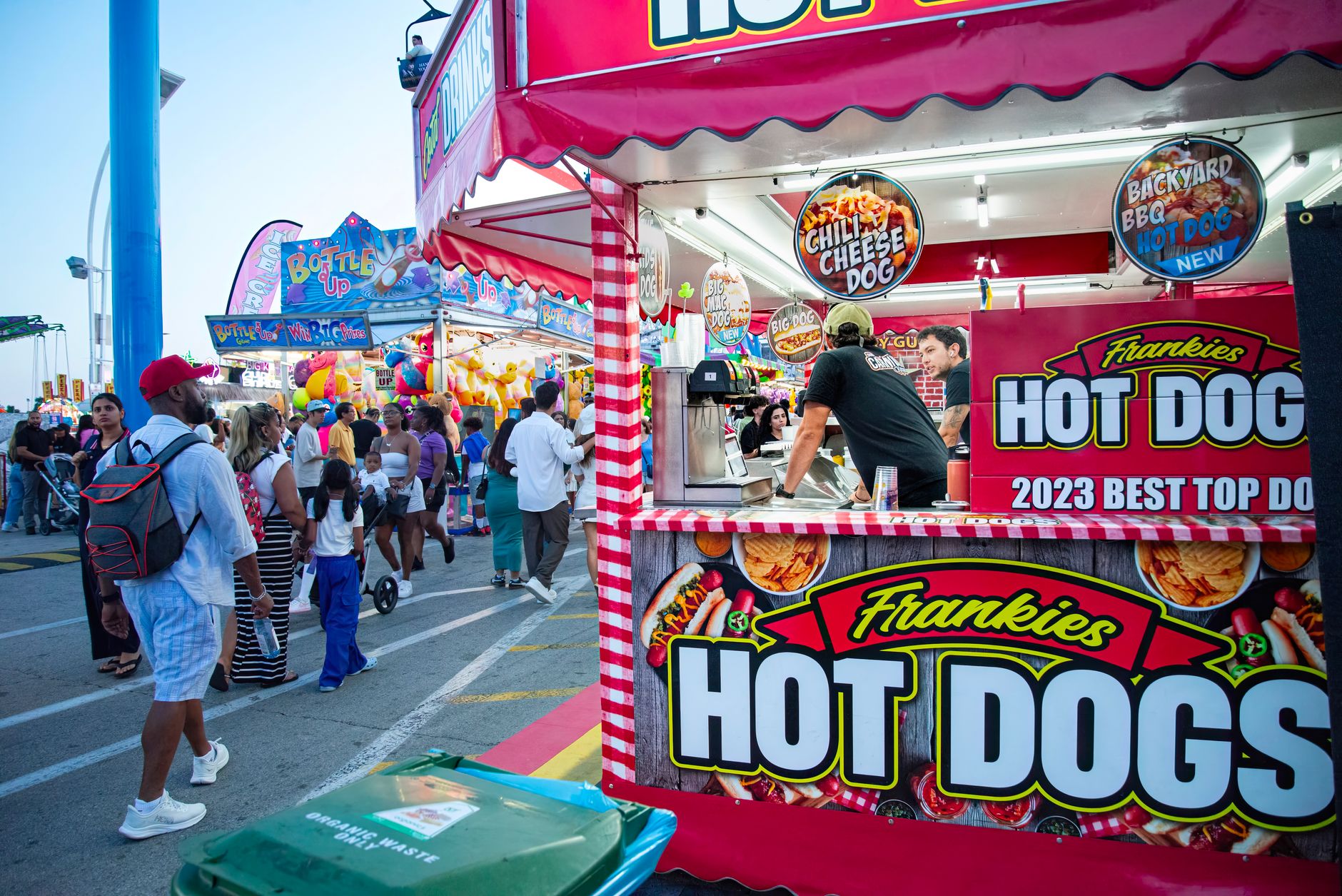
The Bananas charge thirty-five dollars. For this, a spectator receives a seat, unlimited hot dogs, hamburgers, popcorn, soda, and water, with no service fees, no processing charges, no parking tariffs, and no advertisements interrupting the visual field. The owner pays the sales tax. This pricing architecture represents an economic heresy. Traditional live sports generate margin through fragmentation: a low base ticket price subsidized by exorbitant concessions, parking, merchandise, and sponsorship impressions. The Bananas reject this extraction model entirely, bundling everything into a single transaction that eliminates the friction and resentment that characterize modern attendance.
The financial sacrifice is substantial and intentional. By refusing sponsorship revenue, no corporate logos on the outfield wall, no branded announcements between innings, the Bananas forego the high-margin cash that sustains most minor league operations. By eliminating ticketing fees, they surrender the 15-25% service charges that platforms like TicketMaster or StubHub inject into the value chain. By capping the ticket price at $35 despite a three-million-person waiting list, they leave perhaps fifty dollars per ticket of pure margin on the table. This refusal to maximize short-term revenue is not naivety; it is the primary structural barrier to competition.
The economics function through conversion rather than extraction. The eliminated friction reduces customer acquisition cost to near zero. The Bananas have amassed fifteen million social media followers, more on TikTok than every Major League Baseball team combined, without a traditional advertising budget. The product is the marketing; the $35 ticket includes the implicit promise that the company is not trying to extract additional dollars once the customer is inside the gate. This trust generates the organic virality that fills the stadium nightly. Competitors cannot replicate this model without simultaneously abandoning their existing revenue streams, a capital allocation decision that requires abandoning quarterly earnings pressure for long-term brand equity: trade most operators cannot make.
Banana Ball as Legal Moat
The scarcity is protected not merely by brand loyalty but by a proprietary rule set that creates a sport format structurally unavailable to competitors. Banana Ball operates under a distinct codified system: bunting results in immediate ejection; if a fan catches a foul ball, the batter is declared out; games hard-cap at two hours regardless of inning; stepping out of the batter’s box constitutes an automatic strike. Individually, these are gimmicks. In aggregate, they constitute intellectual property: coherent game design that produces a 119-minute entertainment product distinct from baseball.
The durability of this moat lies in the structural impossibility of replication by established competitors. Major League Baseball cannot adopt the Banana Ball rule set without publicly acknowledging that their own product is broken, a brand admission that would undermine a century of tradition and billions in media rights. Minor league franchises, even those desperate for attendance, cannot adopt the rules without violating their affiliation agreements with major league parent clubs, which demand adherence to standard baseball regulations. New entrants face the difficulty of copying a system that appears simple but requires intricate choreography between rules, entertainment intervals, and game flow. The rules are simple enough for a child to understand but complex enough in their interaction to prevent casual imitation.
This creates a paradox: the Bananas have designed a better baseball that only they are permitted to play. The format is legally defensible as a distinct sport, yet familiar enough to attract traditional baseball fans. It occupies a category of one, rendering traditional competitive analysis irrelevant. While other entertainment properties compete for market share within existing genres, the Bananas have created a genre with a single participant.
Founder as Customer Acquisition Infrastructure
The economic engine depends on a non-transferable asset: Jesse Cole’s personal willingness to endure poverty in pursuit of fan experience. In 2015, at twenty-three years old, Cole assumed management of a failing collegiate summer team with $268 in the bank and $150,000 in annual losses. By January 2016, three months after launching the Bananas, the organization had overdrawn its account. Cole and his wife sold their house, emptied their savings, and lived in a garage on a twin air mattress with a weekly grocery budget of thirty dollars. They commissioned a logo for $12,000 at a moment when they had no money, because Cole insisted on visual precision.
This autobiography is not merely color. It functions as customer acquisition infrastructure. The founder’s personal austerity, sleeping on air mattresses while obsessing over whether fans are having fun, generates the authenticity that drives fifteen million social media impressions. In an era where consumers parse corporate messaging for inauthenticity, Cole’s literal impoverishment on behalf of the product creates a trust that no marketing campaign can purchase. The Bananas’ viral reach costs approximately zero dollars because the content documents a founder who appears genuinely unhinged in his devotion to the spectator experience.
This presents an unsolvable succession problem. The brand is inseparable from the founder’s personality, decision-making velocity, and willingness to make irrational financial sacrifices. Cole’s authority to eject a player for bunting, or to reject a seven-figure sponsorship deal, derives from his personal credibility as the air-mattress guy. If the organization professionalizes, if Cole steps back, delegates, or adopts traditional management structures, the authentic obsession that substitutes for marketing spend evaporates. The business assumes that Cole’s energy is either infinite or replicable; neither assumption withstands scrutiny.
The Geography Trap
The waiting list creates pressure to expand geographically, to transplant the Banana Ball format to cities desperate for the revenue and attention. This expansion represents an existential risk. The Bananas’ scarcity value depends on their status as a destination: pilgrimage site for entertainment rather than a routine local option. If the team operates in ten cities, they become a touring circus; the Savannah stadium becomes merely one stop on a circuit, and the local intimacy that drives the social media narrative dissipates.
More dangerously, expansion invites commoditization. The 3.2-million-person waiting list indicates severe supply constraint; if the constraint is relieved through geographic replication, the psychological urgency to purchase evaporates. The business model requires maintaining the precise level of unavailability that rational capital would eliminate. Every new city added to the circuit increases revenue but reduces the per-city scarcity that justifies the premium pricing and viral attention. The Bananas must scale volume without scaling geography: mathematical impossibility unless they increase the density of performances in existing markets, which risks exhausting the local audience and transforming the event from annual novelty to routine entertainment.
The tension is acute: the waiting list suggests massive untapped demand, but satisfying that demand destroys the scarcity that created the list. The team currently sells two million tickets annually. To satisfy the waiting list without geographic expansion would require tripling current capacity, which would flood the Savannah market, reduce the destination-status of the pilgrimage, and eliminate the exclusivity that drives social media sharing. The Bananas are trapped by their own success: they have created a supply-constrained asset that markets demand they desupply.
The Professionalization Clock
The organization currently operates with the lean aggression of a startup, $30 grocery budgets and $12,000 logo negotiations, yet it must execute at the scale of a major entertainment conglomerate. Two million tickets require professional logistics, union coordination, safety compliance, and operational sophistication that threaten the scrappy authenticity central to the brand. The rules of Banana Ball require continuous innovation; to maintain the entertainment differentiation against inevitable copycats, the Bananas must invest heavily in theatrical production, new rule iterations, and choreography.
This creates a culture war between the bootstrap ethos that built the brand and the professional infrastructure required to sustain it. The founder’s obsession with fan experience currently drives operational decisions at the speed of intuition. As the organization grows, this decision-making must slow to accommodate legal review, insurance actuaries, and venue management protocols. The air mattress cannot scale.
Moreover, the continuous innovation required to stay ahead of competitors, who will inevitably adopt elements of the Banana Ball format, requires research and development investment that strains the low-cost structure. The business was built on doing more with less; sustaining the moat requires doing more with more, which risks converting the Bananas from an authentic disruption into a polished corporate entertainment product indistinguishable from the minor league baseball they sought to replace.
The business model thus carries a hidden depreciation schedule: the founder’s physical energy, the novelty of the rule set, and the scrappy culture all have half-lives that accelerate with scale. The Bananas have built a monopoly on entertainment scarcity, but the scarcity itself is perishable. They must grow to capture the value of their waiting list, yet growth dissolves the very conditions that created the list. The three million people waiting represent not just potential revenue, but a countdown timer.
The Unit Economics of Generosity
The thirty-five-dollar ticket price appears, at first glance, to leave substantial margin on the table. With a three-million-person waiting list, conventional price theory suggests an immediate increase to fifty or sixty dollars, capturing the consumer surplus that currently dissipates into scarcity value. Yet this analysis misunderstands the cost structure. The all-inclusive model, unlimited hot dogs, hamburgers, popcorn, soda, and water, creates a variable cost per attendee that traditional sports franchises avoid. While a standard minor league team might spend three to four dollars per fan on total gameday operations, the Bananas’ food service obligation likely pushes per-capita costs toward twelve to fifteen dollars before labor and venue overhead. At thirty-five dollars top-line revenue, the gross margin per ticket is thinner than the waiting list would suggest.
This cost structure explains the pricing paralysis. Raising prices to fifty dollars would certainly increase absolute margin, but it would simultaneously alter the consumption psychology. At thirty-five dollars, the all-inclusive bundle functions as a loss-leader for attention; the marginal cost of the fifth hot dog or third soda is negligible compared to the social media value of a fan documenting their gluttony on TikTok. At fifty dollars, the transaction converts from entertainment purchase to luxury expenditure, and the unlimited food shifts from delightful perk to economic obligation. The consumer begins calculating whether they are “getting their money’s worth,” a mental accounting that destroys the carefree atmosphere central to the brand.

Moreover, the food service operation itself represents a scaling constraint that the waiting list obscures. Unlimited consumption requires inventory depth and waste tolerance that fragment operational focus. The Bananas must maintain commissary capacity sufficient to feed two million annual attendees without the revenue buffer of à la carte pricing that would subsidize overproduction. This necessitates precise demand forecasting; a rainout that goes unanticipated destroys margin through spoiled inventory, while understocking destroys the experience promise that justifies the ticket price. The all-inclusive model thus operates on a knife-edge of logistics: too lean and fans encounter empty concession stands, destroying viral goodwill; too generous and food costs consume the thin margin that funds the theatrical production.
The venue control that enables this model also concentrates this risk. By eliminating third-party concessionaires, the Bananas capture the margin that would otherwise flow to external vendors, but they also absorb the full inventory risk. Traditional venues mitigate food cost volatility through contractual minimums and revenue-sharing agreements with national concessionaire firms. The Bananas, refusing these relationships to preserve the “no middlemen” purity, must internalize both the operational complexity and the commodity price exposure. When beef prices spike or supply chains fracture, they cannot pass costs to consumers through menu pricing; the thirty-five-dollar ticket is a fixed commitment in an inflationary environment.
The Twenty-Thousand-Dollar Sword
The operational control that enables this economic engine depends on a lease arrangement so favorable it constitutes a structural fragility. The Bananas operate Grayson Stadium in Savannah for approximately twenty thousand dollars annually, a figure approximating the cost of a mid-range luxury sedan rather than a professional sports venue. This rate reflects either municipal desperation to activate a dormant asset or a failure by local authorities to recognize the value they have ceded. Regardless of origin, the lease creates a dependency that expansion cannot easily replicate.
The vulnerability operates on two frequencies. In the immediate term, the city of Savannah retains the power to non-renew, redevelop, or reprice the facility. A change in municipal administration, a stadium renovation proposal, or simply the recognition that the Bananas have built a thirty-million-dollar enterprise on twenty-thousand-dollar rent could terminate the home field advantage. The Bananas have invested heavily in theatrical infrastructure, lighting rigs, dugout modifications, seating configurations specific to Banana Ball, that cannot be relocated without substantial capital loss. They are operationally captive to a lease that renews at the discretion of public officials who may not share the founder’s vision or may seek to capture the economic rent the team has created.
The longer-term vulnerability concerns replication. If the Bananas expand to additional markets, they cannot replicate the twenty-thousand-dollar lease structure. Municipalities aware of the brand’s drawing power will demand market-rate rent or revenue-sharing agreements that destroy the margin structure. The team’s ability to offer thirty-five-dollar all-inclusive tickets depends on fixed occupancy costs that approximate zero; in a market-rate facility, the same operation would require fifty-dollar tickets or sponsorship revenue, both of which violate the brand covenant. The current profitability is thus geographically specific to Savannah’s failure to price its asset correctly: failure that cannot be assumed in Denver, Nashville, or Portland.
Furthermore, the team operates within the Coastal Plain League, a collegiate summer baseball circuit that provides the player labor pool under NCAA eligibility rules. This league dependency creates a secondary fragility. The Bananas’ ability to field a team depends on the league’s continued tolerance of their rule modifications, entertainment schedules, and scheduling demands. If the league determines that Banana Ball’s theatrical elements compromise the developmental mission of collegiate summer ball, or if traditional member teams protest the competitive or scheduling advantages the Bananas extract, the league could revoke membership or modify rules to prohibit the entertainment innovations. The team would then face the choice of operating as an independent professional circus, losing the college athlete labor subsidy that keeps player costs near zero, or conforming to traditional baseball regulations that eliminate their differentiation.
The Pricing Paradox and the Waiting List Illusion
The three-million-person waiting list functions as a balance sheet asset only if it remains unsatisfied. This creates a perverse incentive structure where the optimal financial strategy requires refusing to sell tickets to willing buyers. Traditional entertainment enterprises treat waiting lists as operational failures to be remedied through capacity expansion or dynamic pricing. The Bananas must treat the waiting list as a permanently maintained condition: structural shortage that validates the thirty-five-dollar price point as a bargain.
If the Bananas were to clear the waiting list, either by expanding to multiple cities or by raising prices to market-clearing levels, they would simultaneously destroy the social proof that generates the organic marketing. The waiting list provides the content engine for the fifteen-million-follower social media presence; it supplies the narrative of exclusivity that drives earned media coverage; it justifies the “fans first” positioning by demonstrating that the team could extract more revenue but chooses accessibility instead. The moment the list disappears, the thirty-five-dollar ticket becomes merely a ticket, comparable to any other entertainment option rather than a scarce allocation.
This creates a pricing equilibrium that defies revenue maximization. The team currently sacrifices approximately sixty million dollars in annual revenue by maintaining the thirty-five-dollar price point against three million unsatisfied demand units. This is not irrational; it is the marketing budget. The sixty million foregone purchases the social media reach that would otherwise require paid advertising expenditure. If the Bananas spent twenty million dollars annually on digital marketing to maintain fifteen million followers, their margin structure would collapse. By refusing the revenue, they capture the attention.
However, this equilibrium depends on the waiting list remaining credible. If potential consumers perceive that the list is manufactured, that the Bananas could easily satisfy demand but choose not to, the scarcity signaling inverts from value indication to consumer hostility. The line between exclusive and exclusionary is thin. The Bananas must manage the waiting list as a theatrical production itself, ensuring that the public perceives genuine constraint (limited stadium seats, limited tour dates) rather than artificial withholding. This requires maintaining operational bottlenecks that any rational efficiency analysis would eliminate.
The Geographic Expansion Trap
Expansion scenarios reveal the unsolvable mathematics of the model. Assume the Bananas open second and third locations, anana Ball in Austin and San Diego. Each new market requires venue control, local staff recruitment, and the transplantation of the Savannah culture. Immediately, several economic variables shift. First, the twenty-thousand-dollar lease cost disappears; new markets require either capital-intensive stadium construction or market-rate facility rental, increasing fixed costs by an order of magnitude. Second, the founder’s personal presence, the air-mattress credibility, cannot bilocate. Jesse Cole can sleep in a garage in Savannah or Austin, but not both. The authenticity that substitutes for marketing spend dilutes with each additional city.
Third, and most critically, the waiting list psychology fragments. In a single-city model, the three-million-person waiting list represents national demand concentrated against Savannah supply. In a three-city model, the waiting list partitions into regional markets. A fan in California no longer joins a Savannah waiting list; they purchase Austin tickets when the tour visits. The national scarcity converts to regional availability, and the destination pilgrimage quality, the “I traveled to Savannah for this” narrative that drives social media virality, devolves into routine local entertainment.
The multi-city model also invites competitive arbitrage. Currently, the Bananas operate as a monopoly product in a single location; competitors cannot enter the market because the addressable market is defined as “people willing to travel to Savannah.” In a touring or multi-city model, the Bananas enter established entertainment markets where they compete with existing sports, concerts, and theatrical productions for the local entertainment dollar. They become comparable rather than categorical. The thirty-five-dollar price point, defensible as a unique destination experience, becomes expensive when compared to local minor league baseball at fifteen dollars or movie theaters at twelve.
Moreover, the rule-set moat weakens with visibility. As Banana Ball becomes nationally ubiquitous through touring, the novelty that drives media coverage dissipates. ESPN featured the Bananas as “logo of the year” before they played a game because the concept was singular. A touring production in its third year is no longer news; it is established product. The earned media subsidy, estimated at tens of millions of dollars in equivalent advertising value, evaporates as the format becomes familiar. The Bananas must then purchase attention rather than generating it organically, fundamentally altering the unit economics.
The R&D Arms Race and the Professionalization Spiral
To maintain scarcity value against inevitable imitation, the Bananas must continuously innovate the rule set and theatrical production. This requires research and development expenditure that conflicts with the lean, bootstrap culture. The current rule innovations, the bunt ejection, the fan-catch out, the two-hour cap, were developed through ten years of experimentation with negligible capital. Future innovations require professional expertise: sports scientists to analyze injury risks of new rules, theatrical directors to choreograph increasingly complex between-inning entertainment, technology integration for fan participation mechanics.
Each innovation increases production cost and operational complexity. The two-hour game cap, for instance, requires precise scripting of innings, commercial breaks (which do not exist), and entertainment intervals. As the production professionalizes, the labor force shifts from volunteer interns and passionate generalists to union stagehands, professional performers, and specialized operations managers. The scrappy authenticity that justified the thirty-dollar grocery budgets and air-mattress founding narrative becomes impossible to maintain; the organization transforms from startup to institution.
This professionalization creates a talent acquisition paradox. The Bananas must hire experienced operators to manage multi-million-dollar theatrical productions, yet experienced operators bring industry standard practices that conflict with the anti-establishment brand. A veteran stadium manager from MLB will attempt to install conventional security protocols, concession efficiencies, and risk management procedures that eliminate the chaotic intimacy central to the experience. The founder must either micromanage these professionals, destroying their effectiveness and accelerating his own burnout, or accept standardization that dilutes differentiation.
Furthermore, the continuous innovation requirement creates a Red Queen problem. The Bananas must run faster merely to stay in place. Each new rule, the recent addition of a “golden batter” tiebreaker, for instance, requires league approval, player training, and fan education. The complexity compounds. Early Banana Ball succeeded through rule simplification; future Banana Ball risks rule bloat as the organization attempts to out-innovate copycats. The collegiate athletes who provide the labor must master increasingly baroque regulations, slowing game pace and compromising the two-hour guarantee that differentiates the product from traditional baseball.
The Succession Constraint as Terminal Value
The dependency on founder presence creates a valuation ceiling that no operational excellence can breach. In traditional sports franchise valuation, the asset appreciates based on media rights, territorial exclusivity, and brand equity transferable across management teams. The Bananas’ brand equity is non-transferable; it resides specifically in the credibility of a founder who sold his house to fund the vision. If Jesse Cole steps back, the authenticity that substitutes for marketing spend disappears. If he remains, the operational scaling required to monetize the waiting list will eventually exceed human capacity.
This creates a binary outcome structure. The Bananas will either remain a high-margin, founder-dependent boutique entertainment property operating at constrained scale from Savannah, or they will attempt professionalized expansion and sacrifice the scarcity value that created the three-million-person waiting list. There is no middle path where the team expands to ten cities, hires a professional management team, maintains the thirty-five-dollar all-inclusive price point, and retains the fifteen-million-follower organic social media presence. The variables are mutually exclusive.
The waiting list thus represents not growth potential but terminal value. It is the maximum accumulation of brand equity possible under the current constraints. Attempting to convert that equity into revenue through expansion or pricing arbitrage triggers the depreciation of the underlying asset. The Bananas have built a machine that converts entertainment scarcity into social media attention, then into ticket sales, but the machine overheats if production increases. The three million people waiting are not customers in waiting; they are the last available evidence that the model works, a resource to be preserved rather than consumed.
The operational substrate that sustains the thirty-five-dollar ticket price remains invisible precisely because it functions smoothly at current scale. The all-inclusive food service, the unlimited hot dogs, hamburgers, popcorn, and soda that substitute for traditional concession extraction, operates on a logistics model that deteriorates rapidly with volume. In a standard stadium configuration, the Bananas must provision approximately two thousand attendees per game with food service that completes during a two-hour window, a throughput demand that strains the physical infrastructure of Grayson Stadium’s kitchens. The commissary operation relies on volunteer labor and seasonal staff motivated by proximity to the spectacle; it is not mechanized for the ten-thousand-seat venues that expansion would require.
This creates a catering bottleneck that no amount of capital can easily solve. Stadium food operations exhibit severe diseconomies of scale when removed from the à la carte model. In traditional venues, concession stands distribute demand across multiple points of sale and multiple menu items; the Bananas consolidate demand into a narrow window of unlimited consumption at centralized distribution points. The marginal cost of the fifth hot dog handed to a teenager does not decline with volume; it increases as line congestion requires additional labor and waste accumulation demands additional sanitation capacity. If the Bananas expand to a ten-thousand-seat venue in Austin or San Diego, the food service operation either degrades, lines that stretch into the third inning, stockouts that violate the all-inclusive promise, or requires professionalization that adds twelve to fifteen dollars per ticket in fixed labor costs, destroying the pricing equilibrium.
Furthermore, the labor pool that enables the theatrical production remains structurally constrained by NCAA eligibility rules. The Bananas field a roster of collegiate summer baseball players who compete without salaries, receiving only housing stipends and exposure to professional scouts. This amateur labor subsidy, layers who execute the on-field choreography, participate in the between-inning entertainment, and accept ejection for bunting without union grievance, s only available within the framework of the Coastal Plain League and its counterparts. These athletes accept the Banana Ball rule modifications and entertainment demands because they are twenty-year-old prospects seeking development opportunities, not because they are professional performers negotiating equity in a theatrical enterprise.
This labor arbitrage is geographically and temporally bounded. The college summer baseball season lasts approximately sixty days. The athletes arrive in June and depart in August. The Bananas have compressed their revenue generation into this narrow window, creating the scarcity of supply that drives the waiting list. If they attempt to expand to year-round operations in multiple cities, they forfeit the NCAA labor subsidy; they must then hire professional actors and professional baseball players, unionized labor with established working condition standards that prohibit the theatrical demands of Banana Ball. The bunt ejection rule, the on-field dancing, the two-hour game cap with its accelerated pace, ll violate the collective bargaining agreements that govern professional baseball and professional theater.
The three-million-person waiting list thus represents demand for a product that exists only because of specific regulatory and infrastructural subsidies that cannot be replicated. The college athlete labor pool is not scalable; there are only so many Division I baseball players willing to spend their summer performing in Savannah, and the NCAA limits the number of games and practice hours. The municipal stadium subsidy of twenty thousand dollars annually is not replicable in primary markets. The food service logistics that enable all-inclusive pricing fail above certain attendance thresholds. Each of these constraints is load-bearing; remove one, and the thirty-five-dollar ticket becomes a loss-leader rather than a margin generator.
If the Bananas attempt to clear the waiting list through geographic expansion, they must abandon the amateur labor model and the small-venue intimacy that makes the food service operation viable. They become, in effect, a minor league baseball team with better marketing: category already occupied by dozens of franchises operating on thinner margins with less cultural relevance. The waiting list persists only because the Bananas have refused to become what the market demands they become: a standardized entertainment product distributed through national venues, extracting maximum revenue through dynamic pricing and sponsorship integration. The three million names represent not a growth opportunity but a final warning that the current configuration has reached its optimal, and terminal, scale.